
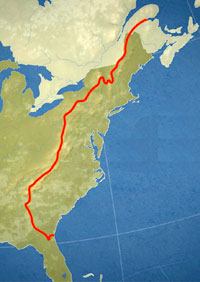
 On this date in 1763, the King drew a line across America. It ran along the crest of the Appalachians from Vermont to Georgia. West of that line was the Indian Reserve. The American colonists were not allowed to cross the mountains, to buy land from the Indians, nor to trade with the Indians without the approval of the Crown.
“And whereas great Frauds and Abuses have been committed in the Purchasing Lands of the Indians, to the great Prejudice of our Interests, and to the great Dissatisfaction of the said Indians; In order therefore to prevent such Irregularities for the Future, and to the End that the Indians may be convinced of Our Justice and determined Resolution to remove all reasonable Cause of Discontent, We do, with the Advice of Our Privy Council, strictly enjoyn and require, that no private Person do presume to make any Purchase from the said Indians…
every Person, who may incline to trade with the said Indians, do take out a Licence for carrying on such Trade, from the Governor…”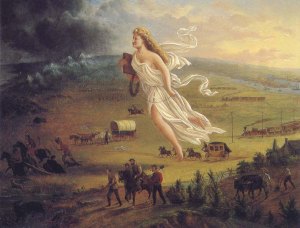
But the primary story of conflict in America was not between the Native peoples and political Powers in Europe or along the East Coast. It was between Natives and trespassing unruly pioneers and settlers. And when these ruffians violated treaties with the Natives, the Powers that governed them invariably looked the other way.
This Proclamation Line of 1763 was an artifact of Britain’s victory over the French. But it was short-lived. When the American revolutionaries defeated the British, the line (however ignored) disappeared altogether.

 Memories of the People