
 “Este presidente es mi presidente.” This president is my president. Such were the words on a poster I saw in a tiny bedroom in a small village at 13,000 feet in the Altiplano, Bolivia, several years ago. It’s a big deal for them. As recently as 1952, when a Quaker group from the US bought a parcel of land to open a school, the land came with serfs– indigenous slaves tied to the property. Since then, Bolivia has seen a series of right-wing leaders who sold their natural resources to Western companies with little return for the people.
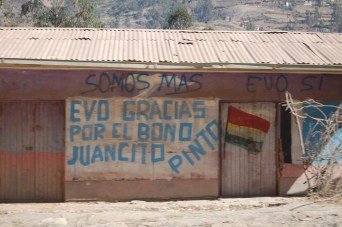 All that changed in 2006, when they elected a poor coca farmer named Evo Morales. He has marshaled the royalties from natural gas and other resource revenues for the benefit of the poor. Electricity, water, paved roads, and (of course) artificial turf soccer fields are appearing throughout the nation. Thanks to a small stipend to families (called the “juancito”), children are going to school.
And knowledge of the indigenous languages of Aymara and Quechua are now required for government employees, leading to a surge in language classes.  The wiphala, the indigenous flag, has been given official status, so that now Bolivia has two national flags.
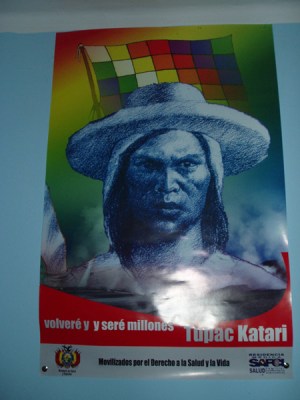
For the indigenous majority in Bolivia (yes, majority), it is the fulfillment of the prophecy of Tupac Katari, an indigenous leader killed (drawn and quartered) in the 18th century: “I will return and it will be in the millions.” I was told that life goes in 500-year cycles, and now is their time; the sleeping Inca of Machu Pichu is waking up.
CNN doesn’t seem to be covering his re-election story (and usually finds something negative to highlight), but here is the news from Al-Jazeera’s Latin office, which opens with a positive spin regarding dramatic poverty reduction. Viva Evo!


 Memories of the People