
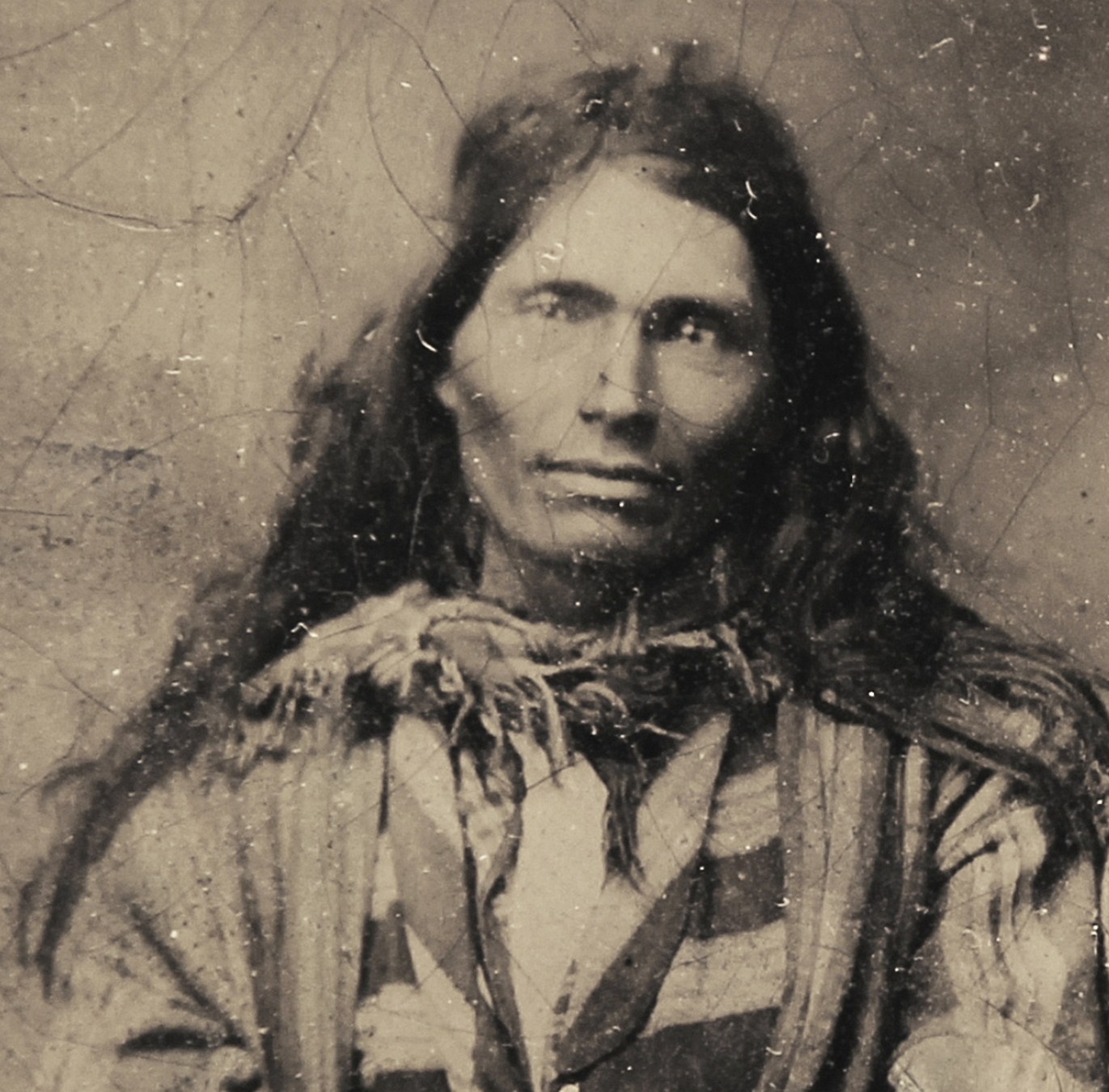
 On this date in 1892, Ned Christie was killed by US marshals asserting federal sovereignty on Cherokee land. Ned Christie, branded a Cherokee outlaw, had been on the run for five and a half years. On this morning, he had his back to the double-logged wall of his stronghold as he turned and peered through the gun portal. He saw about twenty US marshals crawling through the woods outside and they’d brought dynamite this time. As a Cherokee senator and an advisor to the chief, he fiercely opposed the railroads coming thru their land. Then he was accused him of killing a US marshal.
Ned was not the first hero outlaw in these parts. Twenty years earlier, there was Zeke Proctor. He also ran from US marshals. He said he didn’t mean to do it. It was a crime of passion involving two lovers. He meant to kill the white man and not the Cherokee woman, but she jumped and he shot and she died and the white man got away injured. But it was not just Zeke who was on trial; it was the entire Cherokee nation, for Zeke was on trial in a Cherokee courtroom with a Cherokee judge and a Cherokee jury. They had relocated to a log-constructed one room schoolhouse to better defend themselves. Everyone was armed—the judge, the lawyers, the members of the jury, even some in the gallery—for they knew the US marshals were on their way from Fort Smith to arrest the defendant and take him away to a white man’s court.
At the trial, Zeke sat at a table at the far end facing the door. To his left were his attorney and the judge; to his right was his brother. A juror yelled Look out! They’re coming to get Zeke Proctor! Zeke saw a relative of the victim coming through the door, marching down the center aisle with a double-barreled shotgun, followed by several US marshals. Zeke’s brother stepped in front and pulled those barrels toward him as the first one went off. Simultaneously shots were fired from all sides as the jury and gallery dove under their benches. By the time it was over, seven marshals lay dead, along with three Cherokees, including Zeke’s brother and lawyer. Zeke and the judge were injured. The next day the trial resumed and Zeke Proctor was acquitted.
The Cherokees won that battle. The original federal case against Zeke was dropped and the US agreed that the Cherokee court had jurisdiction after all. Zeke was a US marshal by 1892.
But Ned was not getting that deal. In the interim, Congress passed the Major Crimes Act, asserting sovereignty on Indian lands in cases of murder. The US marshals were coming and Ned was out of ammunition. He grabbed his empty rifle, opened the door, and charged into a hail of gunfire.
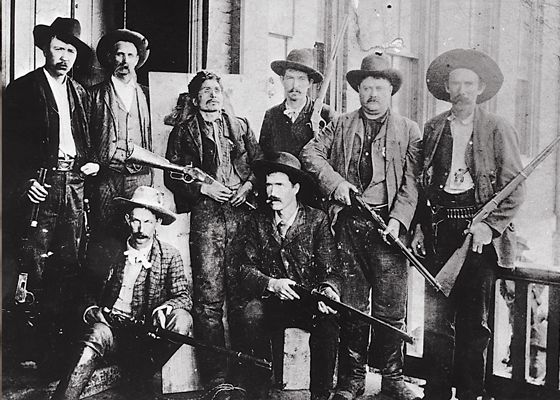
US marshals pose with Christie’s body in Fort Smith, Arkansas. This would be a violation of international agreements today.
A week later his body was on display at Fort Smith, Arkansas, where they sold postcards to tourists of the white posse posing with his corpse. He was eventually buried back at his home in Wauhillau, but even there he got little rest. His headstone was subject to vandalism and, fifty years later, it was stolen.

 Memories of the People
Pingback: The Last Ride: How 20 Infamous American Outlaws Met Their End - Back in Time Today