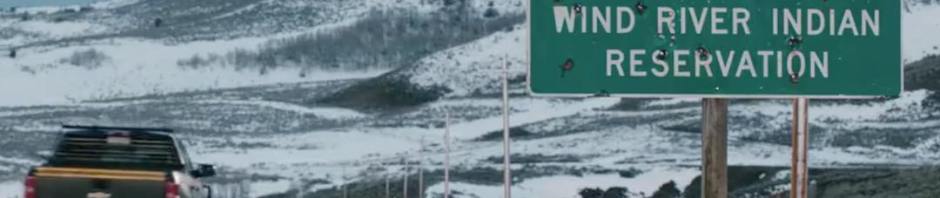
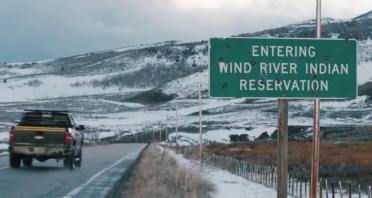
 Wind River, a 2017 crime thriller set in the winter wilderness of the Wind River Indian Reservation, focuses on the on-going epidemic of assaulted and missing Native women and girls. Examples of the problem are not hard to find. The film received widespread positive reviews. Indian Country Today Media Network (ICTMN) called it “gripping, realistic and beautifully-crafted”. They praised the film for its use of at least 10 Natives as cast and crew, including Graham Greene, Gil Birmingham, and Tantoo Cardinal. The film touched on several Native issues, including interracial marriage, cultural differences, loss of cultural heritage, economic impoverishment, drug addiction, tribal government funding, resource extraction on BLM-leased land, and tribal sovereignty and jurisdiction. ICTMN described it as “the most realistic and respectful portrayal on film of the relationships between Native people and others outside ‘the rez.’”
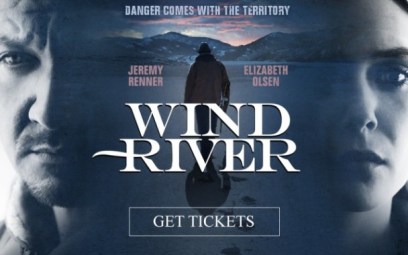
This promo poster makes it clear just who is going to fix things in Indian Territory, and how important the Native actors are.
But ICTMN goes too far when it states, “This movie is not about ‘White Saviorism.’” The basic facts are this: that the two stars of the film are white, playing white federal agents. They solve the crime and avenge the murder of a Native girl. Jeremy Renner plays a true ally, raised and respected around the rez and connected to them through his ex-wife. The superpower that enables Renner to solve the crime is a stereotypical Native attribute: tracking—reading subtle signs on the trail to describe past events in detail. He is Sherlock Holmes-cum-Apache tracker. In the end, Renner’s character gives the advice of a seasoned warrior. Arguably, the plot would be more natural and less forced if the tracker was a Native resident of the rez, not a white federal agent that has to drive in from town. Ironically, the first Native man we meet on the reservation seems to have pretty good tracking skills, having read from the prints that a mother mountain lion and her two grown cubs attacked his steer.
Elizabeth Olsen plays Renner’s pretty blond partner; she’s from Fort Lauderdale and works for the FBI, an agency with a long and mixed history vis-à-vis tribes.
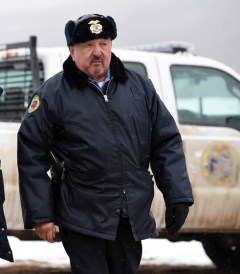
Graham Greene plays a reservation cop resigned to reliance on federal aid.
The Native actors are relegated to supporting roles—an ineffectual reservation cop, the near-suicidal father of the victim, and some drug-addicted suspects. Most of them don’t survive the film; the two white heroes do. The victim, ICTMN reports, is played by “Kelsey Asbille (Eastern Band Cherokee)”. But the Eastern Band Cherokee report no record of her, whose Native appearance comes from a combination of her white mother and Chinese father.
Yes, the film shines a light on an important Native issue, portrays life on a reservation, and employed more Native actors and crew than we’re accustomed to, but to look past the obvious “White Saviorism” is to accept crumbs from the table. It’s difficult to imagine African American reviewers praising a Wakanda saved by a “White Panther”, a white American contractor (possessing some stereotypical African American attribute), accompanied by his pretty blond assistant. The 1987 film Cry Freedom was criticized for focusing on white liberal reporter Donald Woods (played by Kevin Kline) while his friend Steven Biko (played by Denzel Washington) dies relatively early in the film. The movie was about apartheid, but a white liberal was the hero.
ICTMN’s willingness to overlook the white savior trope undoubtedly reflects the political clout of Natives today, but at least they mention the issue. Reviews by mainstream white reviewers completely missed it.
Variety and The Guardian focused on the plot twists. The Los Angeles Times praised its authenticity. Newsweek interviewed director Taylor Sheridan and went into some depth on the problem of violence against Native American women.
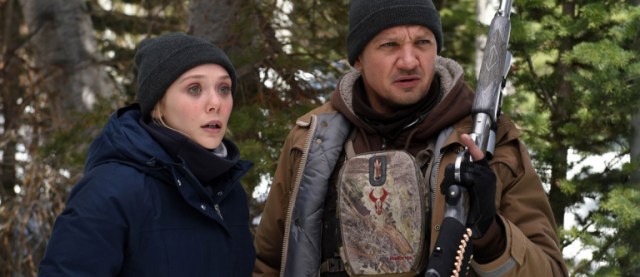
Jeremy Renner is a damn good badass hero. Apparently they couldn’t imagine a Native with tracking skills.
Roger Moore rated the film 3 ½ out of 4 stars, saying Wind River “has a somber, grim grace and the relentless forward motion of a thriller that isn’t just seen, but stared-down, because that’s the warrior code of the place and the people struggling to live there.” But the warrior Moore has in mind is not a Native hero; it is Jeremy Renner, “a man in his element — hand-loading the rounds he uses in his work tool — a rifle — watching the skies to know when the blizzard is coming, scanning the ground to see who ran off where. Just the way he mounts his snowmobile — riding on one-knee to sit up higher and see further ahead, hurtling along on the edge of reckless — embeds him in the character and the place.”
The New York Times review focused on the quality directing and acting, but then concluded with the peculiar statement that the film leaves us with “an expanded awareness that the justice done by the good guys in this film is not nearly sufficient with respect to the larger injustice done to Native Americans.” In short, the Times seems aware that the heroes were indeed white saviors; they just didn’t do enough to compensate for the past.
But it did not dawn on the Times, nor any of the other mainstream reviewers, that perhaps the greatest contribution a film could make is to at least let Natives be the protagonists of our own stories.

 Memories of the People
On a related note (i.e. wind), here is a review of ‘Dark Winds’ by the Navajo Times. https://navajotimes.com/ae/culture/dark-winds-fails-authenticity-test/