
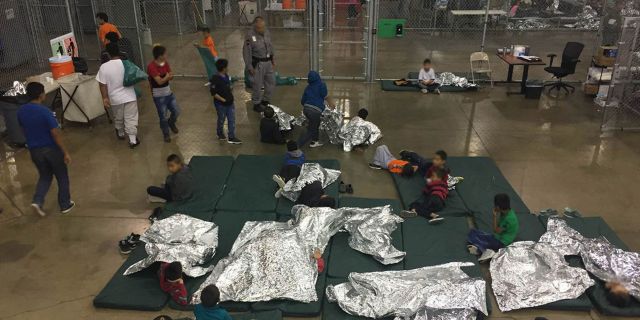
After several weeks of shock, horror, tears, and rage, we are back from the abyss of war crimes and a level of racial terrorism that seemed unimaginable since the Civil Rights Era. Make no mistake, this was a defining moment in modern US history, revealing exactly where we are on that slope between a democratic bastion of human rights and a pariah nation implementing ethnic cleansing.
The Good
We learned that a massive public outcry can still affect US policy, even Trump, who usually tends to double-down in the face of opposition. This time, fortunately, he caved. The voices of rage poured in from social media, celebrities, faith leaders, and from around the world. This seemed to embolden some key conservative constituents to also raise their voices: some evangelicals, some Republicans, and, importantly, Melonia and Ivanka. Protest worked. We didn’t have to blockade detention centers, burn tires in the streets, rattle the White House fences (or tear them down), or worse. In a week that caused me to evaluate just how much I was willing to sacrifice to fight this battle, the threat of violence in the streets was averted.
The Bad
Obviously, we’re not out of the woods. Trump’s new policy has caveats and there are likely devils in the details. Several thousand children remain separated from their  parents, often by thousands of miles, and the government appears unable and unwilling to reunite them. That the policy was implemented with no clear plan to track and eventually reunify the families reveals the Trump Administration’s cavalier attitude toward the lives of people of color. They simply didn’t care. The former head of ICE has stated that, based on his experience, some of these children will simply be lost in the system and never reunited. They will be adopted out to US parents. Thus, some Latino parents, simply asking for asylum, will suffer the ultimate penalty: the loss of their children forever.
Trump’s executive order will put the new families at the front of the line, possibly pushing the current parents with separated children behind them. The current wait for an asylum case to be heard is 670 days, nearly two years. History has shown that abducted children, after just six months, bond with their captors as a survival mechanism. After a year or two, they barely recognize their original parents and forget their native language.
The Ugly
We learned that the Trump Administration is so far out of touch with history, human rights, and basic human decency that they failed to anticipate the public outrage of their policy. In defense of their policy, they assaulted our senses. They tweeted about immigrants “infesting” the land and laughed at a suffering ten-year-old with Down Syndrome separated from his parents. Even Melonia, en route to visit a child concentration camp, work a jacket with bold letters on the back that proclaimed, “I REALLY DON’T CARE.”
 We learned how easy it was for the Trump Administration to garner significant public support. Using a combination of absurd legal claims, outright lies, and a willing megaphone in the form of Fox News and other conservative media, 27% of Americans (and 58% of Republicans) embraced the Trump party line. With faith in their leader and news sources, they were unable to think for themselves, unable to reach the obvious moral conclusion that the policy was abhorrent by any moral or historical measure.
It wasn’t just the right wing. Even moderates were ambiguous about the horrors when NPR and other more neutral news sources treated Trump’s concocted justifications with respect and interviewed concentration camp contractors with all the deference of a medial provider.
We no longer wonder how a society can get a large segment of its members to dehumanize others to the point of terrorizing their children and destroying their lives. All those Germans who implemented the Holocaust, all those Rwandans who killed their neighbors, how the Japanese internment happened, are no longer a mystery to us. We heard the justifications; we saw the poll numbers. We stared into a collective heart of darkness.
We also saw companies like General Dynamics, Microsoft Azure, and United Rentals cash in on the concentration camps. (A full list is here and more discussion is here.) It is the ultimate white privilege to turn ethnic cleansing into a business opportunity. Doctors and child care providers were torn between whether to work with the children or not, whether to help the suffering but enable the oppressors, like serving food at Auschwitz. Here is the story of one child care worker who quit.
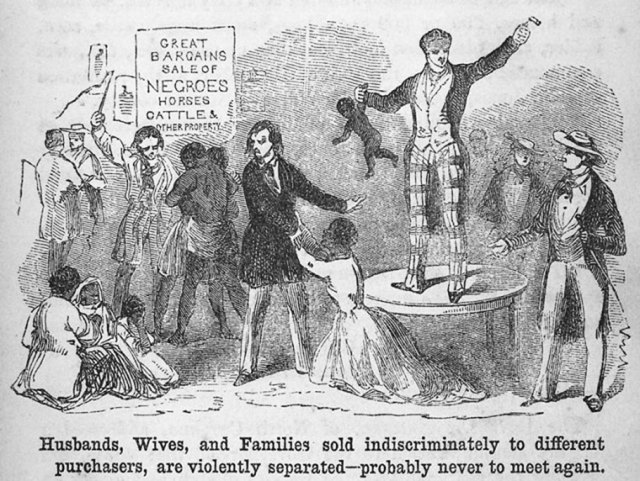
We were also reminded of our past. While some politicians trotted the hopeful Obama-esque refrain, “This is not us; this is not America,” we were reminded that, time and time again, this has been America. The history of the US is filled with the forced removal of brown children more often than not. Slave auctions and the forced removal of Native children to boarding schools span the years from 1776 thru the 1950s. Even as recently as the 1970s, nearly a third of Native children were in the care of white foster parents, a kind of ethnic genocide. Because of examples like this, the UN definition of genocide includes “forcibly transferring children of the group to another group.”
The Future
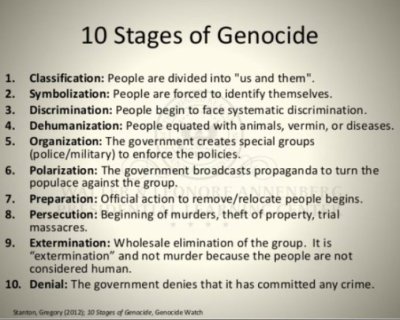 This battle is ending but the war is not over. The election of Donald Trump was the gravest threat to national unity since the Civil War. That threat is not over. That pot is still on the stove and may keep boiling for years, even after Trump is gone.
Liberals and progressives were caught unprepared, realizing that the usual Facebook debates yielded nothing but an unsatisfying catharsis while little children rocked themselves to sleep, too exhausted to cry. The usual tools of non-violent action in a democratic society rarely work with Trump. He laughs at petitions and protests only seem to galvanize him. Efforts to target complicit contractors and boycott them were only in the planning stages, and it wasn’t clear those would work. There was no well-defined strategy to hurt Trump economically.
Lessons from history, from Indian Removal or “extermination” in the 1800s to boarding schools in the 1900s, from the abolitionist movement in the US, to the ramp up to the Holocaust or Japanese internment, reveal more failures than successes. Most of the time, progressives were too conciliatory for too long until it was too late.
We won this battle, mostly, but the war continues. We are still on our back foot, reacting more than acting.


 Memories of the People