
Native Voice One recently featured a discussion on capitalism and socialism. Since I have a PhD in economics, I had to provide my take. Here it is.

Capitalism exists. For as long as there have been two neighbors willing to trade fish for bread, furs for leather, or obsidian for feathers, there has been capitalism. For as long as there has been money and people looking for the cheapest pair of shoes, there has been capitalism. It happens everywhere: in prisons, using cigarettes as the monetary unit; in strict communist countries, where black markets spring up; in school yards, where kids trade items from their lunch boxes. Capitalism is like air; it is and it will always happen.
But is it a good thing? Does it work? That depends. When economists and politicians say “the free market works”, they are presumably assuming it is a well-functioning free market. In economic theory, this assumes that there is “perfect competition” and “perfect information”. No business is getting a subsidy or facing tariffs that aren’t common to all. Every business has access to the same labor market, other inputs, and access to credit so they can borrow money to invest in new equipment. There are no monopolies. All consumers know exactly what they are paying for. There is no deceit and the playing field is level. That is a well-functioning free market. That almost never exists.
It almost never exists for a number of reasons. First, political power is used to intervene, often to benefit specific business interests in order to protect them from competition. Developing countries are restricted in how much sugar they can export to the US in order to protect a few influential families in Louisiana and Florida. US cotton farmers receive large subsidies, enabling them to out-compete cotton farmers in Africa. National borders restrict the flow of labor, resulting in drastically different wages from one country to the next. These are all deliberate manipulations to avoid perfect competition.
There is a second reason why perfect markets rarely exist. Rather than government manipulation of markets, the second reason stems from a lack of government regulations to keep the market functioning as it’s supposed to. For example, without rules, a company might attempt to save on costs by watering down their drinks, or using tap water but saying it is spring water, or other forms of deliberate deception. In the extreme, they could engage in labor abuse, such as child labor or slavery. If one company gains an advantage (perhaps thru nefarious means) they could use their power to drive out the competition, perhaps by temporarily selling at a loss. Left to its own devices, capitalism will destroy itself. Without rules and regulations that ensure fair play, abuses will occur and monopolies will arise. A competitive market will cease to exist. This is the inevitable end of laissez-faire capitalism; capitalism without rules.
The most recent example was the near-collapse of the world’s financial markets stemming from selling of sub-prime loans to US home-buyers. Here, the core assumption of “perfect information” was violated. Many of the home-buyers did not understand the terms of the loans. These loans were then packaged and re-sold to investment banks, but the true contents were deceptively hidden. From the home-buyers to the banks, no one understood what they purchased and could not evaluate the risk. The banks’ exploitation of poor home-buyers trickled up, spreading defaults from Main Street to Wall Street. Government regulations that required full disclosure, or appropriate insurance, or forbade adjustable-rate mortgages for low-income home-buyers, could have prevented the problem. The problem was not the free market; it was a poorly functioning market that violated key economic principles.
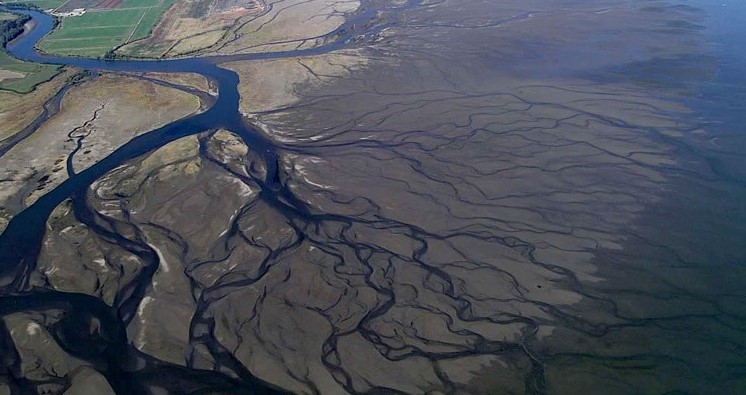
Capitalism is like a river that functions when it is flowing within its riverbed. Imagine a river that comes out of the mountains and flows across a flat low country to the sea. As a company looks for profits and a consumer looks for good deals, the river follows one rule: it flows downhill. As it leaves the mountains, it carries with it sediment, little bits of dirt suspended in the turbulent water. As the river comes into the lowlands, the water slows. The sediment sinks to the bottom. In this way, the riverbed slowly builds up. Left to its own devices, the bottom of the river will eventually build up enough that the river overflows a bank and takes a different route. It will split and braid, jumping banks and switching courses, fanning out into a delta, essentially destroying itself as a single river channel. This has important ecological and geological functions, but for our metaphor, the river has destroyed itself. As Bruce Springsteen says, “Like a river that don’t know where it’s flowing, it takes a wrong turn and it just keeps going.”
Capitalism is like this river. It needs good government regulations like levees to contain it and keep it on course—to prevent deceit, exploitation, and monopolies.
It is curious to note that many of those who call for capitalism are actually calling for an end to some of these good regulations that keep the market fair. Perhaps they are benefiting from a meandering side-stream; they want to manipulate the rules so they can manipulate the market. On the other side, many who criticize capitalism are actually asking for the level playing field that should be provided by a well-functioning market with perfect competition and perfect information. While people may toss out labels like “capitalism” and “socialism”, most political debates are over the levees and how high they should be.
Back to my original questions: is capitalism a good thing and does it work? As described above, it only works with government regulations to keep the market functioning with fair competition for all business and accurate information for all consumers. With that, it will work as a way to enable people to buy and sell.
There are some things, however, that capitalism is not designed to do and cannot be expected to do. It generally does a poor job at providing “public goods”, things like street lights, education, police and fire departments, sewage treatment, and the like. For more complicated reasons, it will not provide flood insurance or health care for many people. It does not protect the “commons”, free-access resources like fish in the ocean, from unsustainable use and exploitation. It does not prevent negative environmental externalities like pollution or global warming from economic activities. And it does not concern itself with distribution of wealth or social support systems. For all of these things, one needs government intervention to make rules or alter incentives. This may sound like a lot of restrictions, which some will call “socialism”, but there is still plenty of room for capitalism to thrive within these confines.

 Memories of the People