

Palm Springs is Cahuilla territory, specifically the Agua Caliente Band. This was apparent to everyone attending the Tribal Lands and Environment Forum, which is what I was doing there. The Agua Caliente Band were regularly acknowledged and thanked as the host tribe. And they welcomed us with song and dance.
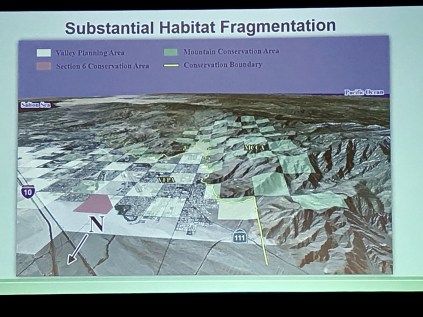
This is a screenshot of their Powerpoint presentation on bighorn sheep restoration, showing their reservation checkboard laid over the mountains and desert.
They have one of the few reservations in the state that was created in the 1800s. It’s big (over 50 square miles) and a bit unique— it’s a checkerboard created by a presidential executive order in concert with a gift of otherwise Cahuilla land to the Southern Pacific Railroad (the squares in the checkboard). It encompasses rugged mountains and canyons and flat desert floor, including a lot of prime real estate in Palm Springs. The history on that and how the tribe managed to keep it is a long and sordid story. Key to the tribe’s success and transition out of poverty was Chairwoman Vyola Olinger and four other women, who became the first all-women tribal council in the nation in 1954. Move over, Marilyn, there are some other powerful women in the history of Palm Springs (see page 60 of Me-Yah-Whae for their story).
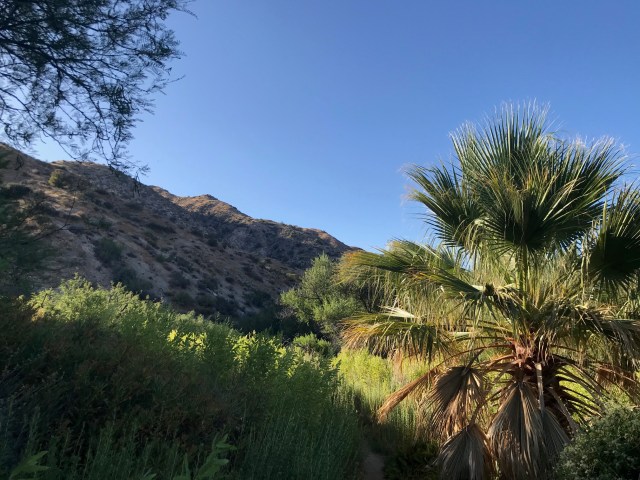
It hit 115 degrees when I was there. Historically, the Cahuilla would spend the summer in the cool shade of the palm oases in the canyons, descending to the hot springs on the valley floor in the cooler months.
At the conference, we learned about various initiatives of the Agua Caliente, such as their work with state and federal agencies to double the local population of desert bighorn sheep, and their multi-million dollar museum and cultural center under construction downtown around the hot springs that give both the tribe and the city their names.

Over 500 people from tribes across the continent attended the conference, as well as officials from state and federal agencies.
Ta’Kaiya Blaney (Tla’Amin First Nation) filled the hall with her haunting voice during an evening of cultural presentations. Here’s a snippet.
At the end, the Agua Caliente bid us farewell and safe travels.

 Memories of the People
Just returned from DC where the Museum of Native American History has an exhibit on Aqua Cliente and the ‘other’ Palm Springs. Timely and interesting.