
So my white friend is on a road trip and posting pics on Facebook. He likes history, so inevitably we start seeing those ubiquitous historical markers of pioneer struggles. Here’s just one example. Read it. It’s typical. The historical markers call it a “fight” and a “battle”, though in reality even the New York Times called it, at the time, “simply a massacre” of Native families by US soldiers. The marker admits they attacked “while the Indians were attempting to parley.” The marker itself is an echo of an attack without parley, for Nebraska didn’t even attempt to consult with the Lakota in developing the message. The National Park Service is better in this regard.
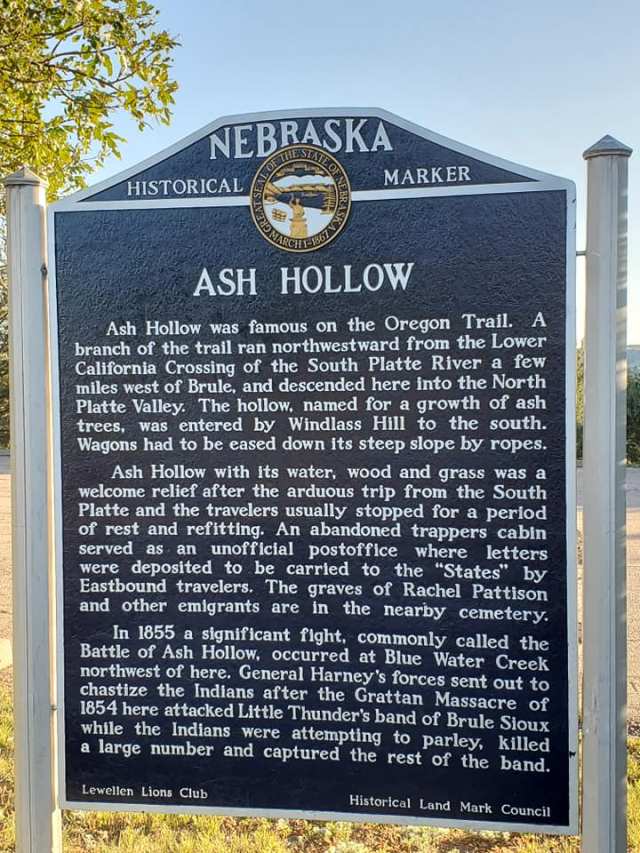
Here’s the part the historical markers (and Wikipedia) leave out. After the “chastisement”, Brig Gen Harney and his men returned to Fort Laramie. They left 86 dead but brought the scalps and vaginas cut from the victims to display as trophies. They also brought 70 captives, all women and children. The most attractive women were given to the officers; the remainder were, in Harney’s words, “shared out among the soldiers.” Nine months later, the fort began to fill with what the soldiers called “half-breed” babies. (Source: Drury, Claven. The Heart of Everything That Is, p.138-9)
 Memorials to the westward march, to “Manifest Destiny”, to “opening the land” pepper the nation. There are countless schools and parks with the name “pioneer”, a euphemism for ethnic cleansing and genocide, a way to celebrate it and erase it at the same time. And so countless towns, counties, rivers, states, forests, parks, schools and bridges honor Custer, Grant, Sheridan, Amherst, even Coronado, DeSoto, and of course Columbus. All ways to claim the land and claim the history and erase what really happened. These are in-your-face rebukes to Native children growing up in this land, ways to tell them they are second-class citizens.
The highest peak in the sacred Black Hills was named after Harney, until 2016 when it was appropriately officially renamed Black Elk Peak.

 Memories of the People