
“The Indians have wiped out Dungeness crab in south Puget Sound.”
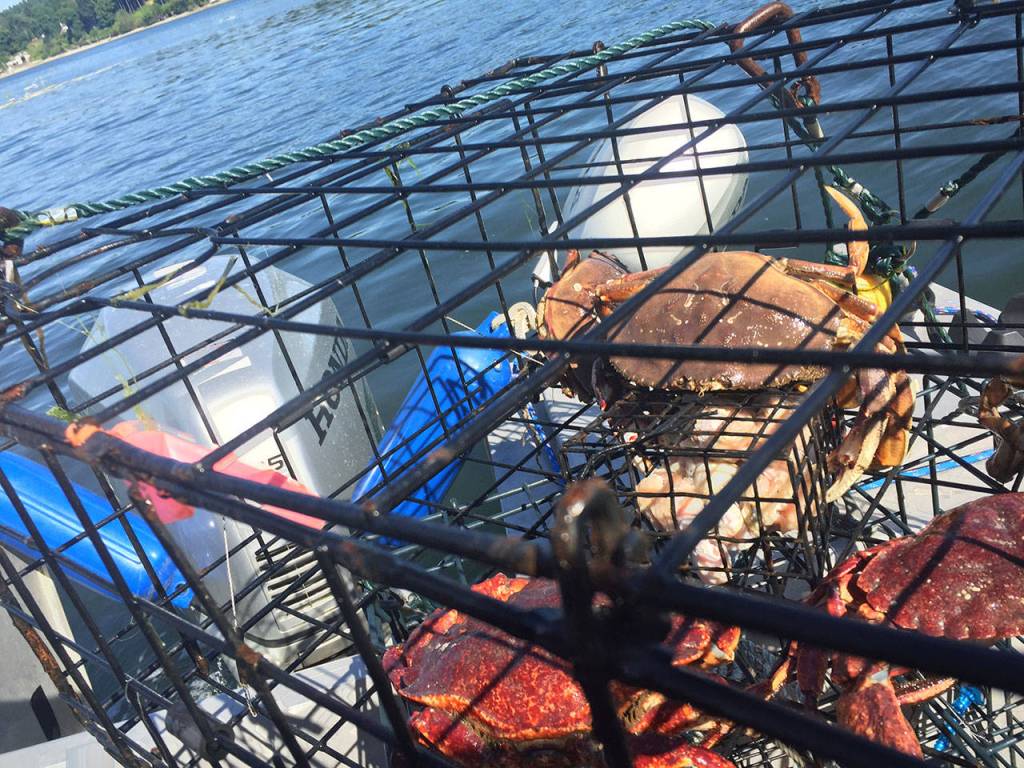
This is a common line among white people in the Pacific Northwest.
The story, besides racist, is factually wrong and biologically impossible. Here’s the real story:
- The Dungeness crab fishery, like all in Washington, is co-managed by the state and tribes. They’ve been working together for years.
- Yes, the Dungeness crab fishery collapsed dramatically in 2016 in the South Sound and has been closed since 2018.
- Prior to that, harvesting by whites and Natives had been roughly equal each year, though slightly higher by whites.
- The Washington Department of Fish and Wildlife categorically says, “Harvest pressure over the past decade is not the primary factor in the decline of Dungeness crab.” This is because only large male crabs may be taken and the remaining smaller males are more than sufficient to fertilize the females.
- It takes four years for the larvae to become adults. The larvae are spread by the currents throughout Puget Sound every year. But they don’t all survive. The crabs are doing fine the more north you go, despite the fact there is tribal fishing there as well. Whatever happened, it happened to the young crabs, preventing them from becoming adults, and it happened only in the South Sound prior to 2016.
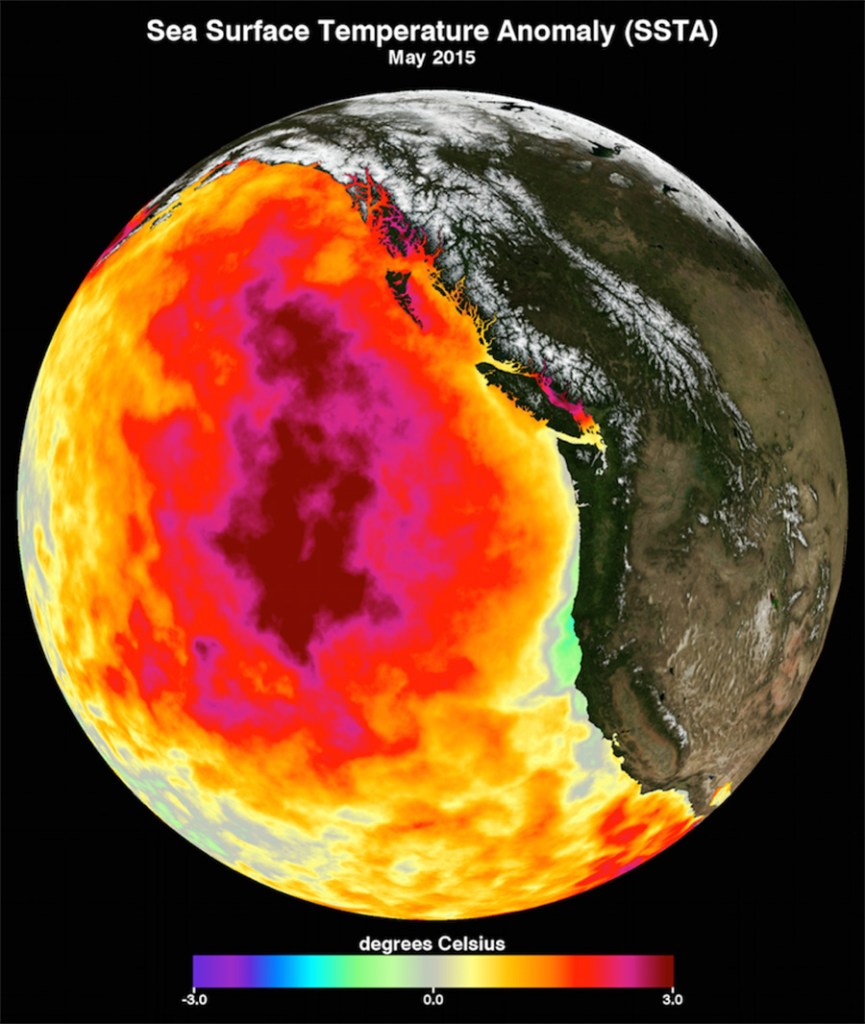
- Young crabs struggle to survive when water temperatures exceed 64 degrees. Enter “The Blob”, an anomalous warm water event in 2014 and 2015 in the North Pacific associated with globally warming oceans. Toxic algae blooms were widespread along the Pacific Coast. According the NASA researchers, “By the end of 2015, both blob and blooms had shut down much of the Pacific fishing industry and upended the marine food chain.” Water temperatures in the South Sound went as high as 66 for five months in 2015. This is the most likely explanation for the lack of adult Dungeness crabs in the South Sound beginning in 2016 and continuing to this day. [Additional note from 2023: More on climate change, the Blob and its impacts on Dungeness crab.]
This explanation was widely reported in the media, including the Tacoma News Tribune. Nevertheless, many believe an alternate theory: the Indians wiped them out. They say the same thing about salmon, a species decimated by hydroelectric dams, while the region enjoys cheap electricity. The Grand Coulee Dam alone on the Columbia River is estimated to have wiped out half the salmon in the Lower 48. The continuing decline of salmon has caused the area’s famous orcas to leave Puget Sound, maybe for good.
Besides diverting attention away from climate change, the notion that whites manage the land better than Natives is a way to assert white supremacy. It’s saying that, because only white people can behave responsibly, the land should be primarily for them.
It’s the same argument the Puritans used. They saw acres of woodland teeming with wildlife and assumed it was an unmanaged pristine wilderness. They saw the Narragansett move from a summer to a winter camp and the Wampanoag abandon their corn fields every few years and move to another site. They said “the Natives of New England enclose no Land, neither have any setled habytation, nor any tame Cattle to improve the Land by.” Only their planted fields are legitimately theirs, they said; “the rest of the country lay open to any that could and would improve it.”
The minister John Cotton provided the theological justification for land acquisition: the Natives had not fulfilled the first commandment, to subdue the earth and have dominion over it. Therefore, “In a vacant soil, he that taketh possession of it, and bestoweth culture and husbandry upon it, his Right it is.”
And then they named the land. The Columbia River is named after Christopher Columbus. Dungeness, first the location and later the crab, was a name bestowed by George Vancouver in 1789. Both the river and the crab are now reeling under human impacts.
Most of the local tribes signed treaties in 1855 (or whites marked an “X” on their behalf), giving away 99% of their lands but keeping hunting and fishing rights at their accustomed places. But even this the tribes had to fight for. In the late 60s and early 70s, Billy Frank Jr. and others fought the “fish wars” against the state and federal governments for the right to fish. In 1974, Judge Boldt issued his famous ruling, granting the tribes 50% of harvestable fish. Now the state, federal, and tribal governments co-manage the fisheries, but that still doesn’t sit well with some whites.

 Memories of the People
Here’s a great article summarizing the state of Indigenous subsistence rights in Alaska, mentioning Washington as a positive example of co-mgmt between tribes and states. https://indiancountrytoday.com/news/we-dont-exist-out-here-without-subsistence
November 2022: Here’s a story about how climate change is impacted Dungeness crab more than ever, and how tribes are helping to find solutions. https://www.adn.com/nation-world/2022/11/07/dungeness-crab-dying-on-pacific-northwest-coast-amid-low-oxygen-levels-linked-to-climate-change/