Across North America, Native communities are leading the battle against increasing oil development, fighting proposed new production, pipelines, and crude-by-rail routes. There is hardly a new proposal without indigenous opposition. Here is an update from the front lines.
Note: Many of these battles concern pipeline proposals to move diluted bitumen (aka
Canadian tar sands production continues to increase.
Proposed in the 2000s, the pipeline would have carried tar sands dilbit from Alberta to a marine terminal on the west coast of British Columbia, for export to Asia.
Proposed Kinder Morgan Trans Mountain Pipeline Expansion (STATUS: in court)
First built in 1953 and then augmented in 2008, the current Trans Mountain Pipeline carries 300 Mbpd (thousand barrels per day) of tar sands dilbit from Alberta to near Vancouver, British Columbia, primarily for local use.
The proposed expansion would add a second pipeline alongside the first one, dramatically increasing capacity to 890 Mbpd, primarily for export to Asia.
The proposal is currently being challenged in court by the Tsleil-Waututh, Suquamish, Kwantlen, and Coldwater First Nations, as well as the governments of British Columbia and local cities. The pipeline is supported by the federal government under Prime Minister Trudeau.
Swinomish crude-by-rail crossing (STATUS: in court)
In 2015, upon learning that many 100-car unit trains of Bakken crude were passing thru their reservation just a few hundred yards from their casino and hotel, the Swinomish field a lawsuit against BNSF to stop them.
Rail lines in close proximity to Swinomish casino and hotel.
This reduction in the monument is currently being challenged thru several lawsuits, including one filed by the Hopi Tribe, Navajo Nation, Ute Indian Tribe, Ute Mountain Ute Tribe, and Zuni Tribe.
Chaco Canyon proposed oil development (STATUS: pipeline cancelled; new oil leases deferred)
Since 2012, the fracking boom has led to oil development in the Chaco region, near Chaco Canyon National Monument and among many historic and sacred sites, as well as many Navajo homes.
Legacy of spills (right) in the Chaco region (archaeological sites on left).
On March 1, 2018, amid significant opposition by the All Pueblo Council of Governors and various Navajo chapters and activists, the Department of the Interior postponed the sale of additional oil and gas leases in the Chaco region, pending additional “cultural consultation”.
Proposed Keystone XL Pipeline (STATUS: in court)
The proposed Keystone XL Pipeline would be Phase 4 of the Keystone Pipeline network. The first three phases, built by TransCanada between 2010 and 2014, deliver 590 Mbpd of Canadian tar sands dilbit to refineries in Illinois or storage facilities in Cushing, Oklahoma, and 700 Mbpd from Cushing to the Texas Gulf Coast.
Phase 4, the Keystone XL, would duplicate Phase I, from Alberta to Steele City, Nebraska. It would carry 500 Mbpd of tar sands dilbit and would include and “on ramp” in Montana where Bakken oil could be added to it.
First Nations in Canada and several Native communities in the US have been involved in multiple protests against the pipeline. All of the various proposed routes cut through the Great Sioux Nation as defined in the Treaty of 1868, weaving between the Cheyenne River, Pine Ridge, Lower Brule, and Rosebud Indian Reservations.
Proposed Keystone XL route in South Dakota between various reservations.
The proposal was blocked by Obama in 2015, but revived by Trump in 2017.
In November, 2017, the Nebraska Public Services Commission became the final authority to grant approval for the pipeline. However, they only approved an alternate route, which now requires TransCanada to do additional years of new review and face new legal challenges.
The soonest construction is likely to begin is 2019, if ever.
Dakota Access Pipeline (STATUS: in court)
In the aftermath of the conflict at Standing Rock in late 2016 and the Army Corps’ unprecedented withdrawal of the Environmental Impact Statement (EIS) process due to Trump’s executive order, the question of the pipeline went to the courts. The pipeline was completed and began delivering Bakken oil in late spring 2017. Just weeks later, on June 14, the judge ordered the Army Corps to address numerous deficiencies in the woefully deficient Environmental Assessment (EA), the main permitting document. He also allowed the pipeline to continue running while the Army Corps revised the document.
Red Lake Enbridge Pipelines crossing (STATUS: pipelines must be removed)
Enbridge Lines 1 thru 4, carrying a total of 2,234 Mbpd of light synthetic tar sands oil, dilbit, and heavy tar sands oil, cross the Red Lake Indian Reservation. The pipelines were built between 1950 and 2002, without the permission of the tribe.
Amid protests by citizens of the Red Lake Band of Chippewa, in 2016 the tribal council reached a deal with Enbridge, swapping the 24 acres where the pipelines are in exchange for $18.5 million to be spent on 164 acres of adjacent land.
Proposed Bayou Bridge Pipeline (STATUS: construction halted by judge; in court)
Proposed in 2015, the Energy Transfer Partners pipeline would run across the bottomlands of Louisiana, including the Atchafalaya Basin, to connect refineries in Texas and Louisiana.
Protests, primarily by local residents and several local tribes, began in 2017. Energy Transfer Partners has attempted to hire the controversial private mercenary firm, Tiger Swan, that was used at Standing Rock, though the state of Louisiana has so far denied them a permit to work in the state.
The Army Corps approved the project, with just a Finding of No Significant Impact (FONSI) on an EA, on December 15, 2017. (Note: that’s completely absurd for a 160-mile long pipeline running through wilderness and waterways.) The company immediately began cutting a path through the swamp.
Yet another pipeline to move tar sands dilbit to the coast for export, this pipeline was proposed in 2013. At just under 3,000 miles, it would have been the would have been the longest pipeline in North America, transporting 1,100 Mbpd from Alberta east to refineries in Quebec and to an export terminal in New Brunswick.
Sometime long ago when I started birding, when I was seven, I read that the ultimate lifetime goal for birders in the US was to see 700 species in North America. For birders, “North America” was defined by the American Bird Association (ABA) and it meant North America north of Mexico, but not including Greenland. About 650 species occur regularly here, but there are others that stop by occasionally. The official ABA tally for this region, including all the rare vagrants ever documented, is about 1,000 species.
The Kougarok Road heading north out of Nome.
But 700 is the standard lifetime goal. When I was a kid, very few had achieved it. Now, thanks to the widespread popularity of birding, cheap air travel, and internet rare bird alerts, the ABA reports 410 people in the “700 club”—and amazingly 56 over 800 and three over 900. In first place is Macklin Smith, with 928, an English professor at the University of Michigan and one of the nicest people I’ve ever met.
Even beginning birders, with enough time and money, can get to 700 in a few years. Add an unhealthy dose of obsession, serious frequent fliers can reach 700 in a single “big year”. This has been done at least 20 times. It has taken me 45 years—and counting; I’m at 699.
It all started when my mom took me to the local library. I loved wildlife, nature, and simply being outdoors. I devoured Ranger Rick magazine each month. I needed a simple bird book to help me identify the birds coming to our backyard feeder in southern California. I found Birds: A Guide to the Most Familiar American Birds, the pale blue one with the robins on the cover. Though I checked it out seven times, for a total of 14 weeks, there wasn’t much in there that looked familiar. I quickly discovered its eastern bias; it featured illustrations of Blue Jay, Northern Cardinal, and Tufted Titmouse, and only made passing reference to western counterparts deep in the text. My only option was to move up to an “adult” field guide. I acquired the Golden Field Guide, Birds of North America, the old olive-beige one with the three buntings on the cover. It featured illustrations of just about every bird possible. Some were even described as “casual” or “accidental”, which I figured out meant really really rare in North America. But, most significantly, the book featured, in the index in the back, little empty check boxes next to the bird names. You could check off the ones you had seen!
If being in the wild appealed to the Cherokee side in me, perhaps it was my English blood that got excited about this sporting aspect. And I was really into sports trivia then. I followed USC Trojans football, LA Dodgers baseball, and AJ Foyt the Indy car driver. I knew lots of stats. I even knew that Georgia Tech once won a football game 222-0. I immediately went through the index, checking off birds for my list: Mallard, Red-tailed Hawk, Mourning Dove, Scrub Jay, House Finch, White-crowned Sparrow, Brown Towhee. I got up to about thirty. Desperate for more, I went to our garage freezer. My dad was a duck hunter and I knew there were paper-wrapped birds in there with labels. I found one with “Canvasback” scrawled on the white package. My nagging suspicions were later confirmed—you should only count free-flying wild birds; I walked that one back. I hit 222 fair-and-square with a group of Buffleheads on the Lincoln Memorial’s Reflecting Pool. I was 10. I passed Georgia Tech a few months later camping in the Sierra with my family: Green-tailed Towhee.
My mom connected me to the Los Angeles Audubon Society. I wrote a letter to Kimball Garrett at the Natural History Museum of Los Angeles County, informing him of my observations of communal nesting among House Sparrows at my swing set. He penned an encouraging reply. Another nice guy named Mark Detwiler took me on a field trip to the Salton Sea. Perhaps my “best bird” came in the summer 1979. I was with my mom and the Audubon group atop Mt. Pinos. We counted seven soaring California Condors and gasped as an eighth appeared behind us, flapping low over the treetops. There were only a few dozen condors left in the wild then. They were all brought into captivity eight years later, when I was in college.
Forty-five years is a delightfully slow climb, allowing me to savor each life bird. I’ve graduated from the check boxes in the back of the Golden guide to an Excel spreadsheet, but my favorite list is the one I keep in chronological order. I can remember the habitat, lighting, and smell in the air for almost each “lifer”, like having a mental photograph seared onto the desktop in my mind. Number 387 was a Wandering Tattler in the summer of 1994. It was way out on the Ocean Shores jetty. As the wind picked up and the horizontal drizzle intensified, the slick rocks became treacherous. I picked my way out past the turnstones, toward the end of the jetty, colder and wetter with each step. Sometimes you really have to work for your lifers.
On the Anhinga Trail with Caleb, 2001.
My path to 700 has paralleled a few other journeys. I’m happily married to a non-birding spouse. I raised three boys and coached soccer for 20 years. I’ve also been a full-time student or employee the entire time. With all these domestic obligations, I haven’t been chasing birds all over the country, although I did convert every family trip into a secret birding expedition. Number 515, Purple Gallinule, came from the Anhinga Trail boardwalk at the Everglades, while my oldest child ogled over a nest of baby alligators.
In Sycamore Canyon, Pajarito Mountains, with Luke, 2004
Rather than chase rarities, I preferred to find birds on my own in remote and unvisited places. This added an adventurous flair. On my first trip to southeast Arizona, with Michael Perrone and my nine-year-old son, I found many of my specialty Arizona “lifers” on the west side of the Huachucas. We camped while poorwills and trogons serenaded us. We looked out over a hundred miles of grasslands and canyons, but we never saw another person. The bird I remember most was a Buff-breasted Flycatcher in Scotia Canyon, number 551. I may be the only birder in the nation to get their life Buff-breasted Flycatcher in Scotia Canyon.
When I was homebound in Davis, California, with no way to add to my list, I developed alternative passions: first gulls and now Fox Sparrows. I learned to identify the various ages, forms, and subspecies so well that I passed from confused to confident to skeptical.
Bluethroat
Nevertheless, I’ve managed to hit the road some, and my list has continued to grow, providing some of the best memories of my life. Number 694 was a Bluethroat, actually quite a few of them, singing all around my tent on the edge of a stream along the Kougarok Road forty miles north of Nome. I was camping with that same son from the Arizona trip. He was now a college graduate—not a birder but also not one to turn down a trip to remote Alaska. For me, there’s nothing like a lifer on territory with vast virgin wilderness as far as the eye can see. But the brilliant songster from Asia had trouble competing with another noise– the sound from the ice breaking up and streaming past our campsite like ten-thousand tinkling chandeliers. Number 695 was the next day—a Red-necked Stint along the shore of Safety Lagoon. The bird was banded with an orange flag. I later learned it was tagged in southern Australia, 8,000 miles away.
About 9pm at our campsite along the Kourgarok Road, Alaska
Number 696 was a spectacular Swallow-tailed Gull from the Galapagos Islands, which turned up only a few miles from where I was helping another son move into the University of Washington. Number 697 was back home in California—a Red-footed Booby at Half Moon Bay. This bird was subject to my chasing rule. I don’t chase rarities unless my birding time at least equals my travel time. In this case, the booby was a two-hour drive away, so that’s four hours round-trip driving. According to my rule, I spent at least four hours birding before returning home. I confess I broke this rule once, for number 644, the Ivory Gull in Pismo Beach.
Citrine Wagtail
Number 698 was twenty minutes from my house, North America’s third record of Citrine Wagtail. I would have loved to have found this bird myself, but the re-find was nothing short of miraculous. The bird was reported a day late, and the location given was somewhere along the 6.4 km auto-tour route at the vast Yolo Bypass Wildlife Area. And it was blowing 60 mph. I’m thinking this was karma for the Taiga Flycatcher I missed years earlier, also twenty minutes away, because I was coaching a soccer practice. The Galapagos theme continued with number 699, a Nazca Booby I picked up after a work meeting in San Diego.
And so here I am, like at the end of a good novel, a little sad that it’s about to be over. Number 700 could come in several different ways: a rarity I find myself (that would be the ultimate), a rarity I chase (probably more likely), an expected bird I travel to find (there are a few of these left), or a split (please no). I’m back to Nome in a few months, as much for the beauty as for the birds, where Rock Ptarmigan still awaits me. But if there’s one rule that holds true about birding, it’s that when you go looking for one species, you find something else.
Wind River, a 2017 crime thriller set in the winter wilderness of the Wind River Indian Reservation, focuses on the on-going epidemic of assaulted and missing Native women and girls. Examples of the problem are not hard to find. The film received widespread positive reviews. Indian Country Today Media Network (ICTMN) called it “gripping, realistic and beautifully-crafted”. They praised the film for its use of at least 10 Natives as cast and crew, including Graham Greene, Gil Birmingham, and Tantoo Cardinal. The film touched on several Native issues, including interracial marriage, cultural differences, loss of cultural heritage, economic impoverishment, drug addiction, tribal government funding, resource extraction on BLM-leased land, and tribal sovereignty and jurisdiction. ICTMN described it as “the most realistic and respectful portrayal on film of the relationships between Native people and others outside ‘the rez.’”
This promo poster makes it clear just who is going to fix things in Indian Territory, and how important the Native actors are.
But ICTMN goes too far when it states, “This movie is not about ‘White Saviorism.’” The basic facts are this: that the two stars of the film are white, playing white federal agents. They solve the crime and avenge the murder of a Native girl. Jeremy Renner plays a true ally, raised and respected around the rez and connected to them through his ex-wife. The superpower that enables Renner to solve the crime is a stereotypical Native attribute: tracking—reading subtle signs on the trail to describe past events in detail. He is Sherlock Holmes-cum-Apache tracker. In the end, Renner’s character gives the advice of a seasoned warrior. Arguably, the plot would be more natural and less forced if the tracker was a Native resident of the rez, not a white federal agent that has to drive in from town. Ironically, the first Native man we meet on the reservation seems to have pretty good tracking skills, having read from the prints that a mother mountain lion and her two grown cubs attacked his steer.
Elizabeth Olsen plays Renner’s pretty blond partner; she’s from Fort Lauderdale and works for the FBI, an agency with a long and mixed history vis-à-vis tribes.
Graham Greene plays a reservation cop resigned to reliance on federal aid.
The Native actors are relegated to supporting roles—an ineffectual reservation cop, the near-suicidal father of the victim, and some drug-addicted suspects. Most of them don’t survive the film; the two white heroes do. The victim, ICTMN reports, is played by “Kelsey Asbille (Eastern Band Cherokee)”. But the Eastern Band Cherokee report no record of her, whose Native appearance comes from a combination of her white mother and Chinese father.
Yes, the film shines a light on an important Native issue, portrays life on a reservation, and employed more Native actors and crew than we’re accustomed to, but to look past the obvious “White Saviorism” is to accept crumbs from the table. It’s difficult to imagine African American reviewers praising a Wakanda saved by a “White Panther”, a white American contractor (possessing some stereotypical African American attribute), accompanied by his pretty blond assistant. The 1987 film Cry Freedom was criticized for focusing on white liberal reporter Donald Woods (played by Kevin Kline) while his friend Steven Biko (played by Denzel Washington) dies relatively early in the film. The movie was about apartheid, but a white liberal was the hero.
ICTMN’s willingness to overlook the white savior trope undoubtedly reflects the political clout of Natives today, but at least they mention the issue. Reviews by mainstream white reviewers completely missed it.
Variety and The Guardian focused on the plot twists. The Los Angeles Times praised its authenticity. Newsweek interviewed director Taylor Sheridan and went into some depth on the problem of violence against Native American women.
Jeremy Renner is a damn good badass hero. Apparently they couldn’t imagine a Native with tracking skills.
Roger Moore rated the film 3 ½ out of 4 stars, saying Wind River “has a somber, grim grace and the relentless forward motion of a thriller that isn’t just seen, but stared-down, because that’s the warrior code of the place and the people struggling to live there.” But the warrior Moore has in mind is not a Native hero; it is Jeremy Renner, “a man in his element — hand-loading the rounds he uses in his work tool — a rifle — watching the skies to know when the blizzard is coming, scanning the ground to see who ran off where. Just the way he mounts his snowmobile — riding on one-knee to sit up higher and see further ahead, hurtling along on the edge of reckless — embeds him in the character and the place.”
The New York Times review focused on the quality directing and acting, but then concluded with the peculiar statement that the film leaves us with “an expanded awareness that the justice done by the good guys in this film is not nearly sufficient with respect to the larger injustice done to Native Americans.” In short, the Times seems aware that the heroes were indeed white saviors; they just didn’t do enough to compensate for the past.
But it did not dawn on the Times, nor any of the other mainstream reviewers, that perhaps the greatest contribution a film could make is to at least let Natives be the protagonists of our own stories.
The mound builder myth justified the ethnic cleansing of the 1800s. It was seemingly put to rest in 1894 just as Native Americans were contained on reservations.
But the myth wasn’t dead. It festered in white corners of America. Thru the 1950s, one could find the “Lost Race of the Mound Builders” in county histories. Now the stories have returned, finding new life with the Nazis, neo-Nazis, alt-right, and other white supremacists.
In the early twentieth century, the various theories received a serious academic label, hyperdiffusionism, but a racist agenda was at their roots. Cultural achievements, such as pyramids, astronomical calendars, and evidence of complex civilizations in the New World were invariably attributed to Old World sources; almost never the reverse.
In 1937, German Nazi Edmund Kiss suggested that the incredible ruins at Tiwanaku, Bolivia were actually built by Europeans. He was associated with the Ancestral Heritage Research and Teaching Society (also called the Ahnenerbe), a pseudo-academic organization founded by Heinrich Himmler to investigate and construct the history of the Aryan race. They explored, for example, the use of the swastika in various past cultures. They later expanded their research to include infamous medical experiments on live humans.
The ancient ruins at Tiwanaku, Bolivia. Evo Morales, the first indigenous head of state in the Americas in 500 years, held his inauguration here.
As America turns brown, history turns white
The modern phase of the mound builder myth began in earnest in 1976 with the publication of Barry Fell’s America, B.C., which purported to show evidence of pre-Columbian druids in Vermont, Phoenicians in Iowa, and Celts across North and South America. While Fell was a professor at Harvard, his field was marine biology, not archaeology, epigraphy, or linguistics. This is typical of diffusionist authors; most were either amateurs or academics working outside their field of expertise.
The timing of Fell’s book mirrored patterns from the nineteenth century. It came on the heels of the Civil Rights movement and a reform of immigration laws which removed racial criteria for legal immigration and US citizenship. Native Americans were also organizing and demanding justice. In the few years before Fell’s book, the American Indian Movement marched on Washington, occupied the Bureau of Indian Affairs building in Washington DC, bombed the visitor center at Mt. Rushmore (at 4am), occupied Alcatraz Island for a year and half, and most famously occupied the hamlet of Wounded Knee for ten weeks. The FBI considered them domestic terrorists. It’s not obvious that Fell was racially motivated, but it is clear that his book became immensely popular just as people of color were immigrating to the US, speaking out, and voting in unprecedented numbers. As America was becoming more brown, some white Americans were seeking a history that was more white.
Perhaps inspired by Fell, the nineteenth century fad of fraudulent artifacts re-emerged in 1982 with the “discovery” of thousands of artifacts in Burrows Cave in southern Illinois, the heart of Mound Builder territory. The immediate dismissal of these artifacts as hoaxes only led credence to charges of a government cover-up.
In the late 1980s, Frank Joseph, formerly known as American neo-Nazi leader Frank Collin, wrote The Lost Colonies of Ancient America and edited Ancient American, a fringe magazine promoting a variety of mound builder-type theories. The magazine acknowledges that it is “not a scholarly journal” because it is too “revolutionary”. It boasts:
Each issue presents such otherwise neglected and even suppressed factual evidence demonstrating the lasting impact made on the Americas by Scandinavian Norsemen, Pharaonic Egyptians, Bronze Age Mediterraneans, Semitic Phoenicians, West Africans, Dynastic Chinese, seafaring Polynesians, and many other culture- bearers. All contributed to the birth and development of numerous and sophisticated civilizations which flourished throughout the American Continents in pre-Columbian times. It is the magazine’s purpose to show readers just how, when, and why these once powerful societies arose to great heights of cultural splendor and fell into deep obscurity as dramatic object lessons for our time.
At one point the magazine listed the “Ho-Chunk Nation, Dept. of Heritage Preservation” as advisors. The tribe had indeed “advised” Collin of his blatant biases with regard to their history. Upon learning how they were acknowledged, the Ho-Chunk demanded their name removed from the journal.
The Kennewick Man controversy
A reconstruction of Kennewick Man. His diet was determined to be mostly marine mammals, probably sea lions from nearby Celilo Falls.
The discovery of “Kennewick Man” in 1996 in central Washington created another public flashpoint. When scientists took the body for study, the Yakama, Umatilla, and other nations in the region viewed it in the context of a nearly two-hundred-year attempt to re-write the history of North America, complete with grave robbing, skull stealing, and the dismissal of Native perspectives. When one scientist reported that Kennewick Man’s skull had more “Caucasoid” than Native American features (although he was confusingly referring to the Ainu of Japan), the New York Times reported that “white supremacist groups are among these who used Kennewick Man to claim that Caucasians came to American well before Native Americans.” The more conservative Wall Street Journal seemed to offer support for the notion, saying: “Scientific evidence that American Indian ancestors may not have been the first inhabitants of the Western Hemisphere is a ticklish subject, not only for Indians but also, apparently, for the Clinton administration, exquisitely attuned, as always, to the nuances of multiculturalism.” Dead for nine thousand years, Kennewick Man was in the center of political-cultural war spanning nearly three centuries. In the end, DNA analysis showed that Kennewick Man was Native American and related to the very tribes in that region. After a long court battle, he was returned to them and re-buried at an undisclosed location in February, 2017.
Attacking John Wesley Howell
Smoot here echoes the title of a popular book from 1833. The Amazon description illustrates the conspiracy theory: “The book chronicles how our own archaeological history was silenced by powerful forces within the scientific, political and religious communities.”
The election of Barack Obama in 2008 was a watershed moment in racial politics in the US. Not only was he the first African American president, he was the first candidate to win the office with a coalition of women and people of color. In response, white supremacists organized like never before. This included embracing fringe archaeology whole-heartedly. Hyperdiffusionist interpretations were most popularly described in S. Edgar Smoot’s Lost Civilizations of North America, a 2010 DVD set advertised as “featured on the Glenn Beck FOX NEWS TV show.” The video bemoans the destruction of ancient earthworks as part of a conspiracy engineered by John Wesley Powell in 1894 to cover up the “true history of the Mound Builders”. (See this for a thorough debunking of Lost Civilizations.)
Beck’s promotion of the video betrayed pathetic ignorance and a lack of basic historical knowledge. Unfamiliar with John Wesley Powell, well-known as the first white man to pass through the Grand Canyon, Beck referred to him as “John Wesley Howell” several times before realizing he was incorrect. Both the DVD and webpages supporting it often show a few pictures of artifacts with inscriptions suggesting European ancestry, long discredited as hoaxes, and claim, “This is one of tens of thousands of artifacts found in North America”, implying a vast coverup. Beck embraced it and his followers ate it up. The marriage between hyperdiffusionists and the right wing of the Republican party was a perfect fit. They had other bedfellows as well. Mormons, whose religion emanates from the mound builder myth, and fundamentalist Christians seeking to “take back America” were attracted to its story. Beck provided the politicizing glue to bind these groups together. On Fox News, he concluded his endorsement by turning the concept of “erasure” on its head, claiming that modern scientists are seeking to “erase” the Mound Builders from history.
The alt-right rediscover “the long lost White America”
White supremacists joined the growing alt-history coalition in earnest the same year with the publication of White Apocalypse, a fiction novel about a massive cover-up of the “truth” about the Mound Builders. Its author is Kyle Bristow, praised by Fox News’ Bill O’Reilly and Sean Hannity. The book’s description on Amazon reads:
In White Apocalypse, a rogue anthropologist teams up with a proponent of the Solutrean Hypothesis and a fiery lawyer in order to reveal to the world the shocking truth that carries immense cultural, political, and racial significance: 17,000 years ago, white people immigrated to North and South America from Europe, and when the Amerindians arrived by crossing the Bering Strait roughly 12,000 years ago, the latter subsequently and systematically murdered the former. The powers that be will do everything that they can to prevent this controversial theory from being espoused by the trio, and during this action-packed, semi-fictional thriller, the epic adventure will take the advocates of historical revisionism from the forests of southeastern Michigan to a federal courtroom in Ohio, from the busy streets of Washington, D.C. to an Amerindian reservation in Virginia!
References to this alt-history are commonplace in the white supremacist echo-chamber today. They embrace the Ahnenerbe’s search for Aryan roots in the Americas, praising Nazi Germany, “No one nation has put such an effort before or since into re-discovering and documenting our prehistoric past. If this was Himmler’s only true contribution to history, then he should be considered a hero of our people.” A simple on-line search finds dozens of pseudo-archaeological books with titles like Lost Race of the Giants and Forgotten Worlds, and articles such as “The Lost White Tribes of Peru” and “Finding Identity and a Home in Future White America” with exhortations like this: “As long as diversity, multiculturalism and political correctness remain the focus of everything we say and do, then we will neither re-discover that long lost White America or even hope to create a new white ethnostate to save our oppressed millions.”
Delusion and justification
Aside from the tiny Viking outpost discovered in 1960 at L’Anse aux Meadows on Newfoundland, which dates to about the year 1000, there remains no evidence of European contact, let alone societal influence, in the Americas before the fifteen century. The mound builder myth of the 1800s, and the present Solutrean version of it embraced by white supremacists, is at once an attempt to erase, replace, and demonize Native Americans and their history. It fits alongside past biblical justifications for slavery in the South.
Anthony Aveni, a professor of astronomy and anthropology at Colgate University, observed with frustration, “I think there is, beneath all this dialogue about diffusionism, a will to believe in bizarre ideas…. It’s a belief that we can wish into existence the universe we desire and deserve.”
James Baldwin was more specific. He observed that white Americans have “this necessity of justifying a totally false identity and of justifying what must be called a genocidal history.”
Recent on-line commentary illustrates just how important this alternative history is to its proponents. Here is an example from a five-star Amazon review of Bristow’s novel:
“It will shake long held beliefs about who is really the native American and white guilt. If indeed Europeans were here first, then in fact we were the victims of genocide not the native American Indian. The very fact that our ‘establishment’ has deliberately hid the truth from us regarding these archeological digs, is itself evidence of a cover-up. Kyle is a bright man and a truth-teller. Any white person who is feeling even the inkling of white guilt should read this book. It will completely change your attitude about who and what is guilty of white genocide.”
Another comment from an on-line forum celebrated the Solutrean hypothesis:
“Just sick and tired of being called invaders of the Continent we discovered and were probably wiped out by the Olmecs or the Pre Clovis. Paybacks a biatch!”
To such twisted notions, Baldwin observes almost with compassion, “To be white [is] to be forced to digest a delusion called white supremacy.” When a white person looks at a person of color, Baldwin says, “what they see is an appallingly oppressive and bloody history known all over the world. What they see is a disastrous, continuing, present condition which menaces them, and for which they bear an inescapable responsibility.”
In the case of Native Americans, they see the ethnic cleansing, demonization, and genocides of the past, as well as the concentration camps of the present which have evolved into isolated bantustans of abject poverty. If they look more closely, they see that life expectancy at Pine Ridge Indian Reservation is less than that of Haiti and most of sub-Saharan Africa. And so they come up with an alternative history that erases the past and replaces it; a past that explains that whites have what they have today because they deserve it, and Natives have what they have because they deserve that.
Throughout the 1800s, most white Americans believed in an alternative history– that they were here first; they are the true “natives”, related to the Mound Builders; and that “redskins” have no real claim to the land.
Marietta, Ohio
Traveling down the Ohio River in 1788, General Rufus Putnam came upon what were clearly the remains of an ancient civilization. The earth was contoured into walls, courtyards, terraces, and mesas stretching in a geometric array over a hundred acres. At this site he founded the town of Marietta, Ohio.
The population of Cahokia around 1200 AD may have exceeded that of London.
In the coming decades, from Manitoba to the Gulf Coast, over a thousand ancient mounds and earthworks were documented, measured, and excavated by white settlers, amateur archaeologists, and academic researchers. There were conical pyramids with tombs inside, temple mounts with roads to the top, and earthworks in the shapes of people or animals. The Great Serpent mound in southern Ohio stretched nearly a mile in length, aligned with the solstices. Monks Mound near St. Louis is the largest earthwork in the Americas. Expertly constructed, it was part of Cahokia, a great city laid out on a grid using the four cardinal directions.
The Great Serpent mound, Ohio
By Putnam’s time, the mound complexes were hardly novel. Europeans had encountered them since DeSoto’s foray in the 1540s, sometimes still in use (by the Natchez). Nor were the mounds at Marietta unheard of. The French had explored and traded along the river since 1669. Valued for its trade opportunities with Native groups, they marked the spot with leaden plates in 1749. The British took over the trading rights in 1763 after the French and Indian War, a subset of the Seven Years’ War which spanned three continents. The Ohio River valley was one of its prime rewards. In 1783, with the Treaty of Paris, the river, and the various mound complexes along it, passed into the hands of the young United States of America, at least as far as white people were concerned.
In fact, Marietta was still contested land in 1788. When General Putnam founded it, he was leading a party of forty-eight men who had been given title to the land by the United States as payment for their services in the Revolutionary War. Meanwhile, the Delaware, Shawnee, Iroquois and a dozen other nations had allied two years earlier as the Western Confederacy, formed to meet the new US threat. And the Western Confederacy had the upper hand, inflicting large casualties upon US troops in what is now called Little Turtle’s War. Among the first structures built at Marietta were two defensive forts.
The myth of the Mound Builders
Cahokia today
Europeans had struggled to understand just who the Native Americans were for centuries. The Castilian Council of the Indies debated their rights as humans—or sub-humans—in 1520. The theory that they were descendants of the lost tribes of Israel started in 1650. But the mounds, evidence of a sophisticated ancient civilization, posed a new question. How could the “merciless Indian savages”, as the Declaration of Independence called them, have built such a complicated society?
The answer was the “mound builder myth”, which grew along with the United States’ territory. Here is the basic storyline: Before the red-skinned Indians there was “a race of people more enlightened than the present Indians,” to quote Francis Baily in 1796. They built the great mounds and ancient cities. These Mound Builders were of noble stock, probably descending from Europe or Asia. But then the Indians came. The savages either overwhelmed the Mound Builders by force or, worse, caused this great civilization to decline and disappear thru inter-racial marriage.
This was the foundation of an alternative history that gained widespread popularity and academic support in white society. The entire nascent field of archaeology and anthropology in America revolved around it. The growth of the myth was remarkably coincident with, and provided justification for, massive ethnic cleansing from the Midwest to the Gulf Coast, exactly where the mounds were located.
In 1787, just four years after the end of the Revolutionary War, Benjamin Smith Barton of Philadelphia posited that the Vikings must have constructed the earthworks, and then journeyed on to Mexico and Central America where they further perfected their art with even grander pyramids. Benjamin Franklin suggested the mounds were constructed by Hernando de Soto. As early as 1807, a school textbook supposed that the most “civilized” Natives, the Toltecs and Aztecs, had fairly recently arrived from Tartar. In 1817, just five years after Tecumseh’s pan-Indian revolt across the Midwest, William Cullen Bryant published a poem, Thanatopsis, offering an explanation for the fall of the ancient civilization:
The red man came,
The roaming hunter tribes,
warlike and fierce,
And the mound-builders vanished from the earth.
It was Putnam’s secretary who first mapped and excavated the historic sites at Marietta. In 1820, Caleb Atwater used these in the publication of the first book about American archeological sites, Description of the Antiquities Discovered in the State of Ohio and Other Western States. The final third of the book is dedicated to “conjectures” regarding the builders of the mounds. Appreciating that they represented a past great civilization, and unable to attribute such an accomplishment to the present “savages”, he concluded they were built by actual Indians– the “Hindoos” of India. A remarkable proportion of the early mound builder theorists were also local politicians. Atwater was later appointed by Andrew Jackson to negotiate with Native peoples.
The Book of Mormon played its part in 1830, relating that the mounds were built by refugee Israelites. These wayward Hebrews later split into two factions: one industrious and one ungodly. God punished the latter by turning their skins red. These “redskins” rose up and destroyed the others, leaving a sole survivor who wrote down his story on gold tablets to be discovered by Joseph Smith.
That same year white Americans were embroiled in a fervent debate over the fate of Native Americans. The Indian Removal Act passed by a slim margin and was signed into law by Andrew Jackson. The nation had consciously decided to ethnically cleanse most of the land east of the Mississippi. Jackson, in his State of the Union speech, described the mounds as “memorials of a once powerful race, which was exterminated, or has disappeared, to make room for the existing savage tribes.”
Three years later, in 1833, the myth took off in earnest with the publication of Josiah Priest’s best seller, American Antiquities. According to Priest, the Mound Builders were possibly Europeans, or maybe Egyptians, Israelites, Chinese, or Polynesians. As the book was gobbled up by the public, Georgia was auctioning off Cherokee land to white speculators.
One-third of the Cherokees died while white settlers took over their farms, cabins, houses, lumber mills, and other businesses.
In 1838, as the US Army was going door to door in northern Georgia, rounding up Cherokee families and herding them into stockades, the Grave Creek Stone was discovered a few hundred miles to the north. By the inscriptions on the rock, it appeared to show the Mound Builders had Gallic, Phoenician, and Hebrew origins. The Trail of Tears was underway and the mound country was being “reclaimed” by Europeans.
As skulls and skeletons were exhumed from ancient burial mounds and contemporary Native cemeteries, experts pronounced them proof that the Mound Builders were a separate, and superior, race. They claimed to find differences between the skulls of the Mound Builders and those of modern Native Americans. Samuel George Morton, professor of anatomy at the University of Pennsylvania, provided the science behind the supremacy of the white race in a three-volume set released between 1839 and 1849: Crania Americana, An Inquiry into the Distinctive Characteristics of the Aboriginal Race of America. With Native Americans, Morton wrote, the “eyes are black and deep set, the brow low, the cheekbones high, the nose large and aquiline, the mouth large, and the lips tumid and compressed. In their mental character the Americans are averse to cultivation, and slow in acquiring knowledge; restless, revengeful, and fond of war, and wholly destitute of maritime adventure. They are crafty, sensual, ungrateful, obstinate and unfeeling, and much of their affection for their children may be traced to purely selfish motives… Their mental faculties, from infancy to old age, present a continued childhood: they reach a certain limit and expand no further.” Simply put, Native Americans could not have built great works of civilization. Morton’s work also provided justification for the enslavement of “the negro”.
During the decade of Morton’s publications, the Comanche were pushing the white frontier backward in Texas, the Cayuse were wiping out the Whitman mission to stop white pioneers with measles, John Sutter was putting Maidu and Miwok heads on stakes at the gates of his fort, the US was inheriting Navajo land from the Mexicans, and the term “manifest destiny” was coined.
In 1847, the Smithsonian Institution put its stamp of approval on the myth with the publication of Ancient Monuments of the Mississippi Valley by Ephraim Squier and Edwin Davis. One of the seminal research papers in the field of archeology, it provided a thorough scientific description of hundreds of mounds, complete with detailed charts and maps. Their interpretation, however, was influenced by the politics of the times. They concluded that “as works of art they are immeasurably beyond anything which the North American Indians are known to produce, even at this day, with all the suggestions of European art…”
High school textbook, 1857
By the mid-nineteenth century, the mound builder myth was dogma, widely accepted across all levels of white society and taught to children in schools. A high school textbook from 1857 dismissed the notion that Native Americans descended from the lost tribes of Israel, concluding, “It seems far more probable that the first settlers of America were from Egypt. Their taste and skill in building would indicate this…” They migrated to North America via the Bering Sea, “to have erected the mounds and ancient works whose remains are still visible in the valley of the Mississippi…. The Indians of America must have sprung from later bodies of Asiatic adventurers…” The formerly Egyptian Mound Builders were either driven off by “less civilized bands” or mixed with them and then forgot “the mechanical arts through the allurements of forest life”, repeating a theme that, by relying on subsistence hunting and fishing, Natives were lazy, decadent and unbiblical, and would rather live off the land than farm it and build permanent settlements.
Ironically, at this time the removed Cherokee in Oklahoma were establishing some of the first institutes of higher education west of the Mississippi. Prior to removal, they had their own alphabet, printing press, newspaper, and a ninety percent literacy rate that exceeded that of the Georgia colonists that displaced them. Regardless, this alternative history left no doubt that the “Indians” were recent uncivilized interlopers with no legal or moral claim to the land.
As the mounds were measured and mapped and the myth repeated, there were some voices of caution and restraint. Both anthropologist Henry Rowe Schoolcraft and botanist William Bartram argued that the earthworks were likely constructed by ancestors of the current Native Americans. It is worth noting that Schoolcraft’s wife was half Ojibwe, and from her he learned to speak that language. Bartram was also sympathetic to Natives, having spent considerable time among the Seminole, who regarded him as a friend. In one unusual twist, an amateur archeologist in Ohio sought to humanize Native Americans by re-connecting them to the lost tribes of Israel, but his discovery of stones with Hebrew inscriptions, including the Ten Commandments, were quickly determined to be a hoax.
High school textbook, 1872
The myth persisted, migrating in space and time to the next center of ethnic cleansing. In January 1877, just six months after the Battle of the Greasy Grass (aka Custer’s Last Stand), with the Sioux War in full swing, mysterious tablets were discovered on a farm in Davenport, Iowa. Inscriptions and hieroglyphics on the tablets purported to link the Mound Builders to Europe. In October of that year, as the nation marveled at this ultimate proof of early white ancestry in North America, the US Army was chasing Chief Joseph and hundreds of Nez Perce families through the northern Rockies.
In 1882, Ignatius Donnelly revived Plato’s fictional continent in his wildly popular Atlantis: The Antediluvian World, using “scientific” proofs to assert its place in history. The people of Atlantis, the book asserts, were the Mound Builders.
In 1886, Geronimo and his small band of “off the reservation” Apaches surrendered, ending the last military conflict between the US and Natives in that era. At this point, nearly all Native Americans in the US were confined to concentration camps called “reservations”. In 1890, in a final act of violence, the 7th Cavalry exacted revenge on hundreds of elders, women and children at Wounded Knee for the crime of dancing. This is often called the “last battle” of the Indian Wars; in reality it was a massacre of innocents thirteen years after they had turned themselves in. The “red menace” was over and Custer was avenged.
Four years later, archeologists at the Smithsonian and Harvard’s Peabody Museum definitively put the Mound Builder myth to bed. All archeological evidence suggested that the Mound Builders and Native Americans were one and the same. The Grave Creek Stone, the Davenport tablets, and many other similar discoveries, were all frauds and hoaxes.
Colonialist archaeology
Famous explorer John Wesley Powell, in his role as Director of the Bureau of Ethnology, knew full well the racial motivations that made the mound builder myth so appealing. In 1894 he wrote in his annual report, “It is difficult to exaggerate the prevalence of this romantic fallacy, or the force with which the hypothetic ‘lost races’ had taken possession of the imaginations of men… It was an alluring conjecture that a powerful people, superior to the Indians, once occupied the valley of the Ohio and the Appalachian ranges… all swept away before an invasion of copper-hued Huns from some unknown region of the earth, prior to the landing of Columbus.”
The use, or misuse, of archeology to support a political agenda is not new. Trigger (1984) lists many examples of governments past and present directing scientists to focus on certain narratives, or restricting other lines of inquiry. Archeology, he demonstrates, is regularly used to support nationalist, colonialist, and imperialist agendas. In a parallel example to the US, he describes ancient ruins in Zimbabwe which were so impressive that white colonizers attributed them to Phoenicians. Trigger explains:
Colonialist archaeology, wherever practised, served to denigrate native societies and peoples by trying to demonstrate that they had been static in prehistoric times and lacked the initiative to develop on their own. Such archaeology was closely aligned with ethnology, which in the opinion of the general public also documented the primitive condition of modern native cultures. This primitiveness was seen as justifying European colonists assuming control over such people or supplanting them.
He considers the “lost race of the Moundbuilders” in the US as “the oldest and most complex example” of colonialist archaeology, which “identified the Indians not only as being unprogressive but also as having wilfully destroyed a civilisation; which made their own destruction seem all the more justifiable.”
Reference:
Trigger, Bruce G. 1984. Alternative Archaeologies: Nationalist, Colonialist, Imperialist. Man, New Series 19 (3): 355-370.
To understand Haiti’s poverty, one must understand its history. It is often said that Haiti is the poorest country in the Western Hemisphere. It is—and it’s not even close. This is because Haiti is also one of the most exploited countries in the world.
For an excellent history of Haiti, I recommend Paul Farmer’s The Uses of Haiti.
It started with massive genocide wrought by Spanish “explorers” in the 1500s. Virtually none of the natives survived. After that, the French took over the Haitian side of the island. Ships came from Africa loaded with slaves and left for Europe and the US filled with timber and sugar. Haiti was deforested by the 1700s. At the same time, it became the dominant trading partner of the US and Europe.
In 1803, the unthinkable happened. The slaves revolted, kicked out their French masters, and declared independence. This made Haiti just the second independent nation in the Western Hemisphere at the time, after the US. Europe and the US (where slavery was still legal) reacted with fear and condemnation and refused to recognize the upstart slaves. They cut them off, finally agreeing to let Haiti participate in world trade if they would first compensate the French for the loss of their plantations and slaves. So the slaves were made to pay compensation to their masters. The US regarding Haiti as a renegade slave state and did not recognize its independence until after the Civil War, a full sixty years after their independence.
Isabel’s Allende’s historical fiction is set during the Haitian revolution.
Ever since then, Haiti has been indebted to the US and Europe. The US has invaded or intervened over 40 times. In the 1800s, this often meant sending a military vessel to Port-au-Prince, demanding a large sum of cash from the national treasury, and sailing away. In 1910, the US precursor to Citibank simply purchased the Haitian national treasury. To protect its investment, the US military occupied the country from 1915 to 1934, in the process creating the Haitian military, whose sole purpose was and still is to repress its own people. Eventually, the US installed dictator François “Papa Doc” Duvalier, whose reign of terror kept Haiti safe for US businesses.
Haiti’s primary natural resource is no longer timber or sugar or coffee, but cheap labor. The US helped create this new slave economy by exporting, with approval from US-sponsored dictator Jean-Claude “Baby Doc” Duvalier, cheap (and subsidized) agricultural products. These were sold for less than what local Haitian farmers could sell for. Unable to compete, they abandoned their farms and moved to the cities to work in factories—factories owned by the Haitian elite (often US citizens living in Florida) or US companies, paying slave wages.
Aristide survived four assassination attempts. As one Haitian elite described, “Everyone who’s anyone is opposed to Aristide, except the people.”
The Haitian poor finally found a champion in the diminutive priest Jean-Bertrand Aristide, who was elected twice in landslides (despite the US funding $70 million to the opposition). See American doctor Paul Farmer’s article for the story of Aristide’s struggles with the Haitian military and its US supporters. Aristide had called for a cancellation of Haitian debt; for the French to reimburse Haiti, with interest, for the compensation to slave masters extorted from it in the 1800s (a total of $27 billion), for a clampdown on government corruption; for investments in health care and education; and for an increase in the minimum wage. This was too much for the West, and Aristide was driven from power by US-orchestrated coups both times. He was also the subject of an intense media campaign by Haitian elites opposed to him. (Reviews of books about Aristide on Amazon will either have a one-star or five-star rating, depending on who submitted it.) He lived in exile for years.
Since then, Haiti has been under a United Nations military occupation, whose role it is to keep from power both Aristide and right-wing military leaders involved in drug trafficking.
Today, Haiti is a de facto vassal state of the US, pressured by US trade and military policy to be nothing but a pool of cheap labor. 214 years after independence, it is still a nation of slaves, making t-shirts and cheap toys for US consumers.
Here, a Haitian pop star Mikaben plays an ode to his homeland:
Years ago, Chevron came out with a series of commercials showing them going out of their way to protect wildlife and the environment. These ads would invariably conclude with a question like, “Do people stop work on an oil pipeline so the Barn Owl nearby can finish raising its young?” and conclude with, “People do.”
It’s likely a lot of what Chevron was doing was mandated by the Migratory Bird Treaty Act (MBTA). In a memorandum quietly issued on December 22, 2017, the Trump administration essentially gutted it. Based on their new interpretation, “incidental take” is no longer prohibited. They re-interpret the Act to prohibit only the direct intentional killing of birds, such as shooting a robin with a gun.
Salt-encrusted Bufflehead from Searles Lake, where hypersaline water is discharged across four square miles of the desert.
They specifically exonerate those responsible for birds killed by cars, windows, power lines, cats, and various other non-point sources. The memo, however, is silent on the obvious and no doubt intended beneficiaries of this change in the law:
These have powerful lobbies that no doubt led to this decision. In fact, their lawyers probably wrote it. Actually, the memo was written by Daniel Jorjani, deputy solicitor at the Department of the Interior and personal adviser to billionaire Charles Koch.
[ADDED Jan 16: MBTA is being attacked on a second front: H.R. 4239, the SECURE American Energy Act, which includes an amendment exempting energy industries from the MBTA. This would potentially include even oil spills (although other laws, such as the Oil Pollution Act of 1990, are generally used to pursue damages in those instances). H.R. 4239 has already cleared the House Natural Resources Committee, though it has not yet been voted on in the full House of Representatives nor has there been action in the Senate. For more information, see Audubon’s Action Center.]
Ivanpah solar array, which kills between 2,500 and 5,700 birds each year.
It’s not clear what the full ramifications of this will be. It will be up to states to apply state laws to protect birds– but these are variable and notoriously weak in red states.
On the one hand, the MBTA was notoriously poorly enforced– it’s easy to think of many bird mortality events, usually through gross negligence (like hosing off a barge filled with hundreds of flightless Elegant Tern chicks), where the MBTA was never enforced. On the other hand, all the bird monitoring done at construction sites to protect bird nests is motivated by MBTA. Will all that now go away? Will people cut down trees with nesting Yellow-billed Magpies to build shopping malls? Now, people can.
———————————————————————————————————————
Added January 11– copy of a letter to DOI Secretary Zinke from former DOI/USFWS executive managers and leaders:
January 10, 2018
The Honorable Ryan Zinke
Secretary of the Interior
1849 C St., NW
Washington, D.C. 20240
Dear Secretary Zinke:
We are all conservation professionals who have formerly served the Department of the Interior, from 1971 to 2017: Deputy Secretaries, Assistant Secretaries, U.S. Fish and Wildlife Service Directors, and Migratory Bird Conservation Chiefs. We are former Senate-confirmed political appointees, of Republican and Democratic Presidents, and we are former career civil servants. We are, each and all, very concerned by the Interior Department’s December 22, 2017 announcement of a new legal memorandum (M-37050) reinterpreting the Migratory Bird Treaty Act.
This legal opinion is contrary to the long-standing interpretation by every administration (Republican and Democrat) since at least the 1970’s, who held that the Migratory Bird Treaty Act strictly prohibits the unregulated killing of birds. This law was among the first U.S. environmental laws, setting this nation and continent on the enviable path to conserving our natural resources. It was passed to implement the first of four bilateral treaties with countries with which we share migratory bird populations (Canada, Mexico, Japan, and Russia). Its intent, and your obligation in enforcing it, is to conserve migratory bird populations. Therefore, we respectfully request that you suspend this ill-conceived opinion, and convene a bipartisan group of experts to recommend a consensus and sensible path forward. We would be pleased to work with you, involving the public, toward this end.
The Solicitor’s opinion takes 41 pages to turn the MBTA’s straightforward language — “it shall be unlawful to hunt, take, capture, kill … by any means whatever … at any time or in any manner, any migratory bird” (emphasis added)— into a conclusion that the killing of migratory birds violates the act only when “the actor [is] engaged in an activity the object of which was to render an animal subject to human control” (emphasis added).
This is a new, contrived legal standard that creates a huge loophole in the MBTA, allowing companies to engage in activities that routinely kill migratory birds so long as they were not intending that their operations would “render an animal subject to human control.” Indeed, as your solicitor’s opinion necessarily acknowledged, several district and circuit courts have soundly rejected the narrow reading of the law that your Department is now embracing.
We recognize that, at the margin, reasonable people can disagree about the extent to which prosecutions under the MBTA are appropriate for activities that are not intended to kill birds, but which are reasonably likely, and indeed, quite likely to kill them. That is why, over the course of our collective careers, significant progress has been made in defining the limits of this law through refined interpretations, court decisions, and common sense. Over the years, career professionals and political leadership in the U.S. Fish and Wildlife Service (FWS), the Department of the Interior, and Department of Justice have adapted to ensure that the enforcement of this law fairly balances the goal of economic progress with the impact of that progress on bird populations.
Birds are, quite literally, the proverbial “canary in the coal mine.” How birds fare in the world indicates how all wildlife and habitat, and by extension human populations, will fare. It is not just poetry that led Rachel Carson to title her seminal work, Silent Spring. All the past administrations for which we have worked have struck a balance and worked diligently and in good faith with industries that had significant impacts on birds, such as oil and gas, coal, electric utilities, commercial fishing, communications, transportation, national defense, and others to reasonably address unintended take. It can be done. In fact, it has been done.
Successes in applying this law to minimize the incidental killing of birds are numerous. For example, we worked with oil producers to ensure that exposed crude oil waste pits were covered with nets to keep birds from landing in them. We worked to improve the techniques of commercial fishing to reduce the drowning of seabirds in fishing lines and nets. Additionally, government has used the law to work with wind energy companies to improve the siting of turbines to avoid and minimize the killing of birds. It has never been the goal to entirely eliminate the unintentional killing of birds, but when we find techniques and technologies that can be used at reasonable cost to protect bird populations, we had a responsibility to do so. Although the proximate reason for the passage of the MBTA may have been to protect migratory birds from unregulated market hunting (we note the absence of oil waste pits and wind farms at the time of bill passage), the ultimate reason was the protection of migratory birds.
The MBTA can and has been successfully used to reduce gross negligence by companies that simply do not recognize the value of birds to society or the practical means to minimize harm. Your new interpretation needlessly undermines a history of great progress, undermines the effectiveness of the migratory bird treaties, and diminishes U.S. leadership.
In a world where connections to nature are becoming ever more tenuous, birds are the wildlife that Americans encounter daily. Whether we are conservationists, birdwatchers, hunters, or just citizens who enjoy the natural world, conserving birds is a common interest. In addition, we must consider how our treaty partners in Canada, Mexico, Japan and Russia will view this new interpretation. Only a few years ago, the U.S. exchanged formal diplomatic notes with Canada reaffirming our countries’ common interpretation that incidental killing of birds was prohibited by the treaty.
Just as Theodore Roosevelt declared and demonstrated, we, as Federal officials, endeavored to strike a balance between development and conservation. We recognized that strict liability must be tempered with common sense notions of reasonable foreseeability and readily available alternatives. We are anxious to explore this balance and provide you with an approach that we can all support, and one that will continue the proud record of U.S. leadership in conserving birds.
We await your response.
Sincerely,
Lynn Scarlett
Deputy Secretary of the Interior
President George W. Bush
David J. Hayes
Deputy Secretary of the Interior
Presidents William Clinton and Barack Obama
Nathaniel Reed
Assistant Secretary of the Interior for Fish and Wildlife and Parks
President Richard Nixon
Donald Barry
Assistant Secretary of the Interior for Fish and Wildlife and Parks
President William Clinton
Lyle Laverty
Assistant Secretary of the Interior for Fish and Wildlife and Parks
President George W. Bush
Lynn Greenwalt
U.S. Fish and Wildlife Service Director
Presidents Richard Nixon, Gerald Ford, and Jimmy Carter
John Turner
U.S. Fish and Wildlife Service Director
President George H. W. Bush
Jamie Rappaport Clark
U.S. Fish and Wildlife Service Director
President William Clinton
Steve Williams
U.S. Fish and Wildlife Service Director
President George W. Bush
Daniel M. Ashe
U.S. Fish and Wildlife Service Director
President Barack Obama
John Rogers
U.S. Fish and Wildlife Service
Chief, Migratory Bird Management (1972-84)
Rollin Sparrowe
U.S. Fish and Wildlife Service
Chief, Migratory Bird Management (1984-89)
Tom Dwyer
U.S. Fish and Wildlife Service
Chief, Migratory Bird Management (1989-93)
Paul Schmidt
U.S. Fish and Wildlife Service
Chief, Migratory Bird Management (1993-99)
Assistant Director Migratory Birds (2003-11)
Jon Andrew
U.S. Fish and Wildlife Service
Chief, Migratory Bird Management (1999-2002)
Robert Blohm
U.S. Fish and Wildlife Service
Chief, Migratory Bird Management (2006-11)
Brad Bortner
U.S. Fish and Wildlife Service
Chief, Migratory Bird Management (2011-17)
CC:
The Honorable Rob Bishop, Chairman, House Committee on Natural Resources
The Honorable Raúl Grijalva, Ranking Member, House Committee on Natural Resources
The Honorable John Barrasso, Chairman, Senate Committee on Environment and Public Works
The Honorable Tom Carper, Ranking Member, Senate Committee on Environment and Public Works
The Honorable Lisa Murkowski, Chairwoman, Senate Committee on Energy and Natural Resources
The Honorable Maria Cantwell, Ranking Member, Senate Committee on Energy and Natural Resources
The Honorable Ed Royce, Chairman, House Committee on Foreign Affairs
The Honorable Eliot Engel, Ranking Member, House Committee on Foreign Affairs
The Honorable Bob Corker, Chairman, Senate Committee on Foreign Relations
The Honorable Ben Cardin, Ranking Member, Senate Committee on Foreign Relations
The Honorable Rodney Frelinghuysen, Chairman, House Committee on Appropriations
The Honorable Nita Lowey, Ranking Member, House Committee on Appropriations
The Honorable Thad Cochran, Chairman, Senate Committee on Appropriations
The Honorable Patrick Leahy, Ranking Member, Senate Committee on Appropriations
Mr. David Bernhardt, Deputy Secretary of the U.S. Department of the Interior
Ms. Aurelia Skipwith, Deputy Assistant Secretary, Fish and Wildlife and Parks, U.S. Department of the
Interior
Mr. Greg Sheehan, Director of the U.S. Fish and Wildlife Service (Acting)
In 1909 the University of Wisconsin lacrosse team adopted the first Native mascot. By the 1950s, they were commonplace. Beginning in 1968, Native Americans condemned the use of these mascots, arguing that they are based on stereotypes that “have a negative effect on contemporary Indian people… (and) block genuine understanding of contemporary Native people as fellow Americans,” to quote the US Commission on Civil Rights in 2001.
Many are surprised and confused that Natives object to Native sports mascots. After all, the Irish at Notre Dame embrace the Fighting Irish and the Lutherans at Pacific Lutheran are the Lutes. The key thing is this: those are mascots chosen by their own people groups. For most of the schools with Native mascots, Natives represent less than 2% of the student body. In nearly every case, the mascot was chosen by colonizing whites. What many of the papers presented here are suggesting is that these schools, by adopting Native mascots, are re-defining the collective white “we” to include Natives. Natives are part of “our” history. “We” were all part Native.
It sounds inclusive, but there are several problems with this re-defining of history. First, it absolves white society for genocide and ethnic cleansing. It “honors” noble savages, who like buffalo, had to be sacrificed to make way for modern white civilization; it was sad but inevitable. And now the issue is resolved.
Second, it is inherently in conflict with contemporary Native voices that object to it. Modern Natives, still in conflict with the larger white society, don’t fit in this story. It is not resolved.
Third, the mascots are usually wrapped around violent and savage stereotypes.
And fourth, most of the time the teams get it all wrong, like when they use Sioux medicine man headdresses to represent ethnic groups from coast to coast.
Arguments between protesters and defenders in stadium parking lots, as well as on-line discussions, often become so heated that it’s fairly obvious there’s a lot more than a sports team mascot on the line, for both sides.
The most prominent modern controversies have involved the Washington Redskins, Cleveland Indians, University of Illinois Fighting Illini, Florida State Seminoles, and University of North Dakota Fighting Sioux. The issue also affects thousands of professional teams and schools across the nation.
The Winters High School logo looks a lot like this one. This anti-mascot symbol comes from Wisconsin.
The arguments in defense of these mascots are fairly similar from case to case. See, for example, this editorial and associated on-line comments from Winters, California, regarding the logo for the Winters High School Warriors. These pro-mascot arguments don’t vary much from those used to defend the Washington Redskins or Cleveland Indians.
The main arguments by Native mascot defenders are:
The mascot is not really causing any problem; there is no “problem” to be solved.
It’s not meant to be racist; it’s about tradition and local pride.
The mascot actually honors Native Americans.
Among Natives, polls show the anti-mascot opinion is a small minority. Most Natives are not offended. Some Native Americans are fine with it. Indian activists that are anti-mascot are “out of the mainstream.”
Few people care about this issue because the protests are small, so it’s not really a problem.
Natives should spend their time focusing on real problems like poverty and alcoholism.
An alternative logo for the Chicago Blackhawks, developed by a Native artist. The team continues to use the logo in the upper left.
These are often accompanied by other belittling comments, such as: replacement mascots are “stupid,” this is “just another social tirade,” “fuck you,” and “it’s some sort of left-wing fake guilt trip.” That last comment is a bit prescient, hinting at the settler colonist power dynamic that underlies this issue.
Native leaders, writers, and activists are fairly unified in their opposition to these mascots. A quick review of indiancountrymedianetwork.com, nativenewsonline.net, or www.indianz.com will reveal scores of articles and editorials opposing the use of Native mascots. That said, there are a few exceptions. These usually occur when the mascot involves a specific local tribe and the school or university has consulted that local tribe and reached an agreement regarding usage protocol. The agreement between the Florida State Seminoles and the Seminole Tribe of Florida is one such example (although King
and Springwood 2000 argue this “agreement” is simply politically expedient and a product of the disproportionate power dynamic between the two parties). Another agreement, between the Rogue River School District and the Confederated Tribes of Siletz Indians, follows Oregon state law that requires schools to consult with local tribes regarding Native mascots. As part of the deal to retain their mascot, the school district is adding tribal history to fourth- and eighth-grade curriculums.
There is an extensive literature of academic investigations of Native mascots and their impact. A summary of most of the papers is provided here, in chronological order:
Banks, D.J. 1993. Tribal names and mascots in sports. Journal of Sport and Social Issues 17(1): 5-8.
This article, by well-known American Indian Movement (AIM) activist Dennis Banks, provides a historical introduction to the topic, beginning with the respectful approach of the Stanford Indians in the early 1900s, the increase in racist fan behavior in the 1950s, and the beginning of Native protest in 1970, coupled with Stanford students dropping the Indian mascot in 1972.
Davis, L.R. 1993. Protest against the use of Native American mascots: A challenge to traditional American identity. Journal of Sport and Social Issues 17(1): 9-22.
Native mascots often evoke offensive slogans during sporting events.
Based on interviews conducted during large protests against the Atlanta Braves and Washington Redskins during the 1992 World Series and 1993 Super Bowl, Davis describes Natives concerns centered on 1) aggressive “savage” behavior stereotypes, 2) a focus on the past that ignores Natives today, and 3) impacts on the mental health of children. Davis argues that the “vicious resistance” of mascot supporters is because they consider the anti-mascot position un-American and a threat to their “mythology of the American West,” where the genocide of Natives is dismissed and the establishment of “American civilization” is justified and glorified. Davis also argues that the rise in Native mascots in the 1920s, especially among men’s teams, is associated with White American male assertions of “hegemonic masculinity.”
Slowikowski, S.S. 1993. Cultural performance and sport mascots. Journal of Sport and Social Issues 17(1): 23-33.
Slowikowski explores sport mascots through an anthropological lens, focusing on the rituals surrounding a sporting event and linking them to paleolithic hunting rituals of the past, where hunted animals were thanked and respected, providing good luck for the next hunt. That which was destroyed is now revered. From this perspective, Native mascots represent trophies of conquest, a nod to the “hunted,” and thus make the hunt (or the past) legitimate. This “imperialist nostalgia” uses mascots as a kind of “cultural souvenir.” As such, it is important that the mascots are seen as authentic—and not challenged by modern Natives.
Wenner, L.A. 1993. The real red face of sports. Journal of Sport and Social Issues 17(1): 1-4.
This article introduces the other articles from this journal issue, discussing how White males have defined how history and cultural stories are told, and that now this is finally changing—through either business or altruistic motives.
The Florida State Seminoles’ “Chief Osceola”
This paper compares the use of Native and Confederate imagery at Florida State and Ole Miss, respectively. The authors describe an array of demeaning war-mongering and “savage” stereotypes associated with the Seminole mascot (e.g., an official booster club is called the Scalphunters), and explore its approval by one group of Seminoles, which they suggest is a matter of political expediency.
“When [FSU mascot Chief] Osceola leads the FSU football players onto the field, he signifies armed resistance, bravery, and savagery, and his appearance builds on the prevailing understandings of Indianness that construct Native Americans as aggressive, hostile, and even violent… It draws on the Euro-American knowledges of Native American cultures, misconceptions that paint them as savage warriors removed from the mores of civilization and eager for combat. To characterize the indigenous Seminole people or any other native nation of North America as warlike or bellicose dehumanizes and demonizes them. More important, it disregards both their cultures and their histories. It reduces them to a single aspect of life, namely, war, ignoring the numerous other experiences and activities more valued than war. Osceola, as portrayed at FSU, thus offers a stereotypical representation of Native American cultures and histories informed by racist notions and romantic sentiments.”
Ole Miss football game, 1997
Next, they illustrate the stunning display of racial power at Ole Miss (complete with Confederate flags and students dressing as slave plantation owners) and the recent opposition to it, often led by a White football coach concerned for his Black players. The authors argue that “the nostalgic reincarnation of the Seminoles and the Confederacy not only fashion the self through mimicry (and mockery) of the other but they also restage racial hierarchies.” They describe the importance of these racialized symbols to neoconservatives, who defend the images with “denial, obfuscation, and even a refusal to acknowledge the racial components underlying these mascots.” The involvement of administrators and politicians (in mandating keeping racial mascots) suggests that “sports spectacles have become a fundamental node in the articulation of a defensive, reactionary rendering of Whiteness.”
Black, J.E. 2002. The “Mascotting” of Native America: Construction, commodity, and assimilation. American Indian Quarterly 26(4): 605-622.
A Florida State (FSU) graduate explores the use of mascots to control Native Americans “by constructing Indigenous peoples as generic [e.g. all tribes are the same]” and “reducing them to appropriated commodities” via the branding and marketing of items for sale (e.g. Chief Illiniwek toilet paper at the university book store) and materials designed to promote university identity with the “tribe.” Focusing on FSU and the University of Illinois, Black argues that turning Natives into “souvenirs” allows Whites to control their story and history. Because most Americans do not regularly encounter Native Americans, the stereotypes associated with these mascots constitute most of their “knowledge” of them. Native protests, however, challenge these by offering an alternative view.
“Native groups (re)claim their identity by countering the clothing of “wannabe” fans with true dress; performing authentic and ritualized drum beats and singing mythic Native songs to juxtapose fans’ tom-tom banging and chanting of the infamous “oh-oh-ohhh” of the Florida State war chant; and demonstrating Native peace–versus fan-conceived red savagery-by protesting with words, not violence.”
King, C.R., E.J. Staurowsky, L. Baca, L.R. Davis, and C. Pewewardy. 2002. Of polls and race prejudice: SportsIllustrated’s errant “Indian Wars”. Journal of Sport and Social Issues 26(4): 381-402.
The first page of Sports Illustrated’s controversial article.
This paper provides a critical review of an article in the March 4, 2002 issue of Sports Illustrated (SI) that argued that Indian mascots are not offensive because most Native Americans support them. The authors point out the biased choice of photographs (mostly White college students in “redface” and no contemporary Natives in normal dress), sensationalistic headlines, complete lack of historical context (e.g. information about the real Osceola), and incomplete reporting (e.g. not all Seminole tribes support FSU). With respect to their poll of “Native Americans,” SI refused to provide any details regarding methodology. The authors’ review of other poll results and the challenges involved in surveying Native populations makes the SI poll seem unreliable. They also question the notion that “popular opinion can settle troubling questions about prejudice, power, and privilege.” They provide a historical review of sports mascots, noting that Indian-themed mascots are second only to animals in popularity, both being chosen for stereotypical aggressiveness.
“Although other ethnic groups have been occasionally used as mascots, these mascots differ from Native American mascots in several ways. The mascots named after other ethnicities are often (a) a people that do not exist today (e.g., Spartans); (b) less associated with aggression (e.g., Scots); (c) selected by people from the same ethnicity (e.g., Irish Americans at Notre Dame); and (d) not mimicked to nearly the same degree.”
They also observe that while “many U.S. citizens see the mascot issue as emerging “out of the blue,” many Native American organizations see the elimination of such mascots as part of a larger agenda of reducing societal stereotyping about Native Americans (in the media, school curriculums, and so forth) and informing the public about the realities of Native American lives. An increase in accurate information about Native Americans is viewed as necessary for the achievement of other goals such as poverty reduction, educational advancements, and securing treaty rights.”
The authors address the argument that Indian mascots “honor” Natives by exploring the “positive” stereotypes associated with the mascots. In reviewing the “bloodthirsty savage” and “noble savage” stereotypes, the authors state:
These two stereotypes convey several problematic notions, including that Native Americans (a) are mainly a people who lived in the past; (b) have not adopted contemporary lifestyles; (c) have a single culture (rather than coming from many different native societies with many different cultures); (d) all were and are involved in fighting, are especially spiritual, and are deeply connected to nature; and (e) that non-Native Americans were and are less involved in fighting.
The authors also list three reasons why some Natives may support the mascots: 1) the stereotypical attributes are sometimes positive; 2) constant exposure to these stereotypes and pressure to acculturate; and 3) economic necessity, seeking to capitalize on the mascots.
The authors then go on to argue that Native mascots in an education setting create a hostile environment in violation of the Civil Rights Act, describing the case of Charlene Teters, Spokane, at the University of Illinois. They conclude by stating that the SI article is an example of White hegemony trying to control the battlefield of ideas.
Baca, L.R. 2004. Native images in schools and the racially hostile environment. Journal of Sport and Social Issues 28(1): 71-78.
Baca begins by illustrating that “American Indians are treated differently than other minority races,” in that stereotypes, caricatures, and terms that would be offensive and publicly unacceptable for other races are widespread when it comes to Native Americans. Baca then focuses on Native students that attend schools with Indian mascots and the legal recourse they may have under the Civil Rights Act to sue schools that create a “racially hostile environment.” The paper notes “that as of this writing, there has been no successful administrative or court challenge to the use of faux or caricatured American Indian images in schools under these statutes.” The paper explores the legal criteria and the case of Charlene Teters at the University of Illinois, who faced verbal and physical attacks but still lost her case that the environment was “racially hostile.”
Farnell, B. 2004. The Fancy dance of racializing discourse. Journal of Sport and Social Issues 28(1): 30-55.
A white student dressed as “Chief Illiniwek” at a University of Illinois basketball game.
Farnell examines statements from supporters of the Chief Illiniwek mascot of the University of Illinois, and especially two representative letters written to the University, seeking the “cultural logic” that allows universities, ostensibly committed to diversity, to promote racializing narratives. Farnell reviews the history behind the “fancy dance,”
which emanated from Wild West Shows and has evolved into modern competitive powwow dancing, but is not associated with Illinois culture. The same can be said for Chief Illiniwek’s Lakota regalia and the “tom-tom” music. Farnell links the students’ fascination with the dance to early-American revulsion and fascination with Native customs and celebration, where “wild dancing and exotic rituals” signified things wild, savage, spontaneous, hypersexual, warlike, and primitive. Such rituals were banned in the late 1800s, only to reappear in Wild West Shows and then in ‘Whiteface’ on football fields. Farnell observes, “The colonialist message was clear: dancing for the entertainment of a White audience was acceptable, but dancing for spiritual and cultural purposes on the reservation was not.”
The aim of Native mascots, argues Farnell, is to objectify Native Americans, define them, and justify the current ‘White public space’ and economic and political order, in which Natives have been removed from their lands and are now outsiders. From the beginning of the Chief Illiniwek mascot, the Chief has modeled “good Indian” behavior: “The drama played out on the football field during the football game against Penn State in 1926, when Chief Illiniwek first appeared and shook hands with ‘William Penn,’… supplies a mythology that reconstructs Indian/White relations as friendly, equal, resolved.” Through impassioned support from alumni, students, and politicians, the University of Illinois effectively creates “a ‘White public space’ in which any contemporary Native American presence is [considered] disorderly.”
King, C.R. 2004. This is not an Indian: Situating claims about Indianness in Sporting Worlds. Journal of Sport and Social Issues 28(1): 3-10.
In this introduction to a special issue of the journal, King provides an overview and literature review to date. King’s opening paragraph asserts that mascots are “White male students… playing Indian” and notes there are “1,400 educational institutions in the contemporary United States that continue to use such anti-Indian symbols as masks and mirrors, transforming Native Americans into totems (for luck and success on the playing field), trophies (of conquest and the privileges associated with it), and targets (directing hostility, animosity, and longing onto indigenous bodies and societies).” King says that previous analysis (e.g. the papers summarized above) have focused on three key themes:
They have interpreted Native mascots as “misappropriations and misinterpretations, rooted in antiquated, fictitious, and racist, if often romantic, notions of Indianness.”
They have analyzed the historical context that have permitted and promoted pseudo-Indian symbols, which position contemporary Natives as “silenced, fixed in the past, opposed to civilization, ranked, studied, problematized, condemned, reinvented, misunderstood, [and] misappropriated” while at the same time assert the dominance of White Americans.
They have examined the rationale behind the logic and arguments of mascot supporters, focusing on the conceptions of “honor, masculinity, [and] racism”.
King adds to this an exploration of notions of “Indianness,” stating, “It is as if occupying the indigenous other (both fans dressing in feathers and mascots performing at sporting events), Euro-Americans sanction their claim to occupy the land.” The presumed Native traditions, however incorrect, become ‘their’ traditions. In response, Natives have sought to assert their sovereignty by defining themselves differently than these mascots and their institutions. King lists some organizations and government agencies that have come out against Native mascots.
Springwood, C.F. 2004. “I’m Indian too!” Claiming Native American identity, crafting authority in mascot debates. Journal of Sport and Social Issues 28(1): 56-70.
Springwood explores White claims to Indianness that are made in the context of mascot debates to both support their argument and “to obscure, if not dissolve, Native voices.” Drawing from his own experience at the University of Illinois, Springwood describes a number of examples of pro-mascot activists claiming to be “part” Indian, seeking to legitimize their position and de-legitimize Native opponents. He also examines a 1995 incident in which the university and a pro-mascot television crew approached Peoria tribal leaders, while offering scholarship money, to make statements in support of the mascot. The Peoria leaders gave tepid support, which changed to opposition in future years as they learned more about the mascot.
Staurowsky, E.J. 2004. Privilege at play: On the legal and social fictions that sustain American Indian sports imagery. Journal of Sport and Social Issues 28(1): 11-29.
Applying legal scholar Felix Cohen’s concept of “transcendental nonsense” to Native mascots, the article concludes with recommendations for how teachers, corporate executives, and government leaders can move beyond Indian mascots and team names toward a more meaningful understanding for both American Indians and non–American Indians. “American Indian sport imagery is, in a literal sense, a concrete example of the loss that all Americans experience by not having an opportunity to truly know about the history and contemporary experiences of American Indians in their rich span and scope.”
Strong, P.T. 2004. The mascot slot: Cultural citizenship, political correctness, and pseudo-Indian sports symbols. Journal of Sport and Social Issues 28(1): 79-87.
A Cleveland Indians fan holds up a poster of “Chief Wahoo”.
Strong explores “this blatant form of racist representation” by focusing on the double-standard between, for example, Chief Wahoo, and a satirical cartoon image of a smiling black man created by Spike Lee to illustrate a point—so successfully that the image was censored by the New York Times, while Chief Wahoo was routinely published by the paper. Strong focuses on the narrow “cultural citizenship” afforded to Natives, while stating that “the charge of political correctness is a common way of dismissing claims for recognition on the part of subordinated groups—a way of trivializing their interests, visions, and aspirations.”
Spike Lee’s satirical cartoon of a black man, which the New York Times refused to publish.
Staurowsky, E.J. 2007. “You know, we are all Indian” Exploring White power and privilege in reactions to the NCAA Native American mascot policy. Journal of Sport and Social Issues 31(1): 61-76.
In August 2005, the National Collegiate Athletic Association (NCAA) announced a policy that would require colleges and universities with Native American mascots and imagery to refrain from displaying those during NCAA-sponsored events. The policy further stated that institutions with this imagery would be ineligible to host NCAA championships starting in 2006. The action was so controversial, that “noted Cheyenne and Hodolugee Muscogee author Suzan Shown Harjo (2005) wrote in Indian Country Today, ‘The NCAA is learning what it’s like to be mocked, cartooned, lampooned and vilified—in short, what it’s like to be Indian.’”
This article examines what the controversy reveals about White people, power, and privilege. Staurowsky opens by quoting Root (1998): “In a society where land theft is legitimated by law, and where communities and individuals are repressed to facilitate the colonization of territory, the taking up and popularizing of the culture under siege are not neutral acts.” She then goes on to explore White reactions to the mascot controversy, from the Nazi sympathizer that donated $35 million to the University of North Dakota (UND) so long as they kept their Fighting Sioux mascot, to White students who act as if they are “the moral conscience of society,” to UND’s decision to take the $35 million and sue the NCAA. Staurowsky also notes the history of UND in providing military training to fight the Sioux.
A mural in Washington, DC, 2014.
Fryberg, S.A., H.R. Markus, D. Oyserman, J.M. Stone. 2008. Of warrior chiefs and Indian princesses: The psychological consequences of American Indian mascots. Basic and Applied Social Psychology 30: 208-218.
This unique paper reviews four studies that examined the consequences of American Indian mascots and similar images on Native high school and college students. When exposed to Chief Wahoo, Chief Illinwek, Pocahontas, or other common American Indian images, American Indian students generated positive associations (Study 1, high school) but reported depressed self-esteem (Study 2, high school), and community worth (Study 3, high school), and fewer achievement-related possible selves (Study 4, college). The authors conclude that the mascots are harmful because they remind American Indians of the limited ways others see them and, in this way, constrain how they can see themselves.
Kim-Prieto, C., L.A. Goldstein, S. Okazaki, and B. Kirschner. 2010. Effect of exposure to an American Indian mascot on the tendency to stereotype a different minority group. Journal of Applied Social Psychology 40(3): 534-553.
This paper examines two studies that explored the effect of exposure to Native sports mascots on participants willingness to stereotype other minority groups (in this case, Asian Americans). They conclude, “The current study provides much-needed evidence to empirically evaluate the effects of Native American mascots on creation of a hostile environment. The evidence suggests that the effects of these mascots have negative implications not just for American Indians, but for all consumers of the stereotype. After the Study 1 data were collected, the University of Illinois announced that it would no longer use the Chief Illiniwek imagery in association with its athletics, or allow a performer to dance at halftime events at athletic games (University of Illinois, 2007).”
Steinfeldt, J.A., B.D. Foltz, J.K. Kaladow, T.N. Carlson, L.A. Padagno Jr., E. Benton, M.C. Steinfeldt. Racism in the electronic agre: Role of online forums in expressing racial attitudes about American Indians. Cultural Diversity and Ethnic Minority Psychology 16(3): 362-371.
Power/privilege (“We are being victimized by reverse racism and a PC society.”)
Trivialization (“Changing logo would cost too much.”)
Denigration/personal attacks (“These people just want attention for their own agendas”)
The paper provides some examples of comments – “Ive [sic] never been racist until now! Im [sic] tired of all your guy’s [sic] crying over this! Perhaps you should spend your time cleaning up the sess pool [sic] of reservations you have created and destroyed. You don’t take pride in your reservations, why would you take pride in a logo?” The study concludes, “the presence of a Native-themed nickname and logo can facilitate the posting of virulent racist rhetoric in online forums, a practice which may flourish…. A daily ritual such as reading the newspaper can subject American Indians to distressing stereotypic representations of their culture.”
Leavitt, P.A., R. Covarrubias, Y.A. Perez, and S.A. Fryberg. 2015. “Frozen in time”: The impact of Native American media representations on identity and self-understanding. Journal of Social Issues 71(1): 39-53.
This paper focuses on the rare and limited ways in which modern media depicts modern Natives. Because Natives are typically depicted in a stereotypical and historical fashion, Natives gain a limited understanding of what is possible for themselves and how they see themselves fitting in to modern society (e.g. with respect to education and employment). For example, 95.5% of the first 200 images in a Google images search for “Native American” produced historical images. The authors contend that the invisibility of modern Native Americans in the media undermines self-understanding by creating narrow and limiting identity prototypes, and thereby leading to self-stereotyping.
The Gila River begins in the mountains of New Mexico. Today, it doesn’t make it past Phoenix.
With the waters of the Gila River under threat again, most articles about the river talk about the reminiscences of Aldo Leopold or the Coolidge Dam, which impounds most of the water at San Carlos on the storied San Carlos Indian Reservation.
But going back a little farther, to the mid-1800s, the truth is shocking. That barren sandy land between Phoenix and Tucson, where dust devils swirl on the slightest breeze and old airplanes are parked on the desert floor, was once a carpet of green agriculture and thriving communities.
Using a thousand-year-old network of levees, weirs, canals, and irrigation channels (above), the the O’odom and Pee Posh (or Pima and Maricopa) re-engineered the Gila River, cultivating over two hundred square miles of rectangular fields. Hardly a drop of water was left unused. Soldiers, trappers, explorers, outcasts all stopped; many stayed. Among the thatched homes, Mexicans, French, Dutch, English, and Americans mixed with chickens and children. They rested and ate well, enjoying a bounty of wheat, corn, beans, pumpkins, watermelon, squash, peas, tobacco, and cotton.
A recent proposal is to divert water near the headwaters of the Gila, in the mountains of New Mexico, and pipe it to a reservoir created to hold water for irrigation.
In 1846, Lieutenant William Emory, surveyor and civil engineer, was impressed by their ingenuity and generosity. “To us it was a rare sight to be thrown in the midst of a large nation of what is termed wild Indians, surpassing many of the Christian nations in agriculture, little behind them in the useful arts, and immeasurably before them in honesty and virtue. During the whole of yesterday, our camp was full of men, women, and children, who sauntered amongst our packs, unwatched, and not a single instance of theft was reported.”
This all disappeared when white settlers began diverting water upstream. Now the Gila barely reaches these dry sands.

 Note: Many of these battles concern pipeline proposals to move diluted bitumen (aka








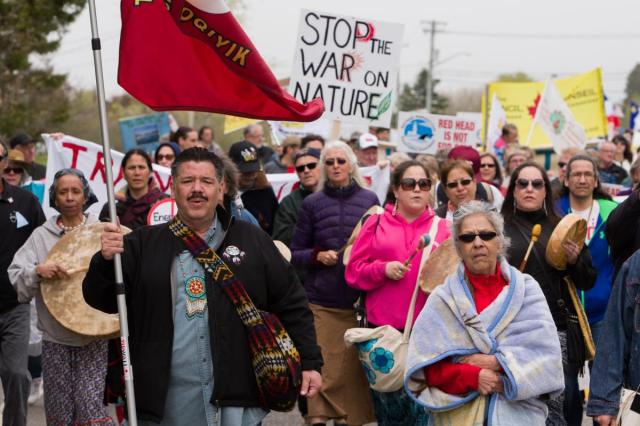

 It all started when my mom took me to the local library. I loved wildlife, nature, and simply being outdoors. I devoured Ranger Rick magazine each month. I needed a simple bird book to help me identify the birds coming to our backyard feeder in southern California. I found Birds: A Guide to the Most Familiar American Birds, the pale blue one with the robins on the cover. Though I checked it out seven times, for a total of 14 weeks, there wasn’t much in there that looked familiar. I quickly discovered its eastern bias; it featured illustrations of Blue Jay, Northern Cardinal, and Tufted
 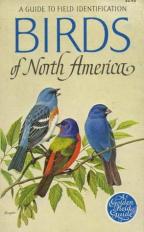 Titmouse, and only made passing reference to western counterparts deep in the text. My only option was to move up to an “adult” field guide. I acquired the Golden Field Guide, Birds of North America, the old olive-beige one with the three buntings on the cover. It featured illustrations of just about every bird possible. Some were even described as “casual” or “accidental”, which I figured out meant really really rare in North America. But, most significantly, the book featured, in the index in the back, little empty check boxes next to the bird names. You could check off the ones you had seen!
 Forty-five years is a delightfully slow climb, allowing me to savor each life bird. I’ve graduated from the check boxes in the back of the Golden guide to an Excel spreadsheet, but my favorite list is the one I keep in chronological order. I can remember the habitat, lighting, and smell in the air for almost each “lifer”, like having a mental photograph seared onto the desktop in my mind. Number 387 was a Wandering Tattler in the summer of 1994. It was way out on the Ocean Shores jetty. As the wind picked up and the horizontal drizzle intensified, the slick rocks became treacherous. I picked my way out past the turnstones, toward the end of the jetty, colder and wetter with each step. Sometimes you really have to work for your lifers.




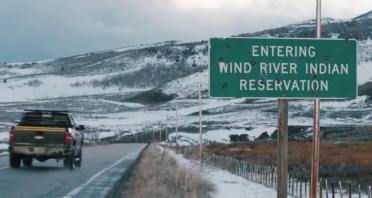 Wind River, a 2017 crime thriller set in the winter wilderness of the Wind River Indian Reservation, focuses on the on-going epidemic of assaulted and missing Native women and girls.


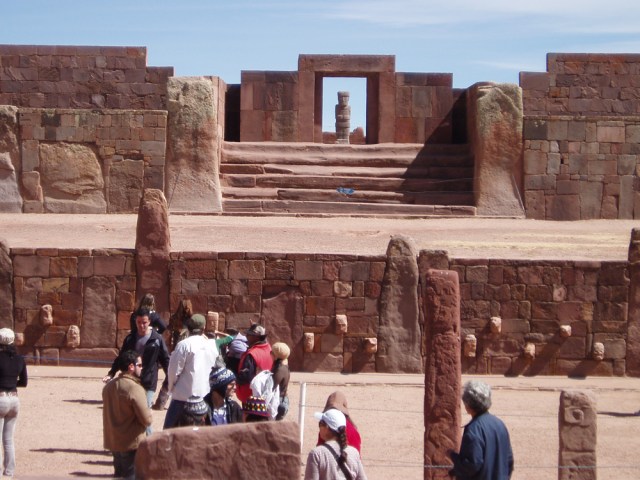
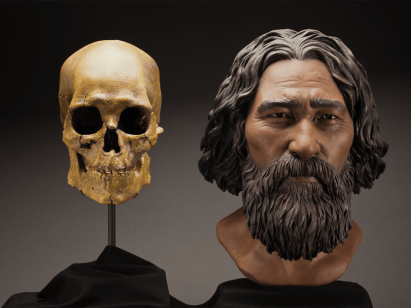
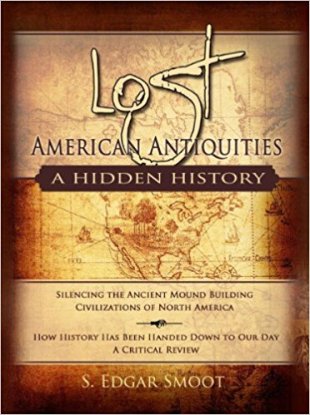
 show a few pictures of artifacts with inscriptions suggesting European ancestry, long discredited as hoaxes, and claim, “This is one of tens of thousands of artifacts found in North America”, implying a vast coverup. Beck embraced it and his followers ate it up. The marriage between hyperdiffusionists and the right wing of the Republican party was a perfect fit. They had other bedfellows as well. Mormons, whose religion emanates from the mound builder myth, and fundamentalist Christians seeking to “take back America” were attracted to its story. Beck provided the politicizing glue to bind these groups together. On Fox News, he concluded his endorsement by turning the concept of “erasure” on its head, claiming that modern scientists are seeking to “erase” the Mound Builders from history.
 References to this alt-history are commonplace in the white supremacist echo-chamber today. They embrace the Ahnenerbe’s search for Aryan roots in the Americas, praising Nazi Germany, “No one nation has put such an effort before or since into re-discovering and documenting our prehistoric past. If this was Himmler’s only true contribution to history, then he should be considered a hero of our people.” A simple on-line search finds dozens of pseudo-archaeological books with titles like Lost Race of the Giants and Forgotten Worlds, and articles such as “The Lost White Tribes of Peru” and “Finding Identity and a Home in Future White America” with exhortations like this: “As long as diversity, multiculturalism and political correctness remain the focus of everything we say and do, then we will neither re-discover that long lost White America or even hope to create a new white ethnostate to save our oppressed millions.”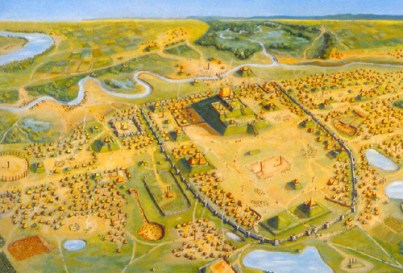
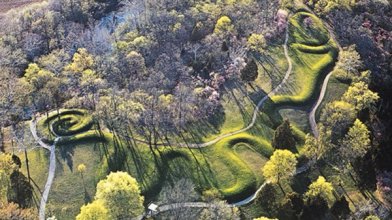
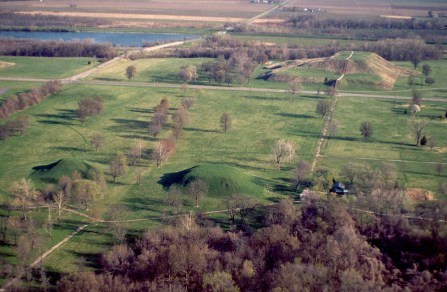

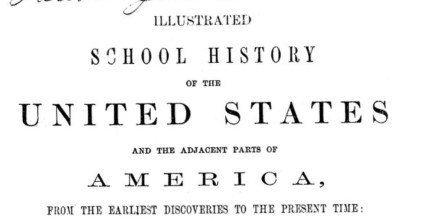
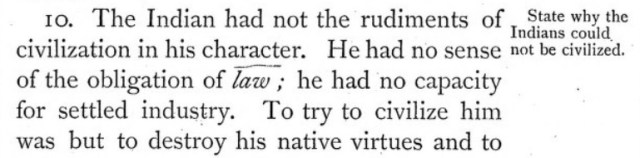
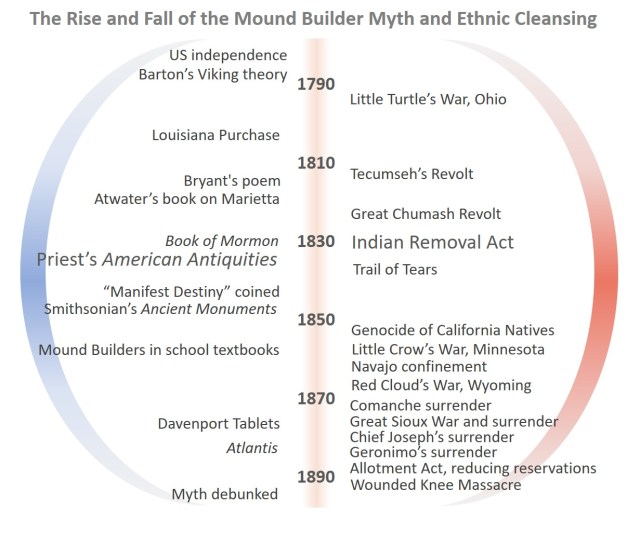
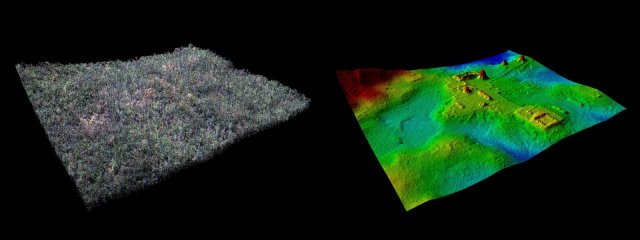


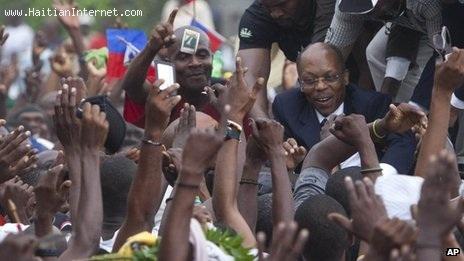
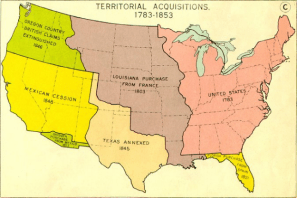



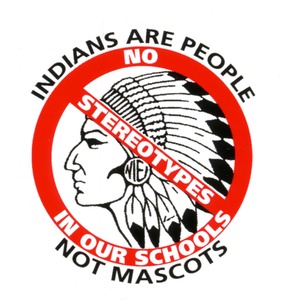


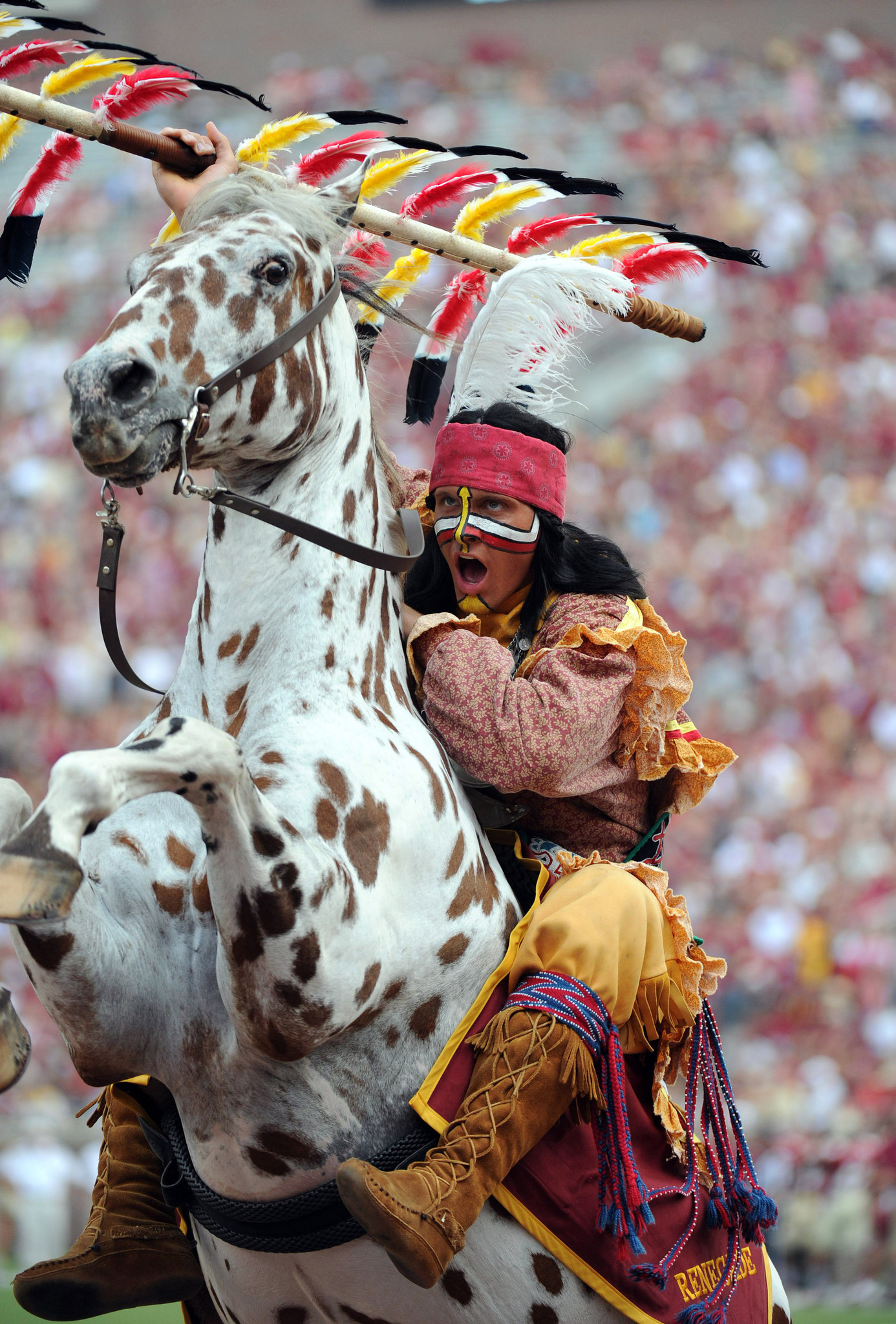
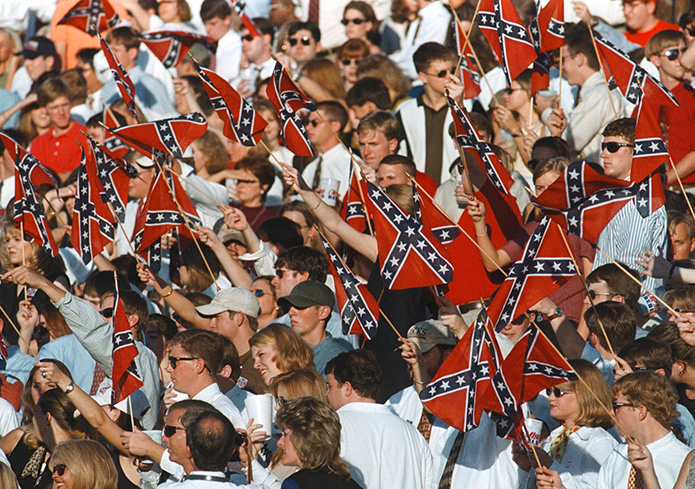

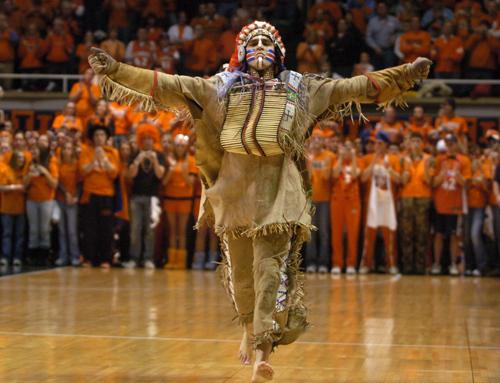

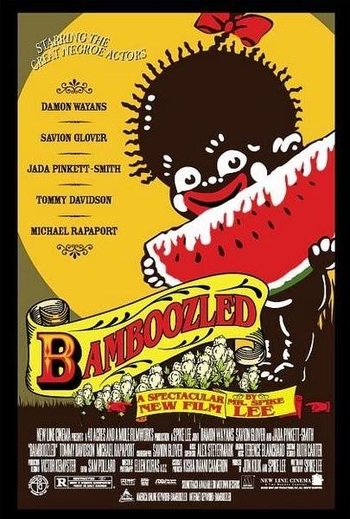
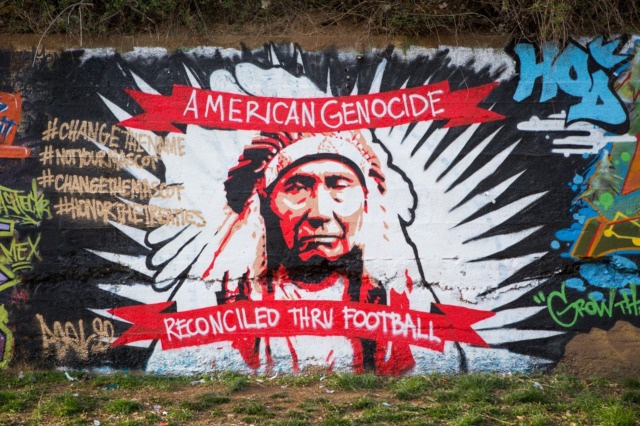
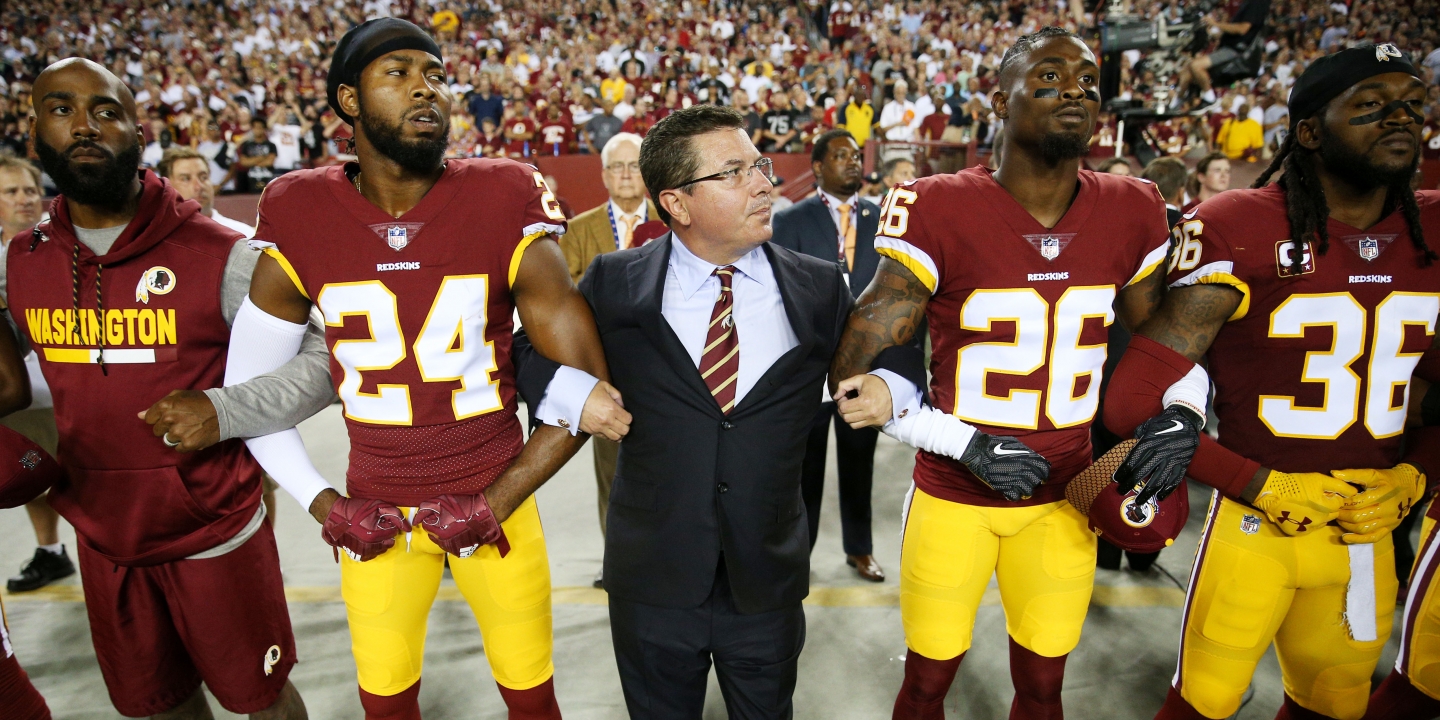
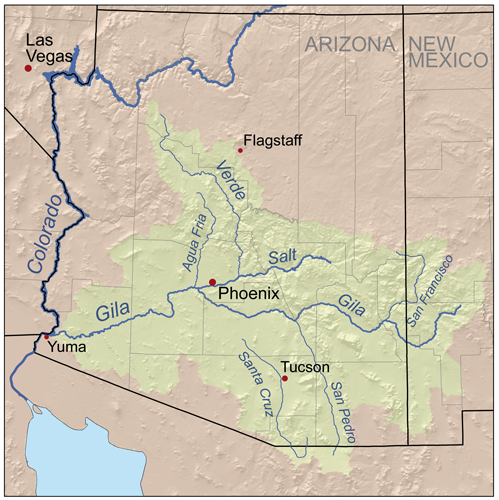
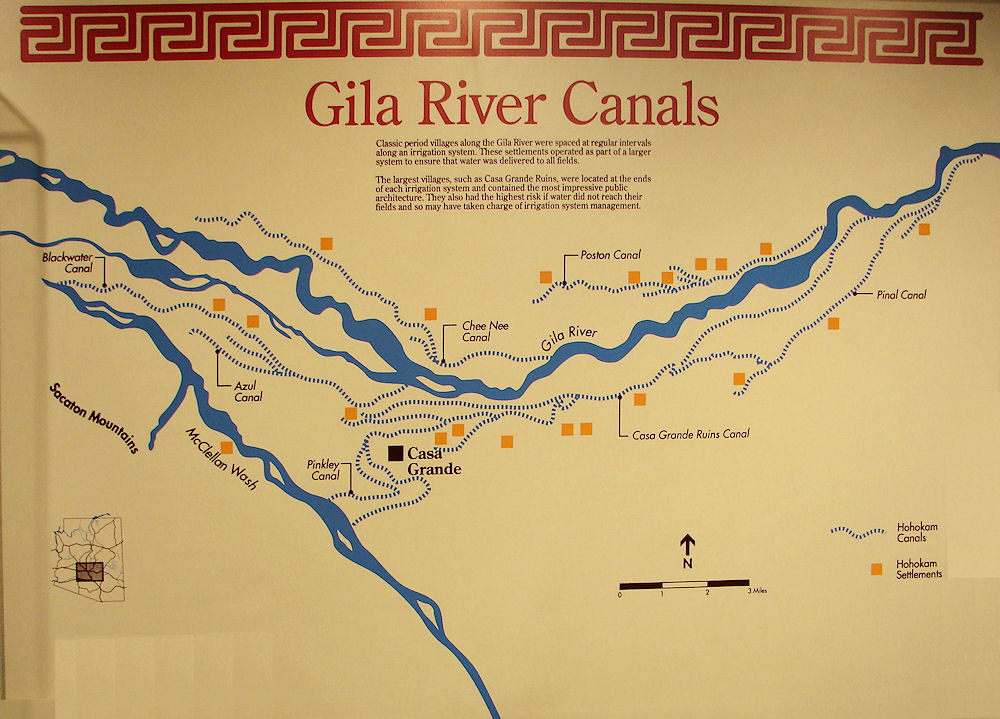 Using a thousand-year-old network of levees, weirs, canals, and irrigation channels (above), the the O’odom and Pee Posh (or Pima and Maricopa) re-engineered the Gila River, cultivating over two hundred square miles of rectangular fields. Hardly a drop of water was left unused. Soldiers, trappers, explorers, outcasts all stopped; many stayed. Among the thatched homes, Mexicans, French, Dutch, English, and Americans mixed with chickens and children. They rested and ate well, enjoying a bounty of wheat, corn, beans, pumpkins, watermelon, squash, peas, tobacco, and cotton.

 Memories of the People