“Operation Yurok”: Saving Salmon from Pot Farms

Press release from the California Department of Fish & Wildlife:

July 20, 2015

CDFW, Partner Agencies Conclude Operation Yurok in Humboldt County

Marijuana Eradication Effort Focused on Misuse of Water and Habitat

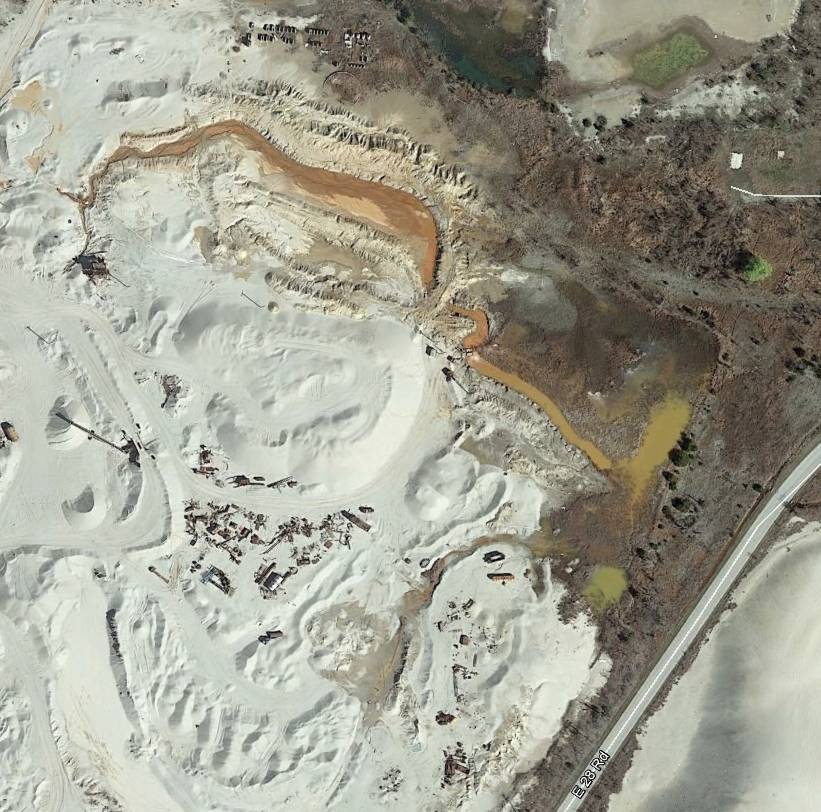
Example of a pot farm as viewed from Google Earth.

Example of a pot farm as viewed from Google Earth.

Officers from the California Department of Fish and Wildlife (CDFW) recently participated in a large-scale, multi-agency operation to address the devastating effects of illegal marijuana cultivation on fish, wildlife and the environment in northern California’s watersheds. The four-day mission concluded Thursday, July 16.

Allied law enforcement agencies including the State Water Resources Control Board, Yurok Tribal Police, Humboldt County Sheriff’s Office and federal law enforcement teamed with CDFW wildlife officers to serve dozens of search warrants, investigate pollution and water diversion crimes, and eradicate numerous marijuana plants as part of the joint effort dubbed “Operation Yurok.”

More than 100 environmental violations of the Fish and Game Code were discovered and eight suspects were arrested. Charges are pending for additional suspects.

“This operation was about more than just the criminality of marijuana cultivation,” said Lieutenant DeWayne Little of CDFW’s Watershed Enforcement Team (WET). “At its roots, it was about protection of the environment.” Created by CDFW in the last year, WET is comprised of both law enforcement officers and biologists, whose primary mission is to take an all-encompassing approach to investigating and protecting waterways from diversion, obstructions, alteration, pollution and litter.

During this period of unprecedented drought, water conservation is gravely important. An average mature marijuana plant consumes an estimated six to 12 gallons of water per day.

“Operation Yurok” teams eradicated more than 29,000 thirsty marijuana plants from the area, which equates to hundreds of thousands of gallons of water per day that will no longer be diverted and prevented from feeding the nearby Trinity River.

The Trinity River is considered by the locals to be the lifeline for many people. Water flows from the river must be great enough to sustain local drinking water needs and support successful salmon runs, which equate to a food source for the local Yurok tribe. Yurok Tribal members and other locals have expressed great concern about illegal marijuana grows in the area, due to the Trinity River’s historic low levels.

_______________________________________________________

See my earlier post about Pot Farms on Reservations, which discusses the Yurok lands.

Posted in news | Tagged , , , , , | Leave a comment

Pope Francis apologizes “for crimes committed against the native peoples”

In Bolivia, the nation with the highest percentage of indigenous people in the Americas, the nation with the only indigenous head of state in the Americas in 500 years, the nation that flies an indigenous flag (below), Pope Francis stepped up.  Al Jazeera reports: “Francis’ apology was met with wild applause. ”

Pope Francis seeks forgiveness for church’s crimes against ‘native people’evo1

Posted in news | Tagged , , , | Leave a comment

On this date… July 5, 1876… Montana

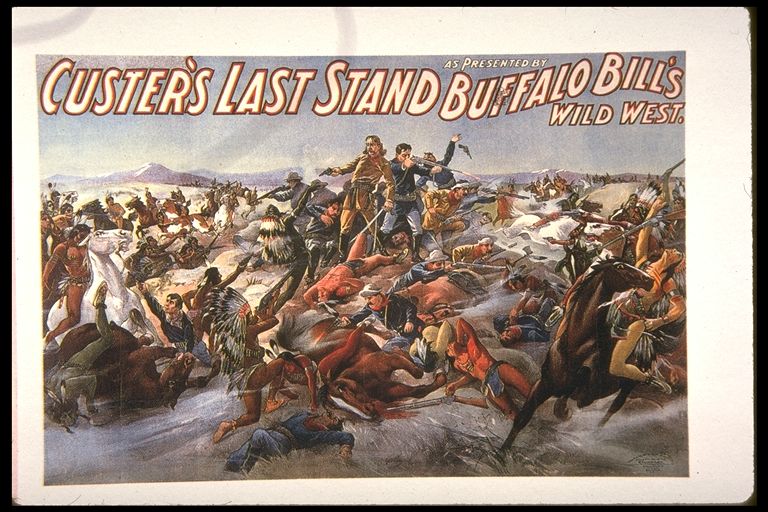
On this date in 1876, one day after the nation celebrated its Centennial, the news of Custer’s Last Stand reached the media.

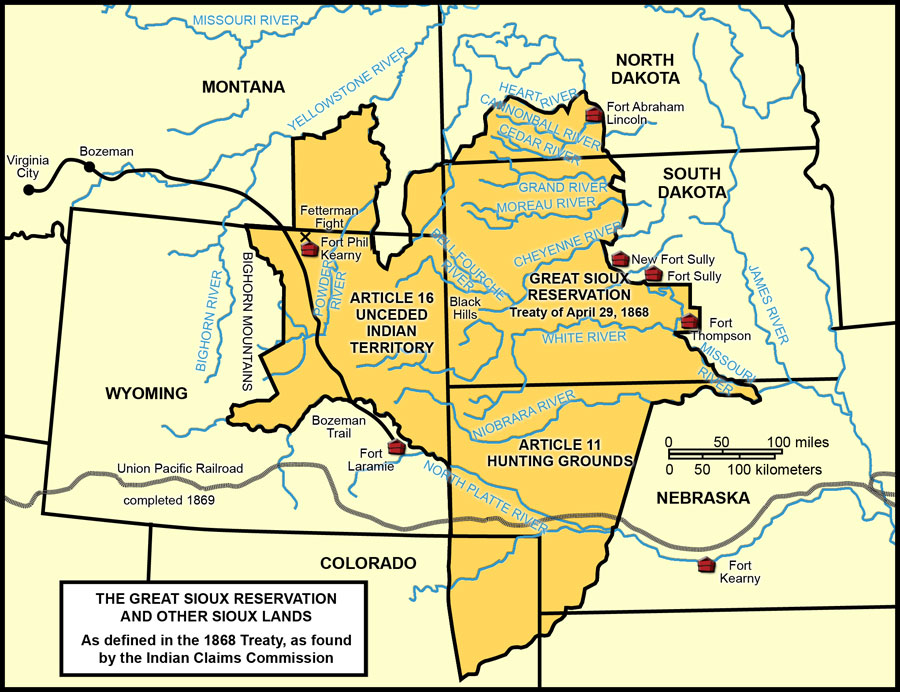
Eight years earlier, in 1868, the Great Sioux Reservation was “set apart for the absolute and undisturbed use and occupation of the Indians and no unauthorized person shall ever be permitted to pass over, settle upon, or reside in.” It included Paha Sapa, the Black Hills, sacred homeland of the Sioux, at its center.

great-sioux-reservation_lar Upon rumors that illegal prospectors had found gold, in 1874 President Grant authorized General George Armstrong Custer to lead an expedition of ten companies of cavalry and infantry to investigate. They announced gold “in quantities as rich as were ever dreamed of.” The tribe, which was never consulted regarding the expedition, called it the Thieves’ Road.

In 1875, President Grant contrived a war, demonizing Sitting Bull as “hostile, lofty, independent, contemptuous, defiant, boastful, scornful, savage, untamable, uncivilized, and disrespectful of white authority”. They deliberately leaked a false report to the media and demanded the Indians to leave their unceded lands and report to their assigned agencies in the middle of winter, when travel was impossible.

In the spring, the US military commenced ground operations in a concocted war to take the Black Hills. Custer was involved again.

On this date in 1876, the New York Times read:

LATEST ACCOUNTS OF THE CHARGE. FORCE OF FOUR THOUSAND INDIANS IN POSITION ATTACKED BY LESS THAN FOUR HUNDRED TROOPS – OPINIONS OF LEADING ARMY OFFICERS OF THE DEED AND ITS CONSEQUENCES – FEELING IN THE COMMUNITY OVER THE DISASTER.

Chicago, July 6. – On June 25 Gen. Custer’s command came upon the main camp of Sitting Bull, and at once attacked it, charging the thickest part of it with five companies, Major Reno, with seven companies attacking on the other side. The soldiers were repulsed and a wholesale slaughter ensued. Gen. Custer, his brother, his nephew, and his brother-in-law were killed, and not one of his detachment escaped. The Indians surrounded Major Reno’s command and held them in the hills during a whole day, but Gibbon’s command came up and the Indians left. The number of killed is stated at 300 and the wounded at 31. Two hundred and seven men are said to have been buried in one place. The list of killed includes seventeen commissioned officers.

It is the opinion of Army officers in Chicago, Washington, and Philadelphia, including Gens. Sherman and Sheridan, that Gen. Custer was rashly imprudent to attack such a large number of Indians, Sitting Bull’s force being 4,000 strong. Gen. Sherman thinks that the accounts of the disaster are exaggerated. The wounded soldiers are being conveyed to Fort Lincoln. Additional details are anxiously awaited throughout the country.

So far as an expression in regard to the wisdom of Gen. Custer’s attack could be obtained at headquarters, it was to the effect that Custer had been imprudent, to say the least. It is the opinion at headquarters among those who are most familiar with the situation, that Custer struck Sitting Bull’s main camp. Gen. Drum, of Sheridan’s staff, is of opinion that Sitting Bull began concentrating his forces after the fight with Crook, and that no doubt, Custer dropped squarely into the midst of no less than ten thousand red devils and was literally torn to pieces.

custerslaststand

The news continued the following day:

FRUITS OF THE ILL-ADVISED BLACK HILLS EXPEDITION OF TWO YEARS AGO- ABILITY OF THE ARMY TO RENEW OPERATIONS EFFECTIVELY DISCUSSED – THE PERSONNEL OF THE CHARGING PARTY STILL UNDEFINED.

Washington, July 6. – The news of the fatal charge of Gen. Custer and his command against the Sioux Indians has caused great excitement in Washington, particularly among Army people and about the Capitol. The first impulse was to doubt the report, or set it down as some heartless hoax or at least a greatly exaggerated story by some frightened fugitive. At the second thought the report was generally accepted as true in its chief and appalling incidents. The campaign against the wild Sioux was undertaken under disadvantageous circumstances owing to the refusal of Congress to appropriate money for the establishment of military posts on the upper Yellowstone River. Gen. Sherman and Gen. Sheridan both asked for these posts, which, in case of anticipated troubles would give the troops a base of supplies about four hundred miles nearer the hostile country than they could otherwise have. The posts desired would have been accessible by steamboats on the Yellowstone, which would have conveyed men and supplies. The House Committee on Military Affairs unanimously recommended their establishment, but the Committee on Appropriations refused to provide in their bills the necessary means. This is regarded as the immediate cause of the disaster. The remote cause was undoubtedly the expedition into the Black Hills two years ago in violation of laws and treaties, authorized by Secretary Belknap and led by Gen Custer. If there had been a post at the head of navigation on the Yellowstone the expedition would doubtless have proceeded thence against the Indians in one invincible column. The policy of sending three converging columns so many hundred miles against such brave and skillful soldiers as the Sioux has been the cause of some uneasiness here among the few who have taken the trouble to think about the facts and prospects. The Sioux seem to have understood clearly the plan of attack, and threw themselves with their whole force first against Gen. Crook’s column and now against Custer’s, and both times inflicted serious disaster. The feeling was common today that the campaign is a failure, and that there must follow a general Indian war, promising to be costly in men and money. The Sioux are a distinct race of men from the so-called Indians of the Southwest, among whom the army found such easy work two and three years ago. The Sioux live by the chase and feed chiefly upon flesh.

The Southern Indians are farmers and eat fruits and vegetables, the latter are at their worst cruel, cowardly robbers. The former are as much like the brave and warlike red men represented by The Last of the Mohicans as ever existed outside the covers of fiction and romance.

custercountyToday, like a Confederate Flag for Native Americans, Custer has towns, counties, state parks, and national forests named after him.

Posted in On this date... | Tagged , , , , , , , , | Leave a comment

When Did the United States Become Our Church?

I grew up in a conservative evangelical Republican context. I now consider myself a left-wing progressive liberation theology Christian who votes Democrat but really prefers the Green Party. I have mixed allegiances. I am a citizen of the United States, a registered citizen of Cherokee Nation, and a citizen of the Kingdom of God as defined by Jesus.

gay marriage2

My Facebook profile pic: I’m supporting USA at the Women’s World Cup, with my god-daughter, while wearing a Cherokee Nation shirt.

I support gay marriage as a legal right of United States citizens. I also have no problem with each church, temple, synagogue, and mosque defining marriage as they see fit; that is their right. The secular government has a different mission than the church.

The United States is a pluralistic society, including people of many different religious and cultural backgrounds. The Constitution is supposed to protect minorities from “the tyranny of the majority” and to protect basic rights and the principle of equality. While marriage may be primarily a religious and cultural construct, the regulations of the United States, for better or worse, are deeply enmeshed in it. According to previous arguments before the US Supreme Court, there are over 1,200 laws that consider marital status. To that end, any pluralistic society that incorporates one’s marital status into their laws must, to be fair, incorporate a wide definition of marriage, so as not to discriminate. It’s a matter of basic fairness.

It’s also a matter of basic respect and dignity for the LGBTQ community. Without the right to marry, they are cast not only into legal quagmires involving taxes, child custody, hospital visitation, inheritance, and many other important issues, but they are tarnished with an official rejection of their basic humanness, that somehow their love and commitment to each other is not equal to that of heterosexuals (which itself is somewhat tarnished by a high divorce rate). It’s a stigma, and a very serious one. Further, like the Confederate Flag or countless symbols against Native Americans, it gives license to discrimination and acts of violence against them.

Justice Anthony Kennedy’s majority opinion focused on the discrimination that same-sex couples face in the social realm as well as the legal realm, saying, “No union is more profound than marriage, for it embodies the highest ideals of love, fidelity, devotion, sacrifice and family. In forming a marital union, two people become something greater than they once were.”

gay marriage1

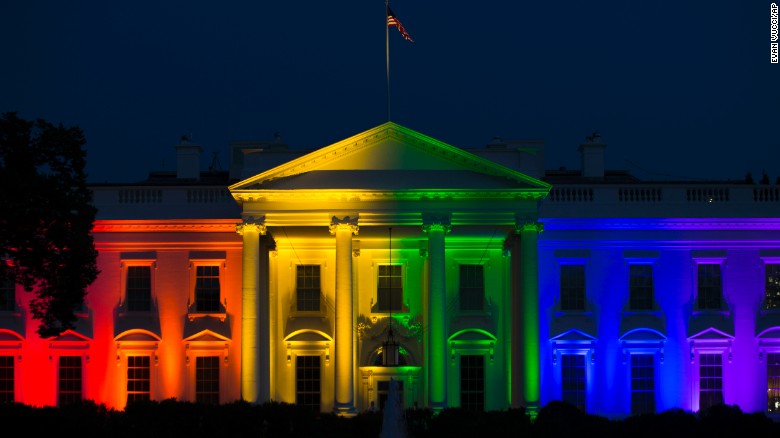
The White House lit up with rainbow lights. To underscore how fickle government can be, note that Obama did not support same sex marriage at the start of his presidency.

Liberals rejoiced. Many friends have said they were moved to tears by the acceptance that this official recognition provides. Perhaps it is hard to fully comprehend the level of discrimination, persecution, and rejection they felt until it is suddenly lifted. Facebook has been overrun with rainbow-themed profile pics (26 million at last count) and congratulations and celebrations have even poured in from around the world.

Conservatives opposed to the ruling have reacted in dismay. This was best captured by a Facebook post by Franklin Graham, son of Billy Graham and head of the Billy Graham Evangelistic Association. He wrote:

The Supreme Court of the United States has ruled today that same-sex marriage is legal in all 50 states. With all due respect to the court, it did not define marriage, and therefore is not entitled to re-define it.

Long before our government came into existence, marriage was created by the One who created man and woman—Almighty God—and His decisions are not subject to review or revision by any manmade court. God is clear about the definition of marriage in His Holy Word: “Therefore a man shall leave his father and his mother and hold fast to his wife, and they shall become one flesh” (Genesis 2:24).

I pray God will spare America from His judgment, though, by our actions as a nation, we give Him less and less reason to do so.

The post has received almost 500,000 likes.

Graham is confusing the United States government with the church. He seeks the policy he wants for his church for an entire pluralistic nation. Other Christians, even evangelicals, have said this defeat will enable them to give up on this mistaken cause and instead focus on issues such as justice and compassion for the poor and oppressed.

We can easily question Graham’s selective choice of issues. When it comes to the Old Testament, he is certainly picking and choosing. There are very few passages that explicitly mention homosexuality – less than five, and most of those are subject to debate. Far more attention is given to oppression of the poor and reliance upon military strength rather than God’s provision. These are favorite topics of the Old Testament prophets, who have filled the Bible with their diatribes against the Jewish theocracy on these issues. Yet, even while these matters involve victims and matters of social justice (and not just personal morality), Graham does not echo the prophets’ call for a Jubilee every fifty years (which involves the forgiveness of all debt and massive redistribution of wealth; essentially a “re-setting” of the economy). It was Jesus’ first request, “I come to announce the Year of the Lord’s Favor” (Luke 4:18). Current demands for Third World debt forgiveness take the Jubilee law of the Old Testament as their inspiration; Graham ignores it. Graham also does not echo the Old Testament requirement that young men with new families (i.e. most young men) be restricted from military service. Both Graham and the Old Testament prophets have much to say about immigration and the treatment of foreigners; suffice it to say they do not say the same things.

Graham says he is concerned about God’s judgement on America. (Is he concerned about God’s judgement regarding the various policies of the 200 or so other nations?) It is commonly supposed that God rained hellfire upon Sodom and Gomorrah for their acts of homosexuality. Graham seems to be falling into this same revisionist history. The prophet Ezekial tells the story a different way. He says the people of Sodom “were arrogant, overfed and unconcerned; they did not help the poor and needy. They were haughty and did detestable things before me” (Ezekial 16:48-50). If Graham is worried about God’s judgement of the United States, it seems there is much more to worry about than same-sex relationships based on love and commitment. Perhaps Graham can focus on the word “overfed” and make obesity and the American food industry his new issue.

Graham’s biggest mistake is simply treating the United States as if it was his church. Liberals are not exempt from the same mistake. In fact, since the dawn of radio and television, Americans have increasingly looked to their president to use the “bully pulpit” of the executive branch to spiritually guide the nation. We look to the president as we would our pastor. We evaluate his speeches as we would a sermon (and they invariably end with “God bless America”). Yes, Obama’s speech at the funeral of the Reverend Clementa Pinckney in Charleston, South Carolina, where he led the congregation in an impassioned singing of Amazing Grace, was inspirational. But for Christians, whose primary allegiance should be to the Kingdom of God, common ground with the policies of the United States is a nice thing (and can at times produce meaningful benefits), but it is not our ultimate goal.

We should appeal to secular governments to protect the rights of the oppressed, to provide basic public services, to address market failures and to regulate our economy, and, more often than not, to do no harm. Advocacy has its place in Christian mission, but the government is at best an unreliable friend. In the Book of Revelation, at the end of time, the “kings of the earth”, presumably referring to the governments of the world, are a fickle bunch, problematic from the start, and only come around to see the Light at the very very end. Yes, let’s advocate for justice, for fairness, for equality, but let us not rely on the government to define our spiritual world, nor count on the United States to be our church nor on the president to be our pastor.

The church is the church and the state is the state. The United States, because it has over 1,000 laws and regulations that refer to marital status, and because it is the government of a pluralistic society and not a church, is obligated to define marriage to be inclusive. Religious institutions are still free to define marriage as they please. It is possible to coexist with multiple definitions. I hope we can all celebrate that the government has removed an indignity and an inequality that made life very difficult for so many.  May it last, and may violence and discrimination against the LGBTQ community come to an end, not just in the United States, but around the world as well.

Posted in my own thoughts | Tagged , , , , , , | 1 Comment

On this date… June 26, 1579… California

On this date is 2015, Sir Francis Drake and the Golden Hinde pulled into a broad protected bay tucked inside Point Reyes. What ensued was one of the most unusual and fascinating interactions between Europeans and Native Americans ever documented. Though news of Coronado’s war against the Pueblo and De Soto’s rampage through the Southeast had spread far and wide, the Miwok apparently had not heard it.

P1030895 - Copy

As the vessel laid anchor, the Miwok along the shore decided to send out one man on a reed skiff. He was a priest, for the English vessel had appeared from the sea, the place of the dead.

An English sailor described the Miwok priest from his vantage point on deck: “He spoke to us continually as he came rowing on. And at last at a reasonable distance staying himself, he began more solemnly a long and tedious oration, after his manner using in the delivery thereof, many gestures and signs, moving his hands, turning his head and body many ways; and after his oration ended, with great show of reverence and submission, returned back to shore again.”

The priest repeated this journey twice more. On his third trip, he brought gifts: a round crown of carefully trimmed black feathers and a basket filled with herbs. Not sure how to offer these when not at a funeral, he tossed them onto the deck of the Golden Hinde. The men on the ship offered him many gifts in return, presented upon a plank over the water, but the priest would not touch such items, save for one hat, which fell into the water.

Later, the Englishmen ran their vessel ashore to make repairs. They set up camp on the beach between the outer point and the Miwok village by the estero. They built fortifications in case they came under attack.

The Miwok, apparently following ceremonial protocol, came to visit every three days. Their numbers swelled by curious visitors from the surrounding area. They lined the grassy bluffs above the beach.

An Englishman reported: “One (appointed as their chief speaker) wearied both us his hearers, and himself too, with a long and tedious oration: delivered with strange and violent gestures, his voice being extended to the uttermost strength of nature, and his words falling so thick one in the neck of another, that he could hardly fetch his breath again: so soon as he had concluded, all the rest, with a reverend bowing of their bodies (in a dreaming manner) cried, ‘Oh!’”

At the appropriate moment, the Mikok men made their way down the bluff to the sand, bringing gifts of feathers and bags of herbs for the dead. They were greatly relieved when the captain, Francis Drake, received the items.

The Englishman continued: “In the meantime the women, as if they had been desperate, used unnatural violence against themselves, crying and shrieking piteously, tearing their flesh with their nails from their cheeks, in a monstrous manner, the blood streaming down along their breasts; besides despoiling the upper parts of their bodies, of those single coverings they formerly had, and holding their hands above their heads, that they might not rescue their breasts from harm, they would with fury cast themselves upon the ground.”

In response, the Englishmen assembled on the sand, facing the bluff, and lifted their eyes and hands to the heavens. Drake led them in prayer while the fascinated Miwok gathered around, seeking to understand their language. When the Englishmen began singing hymns, a sort of duet broke out; at each pause after a line, the Miwok cried in unison “Oh!”

Later, the moment of true contact was allowed. The Miwok men and women walked among the English sailors, circling and inspecting each man, searching their faces for memories of the past, for someone they recognized.

As the Miwok walked among them, “taking a diligent view or survey of every man; and finding such as pleased their fancies (which commonly were the youngest of us) they presently enclosing them about, offered their sacrifices unto them, crying out with lamentable shrieks and moans, weeping, and scratching, and tearing their very flesh off their faces with their nails, neither were it the women alone which did this, but even old men, roaring and crying out, were as violent as the women were.”

After several days, the Golden Hinde was ready to depart. As it hoisted sail and rounded the bay, the Miwok ran to the cliff tops of the outer point, bidding farewell as the ship disappeared into the mist, back to the place of the dead.

Posted in On this date... | Tagged , , , , , | Leave a comment

Report Describes Cultural Genocide in Canada

young-ghoulsMaking international news, a report by a Canadian Truth and Reconciliation Commission describes a century of cultural genocide through the use of horrific boarding schools in Canada.  Though the last school closed in 1996, the wounds continue.

See my earlier review of this movie, Rhymes for Young Ghouls, about Canadian boarding schools.

Posted in news | Tagged , , , , | 1 Comment

Australia Says Sorry to Aborigines

Amazing stuff out of Australia.  This would be a step in the right direction in the U.S.

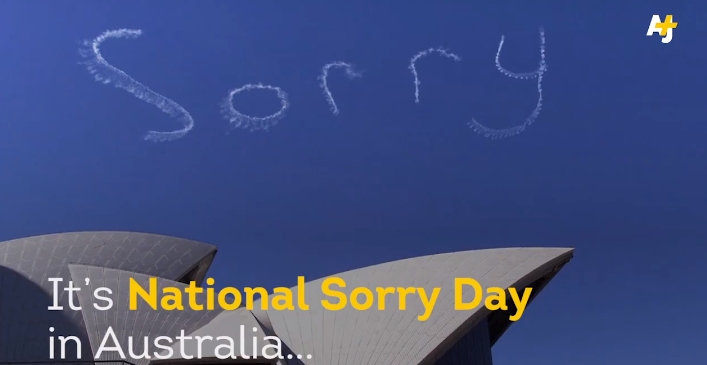
Here’s a short video, Australia says sorry to Aborigines.

sorry

Posted in news | Tagged , , , , , , | Leave a comment

A Tribal/Federal Government Conference: The Good, the Bad, and the Ugly

I just had the privilege of attending the National Tribal Natural Resource Damage and Restoration Conference.  Hosted by the Saginaw Chippewa at the Soaring Eagle Casino and Resort in Mt. Pleasant, Michigan, the conference was also sponsored by the US Department of the Interior (DOI).  Though a member of the Cherokee Nation, I was there for my work, representing the California Department of Fish and Game and giving a talk about crude-by-rail.

untitled1

Viewed from Google Earth, chat piles from lead and zinc mining leach toxic metals into streams in northeast Oklahoma. Several tribes are seeking compensation for the injuries.

There were some good things.  First and foremost are the progressive laws that make natural resource damage assessment (NRDA) possible.  These federal laws allow the federal, state, and (federally-recognized) tribal governments to essentially sue polluters (e.g. large corporations or sometimes the government itself) to recover not just funds for clean-up but also for compensation—to make the public whole for injuries they’ve suffered from the pollution.  Second, the conference brought together about seventeen tribes from around the nation, as well as federal employees that are involved in NRDA.  For the most part, these are well-intentioned people seeking to address environmental problems and help the public, including tribes. The conference began with a Grand Entry, a prayer, and a song from the Saginaw Chippewa Snow Birds (below).

There were some bad things.  Hanging over the conference was the sad reality that tribes have not fared particularly well in past NRD claims.  Government trustees got $18.8 million for lost recreational beach use after an oil spill tarnished beaches for six months in San Francisco Bay, and $10 million for lost recreational boating and fishing after an oil spill tainted the Kalamazoo River for a year or so.  But when decades of contamination (PCB’s, oil, cyanide, etc.) from an industrial operation made most hunting, fishing, and gathering impossible on tribal lands for several generations, the tribe got only $8.4 million.  They are using the money to create a cultural apprenticeship program, pairing elders with young adults, but the program will run out of funding in just four years.  This settlement is considered a success for tribes in the NRDA world.  It’s about the best that tribes can do (so far) through this strange legalistic and bureaucratic process.

This poor NRDA record is in keeping with past tribal experience in US courts.  This is a community who, to this day, lose hunting and fishing rights (guaranteed in treaties) to fish and game commissions, lose religious freedom to local school boards, and lose their children to child protective services.  The Supreme Court ruling that provides the basis for land ownership in the US refers to Native Americans as “savages”.  That case still stands as precedent and is referenced regularly by the high court.  Naturally, tribes are suspicious of a government program designed to help them.  The requirement that they must follow regulations and procedures to benefit from the program is met with the expectation of rejection.  treaty-signingAt the conference most of the government speakers seemed oblivious to this.  They assumed they were there to train the tribes and gave simplistic advice like “read the regulations” and otherwise sought to mold the tribes into the proper bureaucratic shape to be successful.  One speaker advised tribal members to take a lengthy course of trainings (ICS 100 thru 800) so they can participate in oil spill response.   They seemed unaware that they had waded into turbulent waters, dealing with a community that not only are suspicious and fearful, but have different cultural values and communication patterns. Like two ships passing in the night, the federal speakers cited regulations by the numbers (e.g., CFR 990) while tribal members told personal stories of pain and loss.  I was reminded of treaty signing ceremonies in the 1800s, where the legalistic text, difficult reading even for educated whites, was translated (glossing over any controversial items) for the tribal representatives.

Ultimately, tribes do need to be savvy about the NRDA process to make successful claims, and they will need allies among state and federal trustees to do so, but gaps in communication styles and misunderstandings regarding terminology suggest the two sides are still worlds apart.  When I suggested that government representatives take time to read Indian Country Today, Native News Online, and local tribal news websites, that they familiarize themselves with the story behind the expression, “The Black Hills are not for sale”, and that federal attorneys read In the Courts of the Conqueror by Walter Echo-Hawk, I was met with blank stares.  No one came up to me afterward asking for those references.  The conference was at its best when the tribal speakers were at the podium, essentially training the government officials and sharing with each other.

The overall positive gathering was marred by one ugly event.  A federal economist, who has no NRDA experience and obviously little background with tribes, cast doubt on the primary economic method that tribes have used to make their claims (never mind that federal and state trustees regularly use far more apples-to-oranges approaches with apparently little objection).  Instead, he favored other methods that would ignore the value of sacred sites and force tribes to put a dollar price tag on their cultural activities, both strongly opposed by tribes.  He went on to say that he had commissioned a study to explore tribal NRD claims and produce a guidance document to provide instruction for future claims.  Several hands immediately went up.  Did you consult any tribes in doing this?  No, he said.  Furthermore, the scope of work is already finalized and out for bid to contractors.  At the end of the day, despite good intentions and “listening sessions”, the federal government fell back to a paternalistic approach, rooted in centuries of racism, and embarked on a project to tell the Indians what to do.  Suddenly the tribes were wards of the government again.  It was not terribly surprising.  After all, as recently as 1974, tribes could scarcely hire a janitor without BIA approval.  The fact that this proposed study must have gone through several layers of review to get the funding approved, and yet no one thought to involve a tribal representative, is stunning and telling.  A member of the Saginaw Chippewa leaned over to me and said he was getting Winona LaDuke involved in this.  After all, she has a degree in economics from Harvard.  I said, “That’s great” but cast a sidelong glance.  He asked, “They do know who she is, don’t they?”  “I wouldn’t be so sure,” I replied.

Posted in my own thoughts | Tagged , , , , , , , , | Leave a comment

California closer to banning Redskins team names

The California State Assembly passed a bill banning “redskins” as a team mascot in public schools.  The vote was 57-9.  It still needs to go to the State Senate and Governor Jerry Brown, and the odds look good there.

redskins3

Tulare Union High School band

California is a special place when it comes to this term, which was primarily associated with calls for extermination.  Two of the most complete genocides in history took place in the US, against Native Americans in Florida in the early 1700s, and again in California in the 1850s.  In both instances, entire tribes were wiped out, with very high proportions of the population suffering from violent deaths or enslavement.  All survivors were displaced and reduced to abject poverty.  There were no treaties in California; the whites refused and the state’s lobby killed them all in congress.  The few Indians that survived took shelter at US Army forts.  There was a robust trade in Indian children as domestic slaves.  Sex trafficking and rape as a tool of conquest were also well-documented.  It’s also fair to say that most Californians are oblivious to this history, with only some vague awareness that Indians once lived here but somehow are now gone.  Perhaps they got sick and died.

Here are some examples of uses of the term “redskin” in California.  See my other blog post for examples from elsewhere in the US. 

“Now that general hostilities against the Indians have commenced we hope that the Government will render such aid as will enable the citizens of the north to carry on a war of extermination until the last Redskin of these tribes has been killed.  Extermination is no longer a question of time– the time has arrived, the work has commenced, and let the first man that says treaty or peace be regarded as a traitor.” – Yreka Herald, August 7, 1853

“[Certain white men] who live in the vicinity of the [Indian] villages, and who are in the constant habit of committing the grossest outrages upon the squaws.  In a few instances these outrages have been avenged by the Indians, by shooting the aggressors or killing their stock.  These acts of retribution are called Indian outbreaks, and are made the pretext for fresh outrages upon the poor redskins.”  – Sacramento Union, October 1, 1858

“Those men from Eel River [involved in the Indian Island massacre near Eureka, California], becoming exasperated, followed the Indians, and determined to clean out every thing that wore a red skin.  Sheriff Van Ness thinks that the number of Indians (including men, women, and children) who have been thus slaughtered amounts, probably to about eighty.”  – letter to the editor, San Francisco Bulletin, February 28, 1860

“Seventeen of the Indians were killed and scalped by the volunteers, who, being from the immediate vicinity of the former massacre, are highly exasperated at the red-skins…  They are determined to drive off or exterminate the Indians, it is said.”  – Marysville Appeal (California), August 9, 1862

“We feel convinced that there is but one course to be pursued towards these treacherous red skins. We have long since thought they should be collected together and removed to some remote district of country, away from settlements, or to an island in the sea…” – editorial in the Mendocino Herald, April 22, 1864

Posted in news | Tagged , , , | Leave a comment

Baltimore Riot’s “Mother of the Year” is Part of a Historical Pattern

toyaFinally, after years of egregious police brutality and hundreds of cases involving paralyzed and dead citizens (as documented by out-of-court settlements), Baltimore erupted in rioting.  As the white media struggled to understand why, rather than why it took them so long or what can be done about the Baltimore PD, they seized upon an African American as their hero.  Toya Graham, captured on video berating her son and preventing him from joining in the riots, was praised as “the mother of the year.”
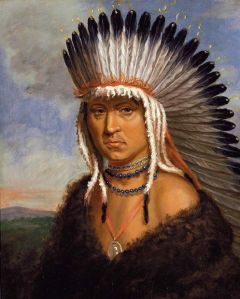
petalesharoThis is part of a long pattern.  In the midst of ethnic tension, the white media has routinely seized upon and praised an individual of the non-white community as a positive example, a good citizen, a model black, brown, or red person.

In 1816, the Pawnee leader Petalesharo released a captive Comanche girl that was about to be put to death.  The story made its way to the East Coast and essentially went viral among the white media.  Petalesharo was invited to Washington DC and New York City, where he was praised in the newspapers, given a medal, and his portrait painted (of course in whiteface).  A poem was written about him.   He is but one of many “good Indians”, models for compliant behavior.

Pocahontas4In the mid-1800s, as Indian Removal became official government policy and quickly devolved into calls for extermination, Pocahontas was eulogized as a “good Indian”.  Though she lived in the early 1600s, she was resurrected, and largely re-shaped and re-created, over two hundred years later.  She was said to be “foremost in the train of those wandering children of the forest who have at different times—few, indeed, and far between—been snatched from the fangs of a barbarous idolatry, to become lambs in the fold of the Divine Shepherd.” In reality, she had been kidnapped by the white settlers of Jamestown and held for ransom.  Her conversion and marriage to John Rolfe (and not John Smith, whom she detested for betraying her father) both occurred while she was imprisoned.  In fact, she already had a Powhatan husband and son at the time of her capture.  She died while still in captivity.  Nevertheless, even today she is cast as an emblem of reconciliation rather than deceit and conflict.  For more on Pocahontas, see this blog post.
Likewise, the media has taken some license in their portrayal of Toya Graham’s motives.  They claim her primary reason for pulling her son away from the rioters was that she was “embarrassed” by his behavior.  In later interviews, it becomes clear that she feared for his life and didn’t want him “to become another Freddie Gray.”  In short, she was afraid the Baltimore police would beat him to death.  (Would the media have praised her if she didn’t want her son to go to Iraq?  Surely the Baltimore PD threaten more Americans than Saddam Hussein ever did.)  Graham’s rationale implies deeper questions within her home and perhaps within every African American home in Baltimore and other communities with similar conflicts with the police.  How should she deal with the problem posed by chronic police brutality?  Should she or her children take a stand?  If so, should they respond violently or non-violently?  Openly or anonymously?  Is she willing to sacrifice her only son for the cause?  These are difficult questions that consider practical strategy, personal morals, and the cost one is willing to pay for the cause.  Much has already been written on the presumptiveness of the white media, which knows little of raising a family in this kind of environment, to pass judgement on these questions.  What is clear, however, is that the white media has a history, during ethnic conflict, of raising up a member of the ethnic minority, re-casting them, and using their story to promote submission to white authority.  The media, of course, is not the only guilty party.  It takes a large part of society to make the story go viral.

Posted in news | Tagged , , , , , , , | Leave a comment