
Much has been written about the problems associated with team mascot names like the Redsk*ns—their derogatory history, their effect on indigenous youth, and the inevitable offensive chants and signs from fans of opposing teams (e.g. “scalp the Redsk*ns”, etc.). Thanks to social media, decades of objections from Native Americans have finally reached the larger public and brought this issue to the fore. (See my blog post for some examples of how the word “redskins” was used in history.)
It is just the tip of the iceberg. This is not meant to detract attention from the important Redsk*ins mascot issue, but Native Americans are surrounded by such symbols, terms, and insulting policies. It’s a part of daily life to see them, hear about them, and be subject to them. Native Americans do in fact protest against most of these things, but in general show a remarkable degree of patience; there are just so many things to be offended about. Here are some of the more egregious offenses, which are frankly stunning when viewed from a different perspective. History cannot be changed, but all of these things can be.
1. Andrew Jackson on the $20 Bill
As one of the strongest presidential advocates for ethnic cleansing and genocide of Native Americans, Jackson’s image on the ubiquitous $20 bill is a constant affront. There are movements among Native Americans to boycott its use.
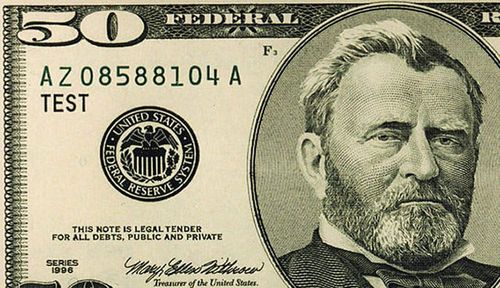
It gets worse: Ulysses S. Grant, the man whom the US Supreme Court later concluded contrived a war to illegally take the Black Hills, is on the $50 bill.
Parallel: Imagine if Germany used Adolf Hitler on a commonly-used Deutschmark note (or if he appeared on a Euro bill).
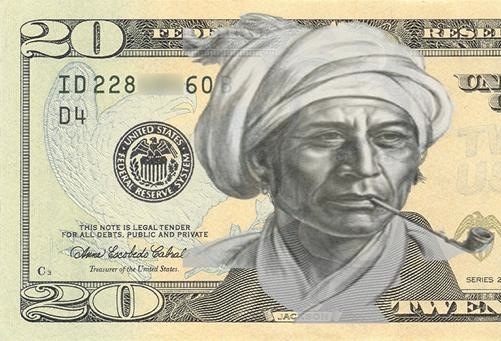 What Can Be Done About It: He can easily be replaced with any number of other less-objectionable presidents, historical figures, or even famous Native Americans. Here are ten potential Native Americans who can replace Jackson on the $20 bill (although some would consider a Native on US money more of an insult than an honor).
2. National Monuments: Little Bighorn vs Sand Creek and Wounded Knee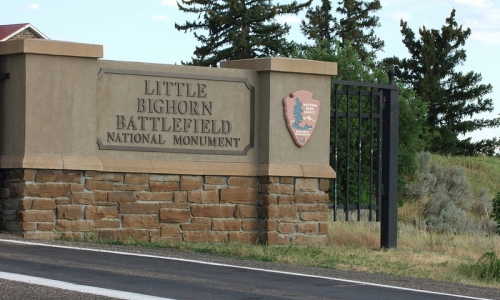
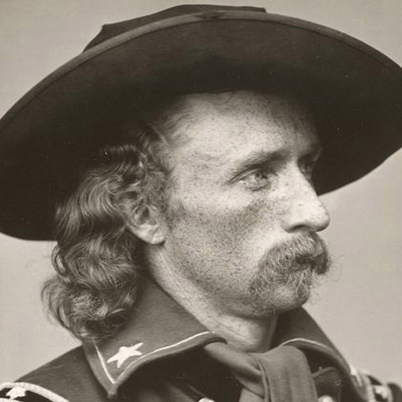
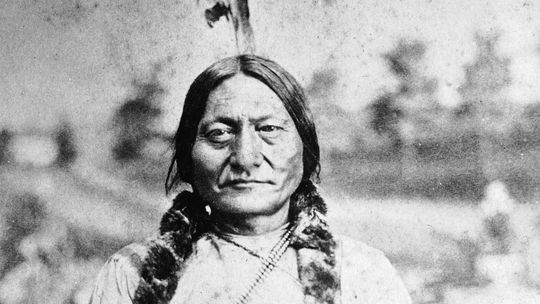
There are many historic white vs Indian battlefield sites in the US, but only a few were actually large battles where casualties numbered in the hundreds. Most of these were massacres of one side or the other. Three of the most notorious are Custer’s Last Stand (also known as the Battle of the Greasy Grass or the Battle of Little Bighorn), the Sand Creek Massacre, and the Wounded Knee Massacre. In all three, US federal or state military forces attacked encampments of Indian families. In the first, the US forces were overwhelmed and slaughtered by the Indians. In the latter two, the encampments were primarily unarmed women and children who were slaughtered by US forces. The site of Custer’s Last Stand is now enshrined as Little Bighorn Battlefield National Monument,  complete with a large visitor center, several memorials, a national cemetery, walking trails, and a 4 ½ mile auto tour. In contrast, the Sand Creek massacre site is merely a National Historic Site marked by a roadside plaque and a small bookstore. It was only discovered in 1999 and most of the site remains in private hands. The Wounded Knee massacre site, arguably ground zero for Native American struggles past and present, is merely a National Historic Landmark. It lies down a rough road and has a makeshift memorial protected by a chain-link fence. It is largely held by a white landowner who will only sell it back to the Sioux at a grotesquely inflated price. A small private museum was burned in the 1973 uprising.
Parallel: Imagine Auschwitz as a used car lot with nothing to remember it but a small plaque along the highway.
What Can Be Done About It: Sand Creek and Wounded Knee should be elevated to National Monument status and funded accordingly. See this article regarding the latest about the Wounded Knee site.
3. Wounded Knee Battle Streamer and Medals of Honor
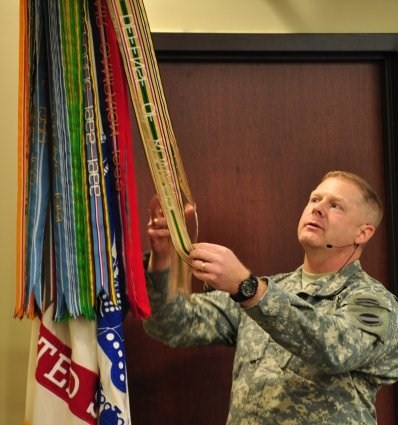 The Wounded Knee Massacre involved the slaughter of several hundred Sioux old men, women, and children on an Indian “reservation” by the US Army’s 7th Calvary. It occurred almost a generation after Custer’s Last Stand and was arguably revenge for that event by the same unit of the military. The victims were part of the Ghost Dance movement to revive Indian pride and were not engaged in any violent actions whatsoever. Despite extensive investigations afterward, the Army awarded twenty of the soldiers Medals of Honor, including some who were involved in chasing down and killing women and children. To this day, the US Army flies a battle streamer honoring the engagement. It reads, “Pine Ridge 1890-1891”.
Parallel: Imagine if the Ohio National Guard had a banner commemorating the Kent State Massacre and that several of their members received Medals of Honor for their service.
What Can Be Done About It: The US Army can eliminate their Pine Ridge battle streamer and the Medals of Honor can be rescinded. See this article for a recent editorial about the latter.
4. Tribe Names
This could be a very long list. A few examples: The Navajo call themselves the Diné, which means “the people”. The word “Navajo” is derived from a Pueblo word meaning “farms in the valley”. The Nez Perce call themselves the Niimíipu, which means “the people”. The word “Nez Perce” is French, meaning “pierced nose”. The Comanche call themselves Nermernuh, which means “the people”. The word “Comanche” is derived, via the Spanish, from a Ute word meaning “the enemy”. Yet these incorrect names persisted for so long that they have become codified in treaties and in law. Only recently have tribes begun to reassert their indigenous titles. And then there is of course the word “Indians”. This term is actually offensive in Canada, where indigenous peoples call themselves First Nations, but it is widely self-applied in the Lower 48.
Parallel: Imagine that Mexicans were officially called “Wetbacks” on US Census forms.
What Can Be Done About It: Many tribes are returning to their original names. The US Government and Bureau of Indian Affairs could follow suit and use the correct names as well.
5. Certificate Degree of Indian Blood (CDIB)
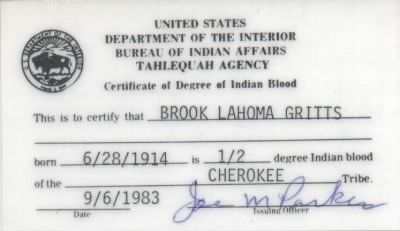 To this day, every Native American in the US that is an official member of a federally-recognized tribe receives a little card from the Bureau of Indian Affairs, like a driver’s license, that is called a Certificate Degree of Indian Blood (CDIB). It has your name, your tribe, and what fraction of Indian “blood” you have (e.g. ½, ¼, etc.). It is derived directly from racist laws of the past that granted greater rights to people that were less Indian. It serves no legal purpose—each tribe sets its own enrollment standard and is free to ignore what it says on a CDIB card. (Yet most tribes still use the BIA’s 1934 recommendation to use blood quantum in defining membership. See this article for a discussion of the complicated issues that creates.) The cards are often inaccurate, ignoring ancestry from multiple tribes, non-recognized tribes, and terminated tribes, failing to calculate ancestry from multiple family lines, and failing to have accurate information in the first place. Most importantly, they ignore the role of family and culture in ethnic self-identification. Finally, they are insulting. For no other ethnic group does the US government track degree of ancestry. And the “blood” terminology is for horse and dog breeds, not people.
Parallel: Imagine that, in the wake of 911, all Arab-Americans receive a card from the US government describing their “degree of Arab blood”.
What Can Be Done About It: BIA already lets the tribes tell them who their members are. They should forget about CDIB.
6. Mt. Rushmore 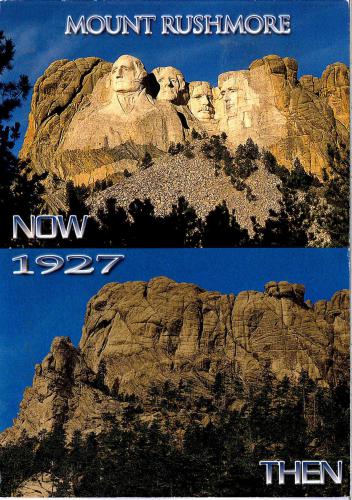
First, Native Americans in general prefer to avoid actions that leave marks or scars on the landscape, especially on permanent objects like rock. For example, you will not find railings or fence posts driven into the rocky ledges above the cliffs of Canyon de Chelly National Monument at Navajo Nation, despite the fact that thousands of tourists walk near the edge of the 700 foot drop. Second, Paha Sapa, or the Black Hills, are the primary sacred site for the Sioux, given to them in the Treaty of 1868 and then stolen from them during a contrived war less than ten years later. (See my blog post on this here.) To this day, they seek their rightful return. The carving of them into the enormous faces of four US presidents is one of the world’s most egregious examples of adding insult to injury. The insult is greater when one delves into these presidents’ policies and statements regarding Native Americans.
Parallel: Imagine Jews, Christians, and Muslims building holy sites on top of each other’s holy sites. (Actually, this parallel is not imaginary.)
What Can Be Done About It: Give it back to the Sioux and let them decide what to do with it.
7. Concentration Camps as “Reservations”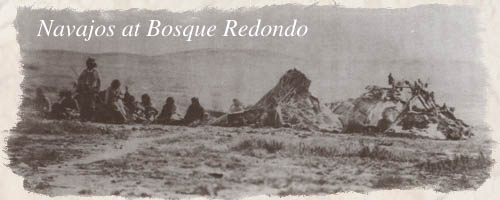
In the 1800s, “reservation” was a politically nuanced term to appease Eastern liberals while satisfying Western pioneers. It almost implies a special reserve where Indians could be safe, protected, and free to live their lives as they please. Nothing, of course, was further from the truth. They were typically stripped of hunting weapons, bereft of food sources, and dependent on meager (and rotten) government rations. Mortality rates were astonishing. Their kids were taken from them and forbidden to speak their own language. If caught off-reservation, Indians could be killed. Today the term “reservation” is more associated with nice restaurants. The term white-washes history; these were in fact concentration camps. Located in some of the worst remote locations, they have evolved today into economically impoverished former concentration camps.
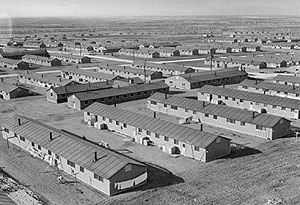 Parallel: Imagine if today’s school children read about the Auschwitz Reservation, the Dachau Reservation, and the Manzanar Reservation.
What Can Be Done About It: Note that the US government called them “reservations”, but call them concentration camps.
8. Plundered Possessions 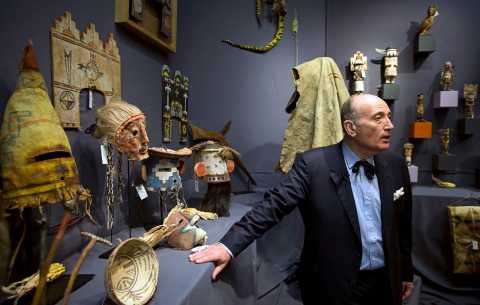
Native possessions, often stolen from pilfered grave sites or directly from the battlefield, reside in museums and private collections all over the world. They are bought, sold, and traded in auctions and on-line. They include children’s moccasins from the Wounded Knee battlefield and a young boy’s shirt with bullet holes and blood stains. And lots of skulls and bones. There’s a law requiring the government to return these items, but the process has been slow. There’s no law when these items fall into private hands.
Parallel: A modern parallel is the Jewish books, paintings, and religious items plundered by the Nazis. They are now the subject of extensive recovery efforts. Reputable museums avoid such Jewish items while still displaying Native American possessions.
What Can Be Done About It: Call the cops; these are stolen goods.
9. Columbus Day 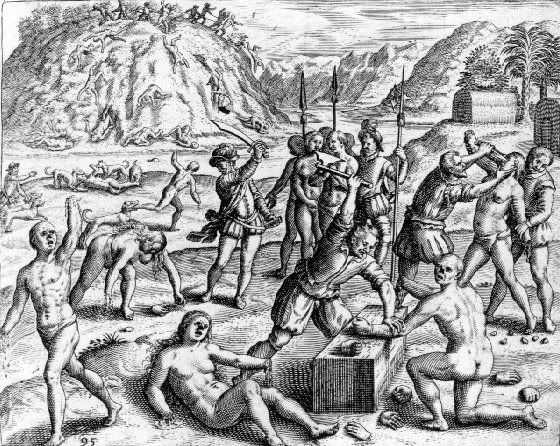
“Let us in the name of the Holy Trinity go on sending all the slaves that can be sold.” – Christopher Columbus. He was not even an American nor a patriot. He was an Italian working as a mercenary for Spain. He never set foot on US soil nor even saw it. And he clearly was at the forefront of the massive Spanish genocide of Native American peoples that occurred after 1492. Interestingly, Columbus Day has only been a federal holiday since 1937.
Parallel: Imagine a national holiday for Adolf Hitler—in Belgium.
What Can Be Done About It: Follow the examples of Seattle, Denver, Berkeley, Minneapolis, and South Dakota, call it Indigenous Peoples’ Day. Brazil and the Philippines also have holidays honoring indigenous peoples.
10. Place Names of Honor—Andover, De Soto, etc.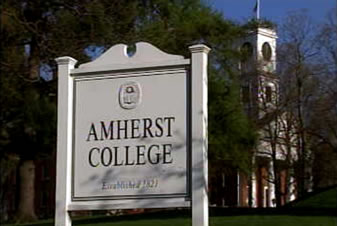
This list can go on forever, so here are just two examples. General Jeffrey Amherst was involved in the only documented case of deliberately sending smallpox-infected blankets to the Indians (“Could it not be contrived to send the small-pox among these disaffected tribes of Indians?”), yet he is remembered by several towns and a prestigious college. Hernando de Soto and his army of several hundred Spanish men cut a swath of terror, rape, slavery, torture, and murder thru ten states. His own biographer was horrified by his actions, writing, “Oh, wicked men! Oh, devilish greed!” Yet De Soto is honored today by counties, towns, parks, and schools.
Parallel: Imagine Ghengis Khan Elementary School in some of the lands he terrorized or Osama bin Laden County Park in Manhattan.
What Can Be Done About It: Easy fix; change the names.
11. Pocahontas’s Painting in the Capitol Rotunda
 Much about Pocahontas has been fictionalized, but a few facts are agreed to by all: She was kidnapped by the English and she “converted” to Christianity and was married to John Rolfe while in captivity. To this day, a painting of her baptism, twelve feet tall by seventeen feet wide, adorns the Capitol Rotunda. The painted figures are life sized. The artist is not shy about his purpose: “She stands foremost in the train of those wandering children of the forest who have at different times—few, indeed, and far between—been snatched from the fangs of a barbarous idolatry, to become lambs in the fold of the Divine Shepherd. She therefore appeals to our religious as well as our patriotic sympathies and is equally associated with the rise and progress of the Christian Church as with the political destinies of the United States.”
Actually, this is not the only giant painting in the Capitol Rotunda depicting Native Americans; there are two others. Both them show naked Native women about to be raped.
Parallel: Imagine ISIS or Boko Haram kidnapping Christian girls, declaring they have converted and married, and decorating their capitol with glorious portraits of their conversions.
What Can Be Done About It: Replace the painting with a true story, and with one with greater relevance to the founding of the United States. Pocahontas was kidnapped in 1615, even before the Pilgrims arrived.
12. The Black Hills 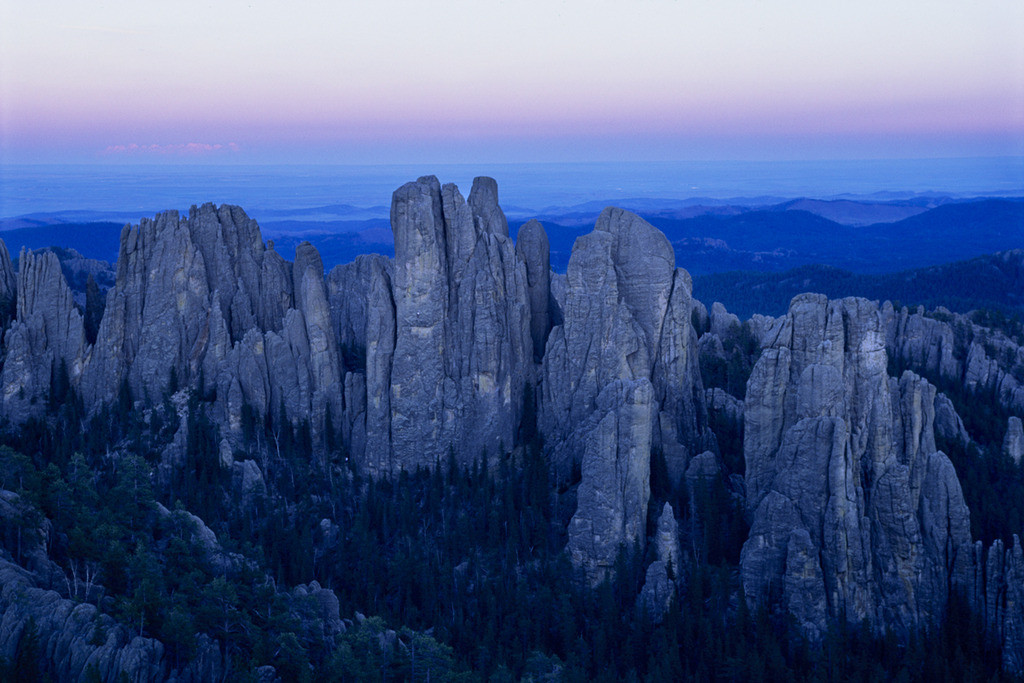
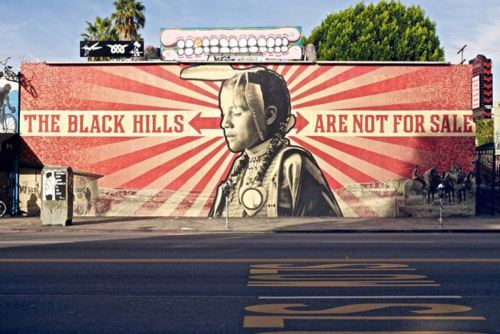
Yes, back to the Black Hills, illegally stolen from the Sioux in a contrived war, so said the US Supreme Court in 1980. The Court awarded the Sioux a cash settlement, which sits today in a government account collecting interest. Estimated today to be worth over $1 billion, the Sioux won’t touch it because they want the land, not the money. Their mantra is “The Black Hills are not for sale.” The magnitude of the Sioux’s principled stand is not trivial. If the money were to be divided among them today, each household would receive over $50,000. This would be more than double median family income. If the money were invested, the interest earned each year would exceed current tribal government budgets. For a people with an 80% unemployment rate, where more than half live below the poverty line, where many households have no electricity, running water, sewage, or heat (other than wood stoves), this amount is not trivial.
Parallel: Imagine the county takes your family farm in a shady eminent domain case, then loses to you in court and reimburses you a token amount but will not return the land. Meanwhile, they aren’t really doing much with your land.
What Can Be Done About It: The US Government can resolve the court case by returning the Black Hills to the Sioux. It can be done, at least mostly, because most of the Black Hills are federally owned in the form of national forests and parks. The $1 billion can be used to pay off lumber companies, buy back mining rights, buy back grazing rights, decommission roads, and restore the habitat. See this page for a similar call from the environmental community.
 “Este presidente es mi presidente.” This president is my president. Such were the words on a poster I saw in a tiny bedroom in a small village at 13,000 feet in the Altiplano, Bolivia, several years ago. It’s a big deal for them. As recently as 1952, when a Quaker group from the US bought a parcel of land to open a school, the land came with serfs– indigenous slaves tied to the property. Since then, Bolivia has seen a series of right-wing leaders who sold their natural resources to Western companies with little return for the people.
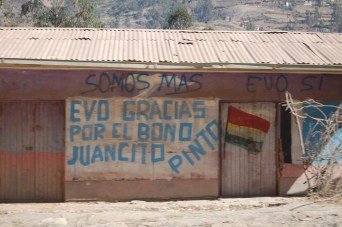 All that changed in 2006, when they elected a poor coca farmer named Evo Morales. He has marshaled the royalties from natural gas and other resource revenues for the benefit of the poor. Electricity, water, paved roads, and (of course) artificial turf soccer fields are appearing throughout the nation. Thanks to a small stipend to families (called the “juancito”), children are going to school.
 The wiphala, the indigenous flag, has been given official status, so that now Bolivia has two national flags.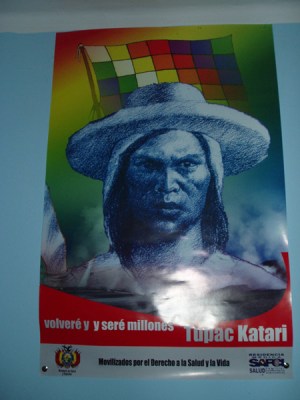

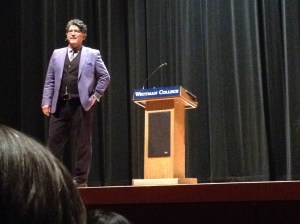 udience can get to know him. Why regurgitate a book to them that they have already read?
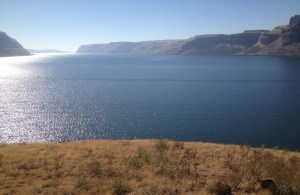 , reclaiming the stage.
 and remembrance. The Marcus Whitman Hotel and Conference Center, the nicest place in town and quite possibly where Alexie was housed, is across the street from Peopeomoxmox’s statue. Down the highway, the Umatilla now have an army depot named after them. Ironies abound. The Cayus
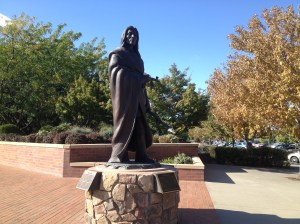 e, whose members were accused of the Whitman murders and who consequently suffered ethnic cleansing and confinement on a reservation (as did all the tribes in the area), are not prominently memorialized.
 e short quip, “Notice I haven’t even mentioned the Whitmans.” Like any good writer, Alexie illustrated the irony taking place with his grand finale.
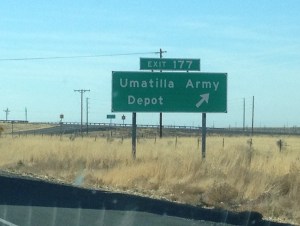 ut say if she was the first person to set foot on Mars?”
 noble beasts shot down. They were all sleek, glossy, and fat, and as I love a horse, I fancied I saw in their beautiful faces an appeal for mercy. Towards the last the soldiers appeared to exult in their bloody task; and such is the ferocious character of men.” – US Army soldier


 y have had



 Memories of the People