On this date… April 5, 1614… Virginia

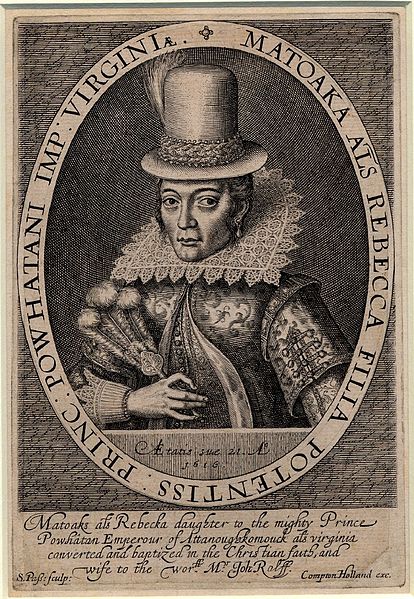
On this date in 1614, Pocahontas was married to John Rolfe.  Never mind that she was already married to Kocoum and had a child.
Image

At this point she was being held hostage, raped, and impregnated.  Her first husband had been killed.  Her father, King Powhatan, had already paid her ransom once, but the English figured they’d hold on to her and try to get another ransom in weapons and corn.

To pass the time, Pocahontas learned English and the basic tenets of Christianity.  But they probably did not read her this verse:  You struck down Uriah the Hittite with the sword and took his wife Bathsheba to be your own. 

She was taken to London where she was paraded as a good Indian.  She quickly got sick and died.  Two-hundred years later, she was romanticized as the perfect Indian.
Image

Her abuse continues today.  Pocahontas, Amonute, Matoaka, what have they done to her?

It started before she was born, in 1575, when they painted Amerigo Vespucci welcomed to America by a naked Indian princess on a hammock.  They said she wanted him.

Image

In the 1800s, when they called for removal and established the camps, the nation became obsessed with Pocahontas.  She became the shining star on the hill, appealing to children from school books and jigsaw puzzles.  They made her the mother of their nation.  A Confederate militia called themselves the Guard of the Daughters of Powhatan.  Her breasts and blowing hair helped sell chewing tobacco.

Image

Their story of her story persisted centuries.  In 1946, Samuel Eliot Morison won a Pulitzer Prize when he said that “the New World gracefully yielded her virginity to the conquering Castilians.”

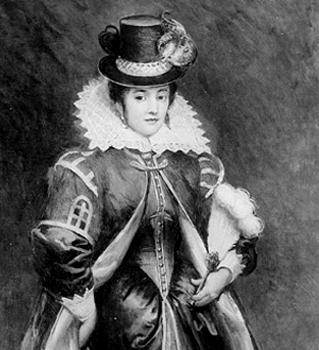
Today her portrait, with white skin and brown wavy hair and a face like English royalty, attired head to toe in the latest London fashion, hangs in the National Portrait Gallery.  Twelve feet tall by seventeen feet wide, her baptism adorns the Capitol Rotunda.  The painted figures are life sized.  The artist is not shy about his purpose:  “She stands foremost in the train of those wandering children of the forest who have at different times—few, indeed, and far between—been snatched from the fangs of a barbarous idolatry, to become lambs in the fold of the Divine Shepherd. She therefore appeals to our religious as well as our patriotic sympathies and is equally associated with the rise and progress of the Christian Church as with the political destinies of the United States.”  (I put this as #11 on my list of Twelve Things More Offensive than the Washington Redsk*ns.)


Image

Like a Boko Haram captive girl, Pocahontas converted while in captivity.  This painting of her baptism hangs in the Capitol Rotunda (alongside several others with naked fleeing Native women).
 

Image

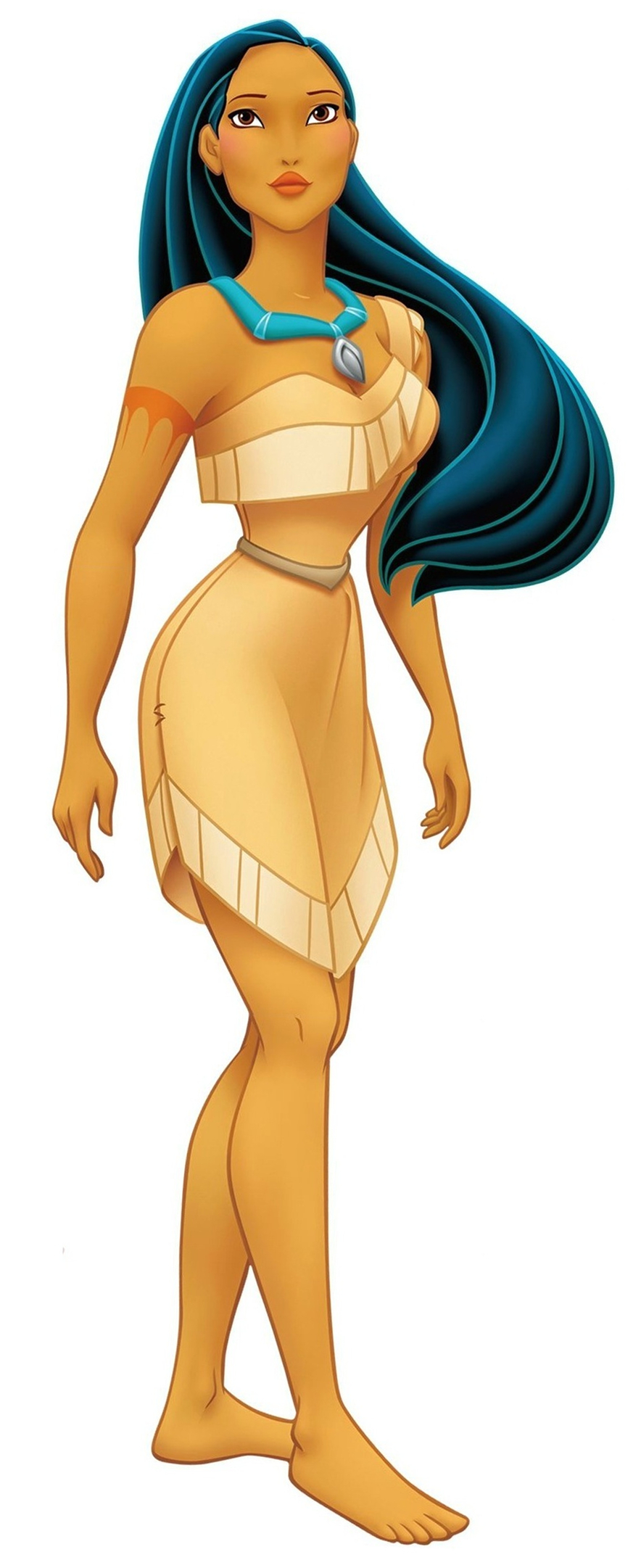
She became the good Indian, spreading her legs to welcome white penetration.  Burlesque dramas told her story in blackface.  They made her sexy, alluring, exotic and erotic, an object of forbidden jungle love.  They gave her the body of Barbie.

It is the power of the oppressor to write the defining story about a person.  Disney put her on the big screen.  She became the ultimate Appropriated One.  They call her Pocahottie.

She is Anne Frank in love with a Nazi soldier, painted with blue eyes and blond hair, topless, selling cigarettes, while her portrait hangs in Hitler’s hall.
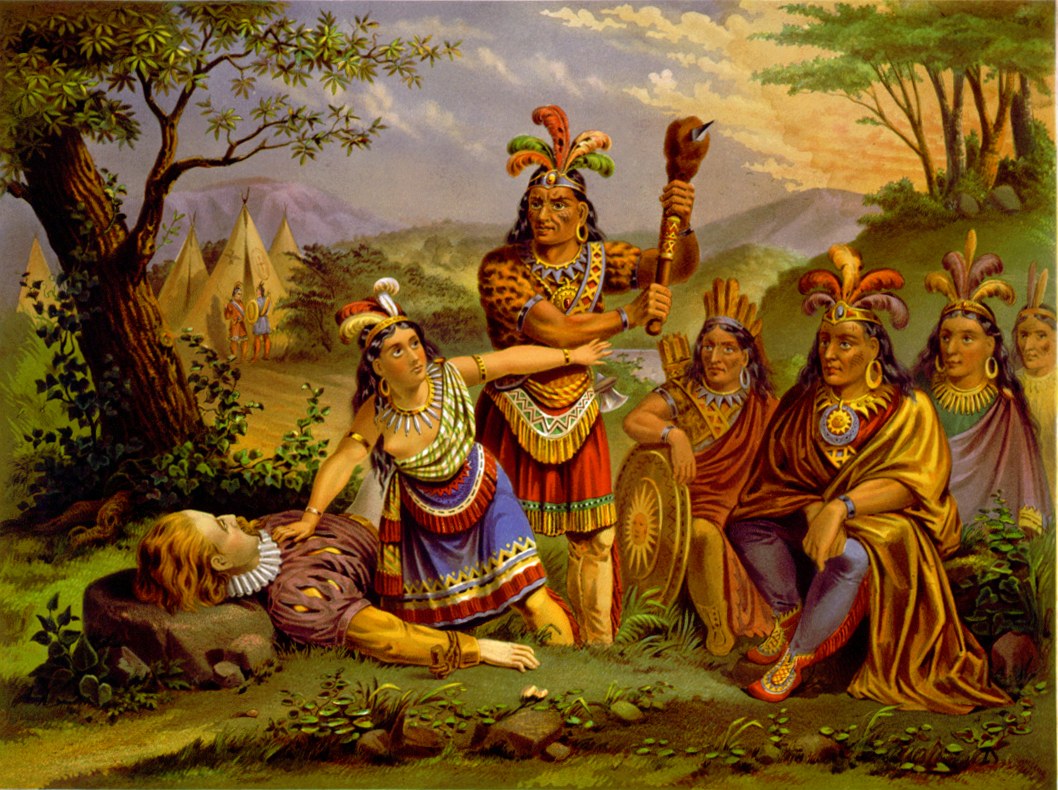


Pocahontas, Amonute, Matoaka, what have they done to her?
Posted in On this date... | Tagged | 1 Comment

On this date… March 17, 1699… Louisiana

On this date in 1699, Pierre Le Moyne d’Iberville cast his eyes on Le Baton Rouge, the Red Stick or Red Pole.  It served as “the dividing line between the Ouma’s hunting ground and the Bayogoula’s.  On the bank are many huts roofed with palmettos and a maypole with no limbs, painted red, several fish heads and bear bones being tied to it as a sacrifice.”

The Red Stick remains a common symbol in Louisiana.

Image

Posted in On this date... | Tagged , , , , | Leave a comment

The Academy Awards, The Godfather, and Wounded Knee, 1973

Fascinating story here from the 1973 Academy Awards:

http://indiancountrytodaymedianetwork.com/2014/03/02/oscars-all-time-most-outrageous-moment-and-what-it-meant-153817

Posted in news | Tagged , , , | Leave a comment

On this date… February 28, 1823… Washington, D.C.

On this date, Supreme Court Chief Justice John Marshall redefined land ownership in America in the case of Johnson v. M’Intosh.

It was a stretch, but he went back to the fifteenth century, when the Pope allotted newly discovered lands to Spain and Portugal.  He ruled that, under this practice, England had “the exclusive right of the discoverer to appropriate the lands occupied by Indians.”  (Never mind that England did not assert this right, but sought to acquire Indian lands through purchase.)  As successors to the English, the United States now has the right to appropriate Indian lands.

After all, the Indians “were fierce savages, whose occupation was war, whose subsistence was drawn chiefly from the forest.  To leave them in possession of their country, was to leave the country a wilderness.”  Because they are “an inferior race of people,” they do not have a right of ownership, but only a right of “occupancy”; the United States government has “the exclusive power to extinguish that right.”

Thus, in the courts, the indigenous people of the United States were stripped of their land.  With the stroke of John Marshall’s pen, in the eyes of the law, they became tenants.  The federal government became a benevolent steward and a jealous landlord.

The Cherokee protested and rejected the “doctrine of discovery”.  They replied that “our title has emanated from a supreme source, which cannot be impaired by the mere circumstance of discovery by foreigners; neither has this title been impaired by conquest or by treaty.”  But the Court turned a deaf ear.

This case remains the basis for land ownership in America today.  It is among the first cases taught to students in law school, and it continues to be cited in legal decisions each year.  The ruling was made in the District of Columbia—Columbus’s land.  They didn’t name it that for no reason.

Image

See Echo-Hawk, W.R. 2010  In the Courts of the Conqueror. 

Posted in On this date... | Tagged , , , , , | 1 Comment

The Alice Piper Statue Project: support public art and indigenous women

Before Brown v Board of Education, before Ruby Bridges, there was Alice Piper.

1921 Political Code of California, Section 1662:

The governing body of the school district shall have power to exclude children of filthy or vicious habits, or children suffering from contagious or infectious diseases, and also to establish separate schools for Indian children and for children of Chinese, Japanese or Mongolian parentage.

In August, 1923, seven Owens Valley Paiute children turned their backs on the Big Pine grammar school where they were refused admission.  Alice Piper and six classmates were told to attend the federal government day school for Indians, a pathetic institution designed to prepare them for a life of manual labor.

But their cry for equality was carried from the sagebrush and cottonwoods of Owens Valley to the California State Supreme Court.  The justices cited the 14th amendment and ruled in favor of the Paiute.  Alice Piper and her classmates were allowed to attend the local public school.

big pine

The ruling echoed off the east face of the Sierra for years.  It served as legal precedent for Mexican American children in 1946.  As a result, Governor Earl Warren eliminated segregation from the California Education Code.  In 1954, Warren, as the Chief Justice of the US Supreme Court, authored the decision in Brown v. Board of Education.

Alice’s school still stands today:  the Big Pine High School.  Contribute thru Kickstarter now to contribute toward a statute in commemoration of Alice Piper.  Let’s support public art and honor this young indigenous woman.


Posted in news | Tagged , , | 1 Comment

Happy Valentine’s Day

“I love you” in many many many indigenous languages, from the 1491’s

http://www.youtube.com/watch?v=RjtHXRyZhGs

Enjoy!

Posted in news | Tagged , , | Leave a comment

Project 562

Very cool kickstarter project (already raised more than twice what she was asking for) for contemporary indigenous representation.

https://www.kickstarter.com/projects/matika/project-562-changing-the-way-we-see-native-america

In addition to the promo video, there are video links to her Ted Talk and other short videos from the road.

Posted in news | Tagged | Leave a comment

On this date… February 10, 1763… Florida

On this date in 1763, the Treaty of Paris ended the Seven Year’s War, also known as the French and Indian War.  The French and Spanish were expelled from what would become the United States, leaving Great Britain as the sole colonial power.  From New York to Florida, the impacts to Native Americans were profound.

We take one example from Florida.  The British and the Spanish traded St. Augustine for Havana.  The Spanish evacuated the former for the latter.  Along with them were eighty-nine Indians, some of the last survivors of decades of British slaving raids.  They included Manuel Riso and Juan Alonso Cavale, the last Timucuan-speaking people on earth.  As they stepped onto the boat and pushed off from the Florida coast, twelve thousand years of memories went with them.

Image

Posted in On this date... | Tagged , , , , | Leave a comment

Coca–Cola’s Super Bowl Ad Raises Good Questions

A 60-second Coca-Cola ad during the Super Bowl, ostensibly meant to promote diversity and a spirit of inclusiveness, has raised a number of interesting questions across the land.  Whose land was it?  Whose land is it?  Who claims it now?  Who lives here now?

http://indiancountrytodaymedianetwork.com/2014/02/03/coca-colas-america-beautiful-super-bowl-ad-causes-stir-153391

There is a Native language in here: Keres Pueblo! The full song is here:
http://indiancountrytodaymedianetwork.com/2014/02/03/native-language-spotlighted-during-coca-cola-super-bowl-ad-153398

Also, I’m guessing the guy in the cowboy hat and the three children in the last two scenes were filmed in the Navajo Nation.


Posted in news | Tagged , , , , | 1 Comment

Proud To Be video released for the Super Bowl

Great 2-min video here by the National Congress of American Indians:

https://www.youtube.com/watch?v=mR-tbOxlhvE

Posted in news | Tagged , , | Leave a comment