Land acknowledgement: Minneapolis, Minnesota

IMG_2343.jpg

March 8, the lake still frozen, the land about to come out of hibernation.

I went to Minneapolis to visit my son. I’d never even been to Minnesota before. But it’s exciting to be here—the home of so much important Native history, past and present. It’s the intersection of the Mississippi River and the Great Lakes, where the Anishinaabeg and Oceti Sakowin came together.

Anishinaabeg refers to the Council of Three Fires, the Ojibwe (aka Chippewa), Odawa, and Potawatomi, as well as some other groups—Algonquin, Nipissing, Oji-Cree. Historically, they formed the Iron Confederacy with the Cree, Assiniboine, and Metis.

Oceti Sakowin, meaning Seven Council Fires, are also known as the Sioux. For a review of which bands constituted the original seven, and then the seven new bands of the Lakota, see my diagram at this blogpost. Minneapolis is squarely in the historic territory of the Eastern Dakota, aka Santee Sioux.

In more recent history, Minnesota has been a center of Native activism, the original home of AIM and the current home of Winona LaDuke, among other Native leaders.

North Country.JPG

I recommend this book, by Mary Lethert Wingerd, for a decent history of the state.

A friend of my son’s joined us for breakfast. She was a local white girl who grow up in Northfield, an hour south of here. She told us about her 8th grade history of Minnesota, which made no mention of Little Crow’s War, the Mankato executions, or Native Americans at all. In her memory, it was all about the bandit Jesse James, who was prevented from robbing a bank in Northfield and lost many of his gang in a shootout. The children even did a school play about it. This kind of highly selective history and Native erasure continues in many Minnesota schools today.

One of the highlights was my visit to the Minneapolis American Indian Center, a community center that offers a plethora of services to elders, children, and everybody else. Built in the 70s, it’s one of the first Native cultural centers in the nation. I’ll leave you with some pics from it.

IMG_2366.jpg

The mural on the back side of the Minneapolis Indian American Center.

IMG_2370.jpg

IMG_2371.jpg

Birch bark canoe on display.

IMG_2373.jpg

The art gallery was featuring a historic collection of AIM photographs.

IMG_2369.jpg

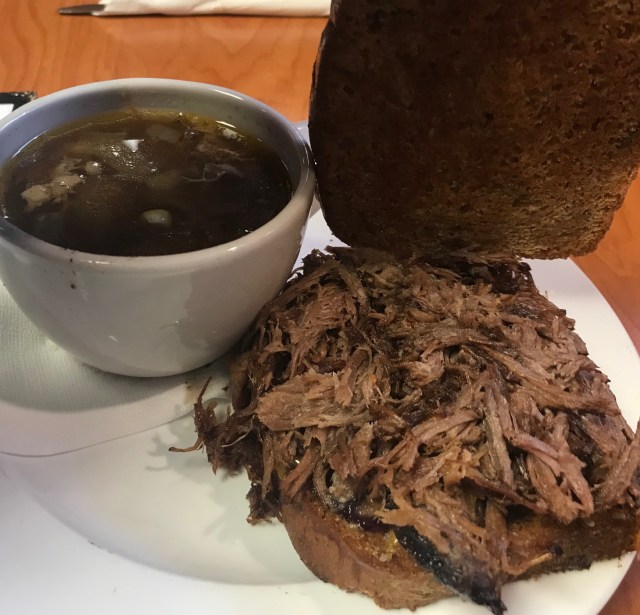
They have a cafe featuring traditional foods. In the spirit of decolonization, I had to get the bison melt. 


Posted in land acknowledgments | Tagged , , , , , , , , , , , , , , , , , , , , , , , | Leave a comment

Super Bowl LIV: The Erasure Bowl

erasure.jpg

A lot has been written about Kansas City’s use of the Chiefs as a mascot, with its various forms of “playing Indian”– tomahawk chops, the chant, etc. For more on the mascot issue– in fact, for a comprehensive review of the mascot issue and a summary of all the academic literature on it– see this blog post here:

Native mascots: A comprehensive literature review


But let’s move on to the 49ers. It’s a historical reference to the Gold Rush, which largely created the city of San Francisco. The US took California from Mexico in 1848, just as gold was discovered by John Sutter’s employees. Sutter himself, based on the testimony of his contemporaries, was a crazed individual comparable to Kurtz in Heart of Darkness. He sex trafficked Native slaves and posted their severed heads on the gates of his fort in what is now downtown Sacramento. Today, streets, town, counties, even the governor’s dog, are named in his honor.

Within a few years, 300,000 white Americans, along with 60,000 Chinese immigrants, 7,000 Mexicans (who were mostly already in California), and others poured into California. The Natives were in the way, especially the ones in the hills, the Miwok, Maidu, Yana, Wintu, and others, who had avoided the Spanish missions (themselves a kind of theocratic terror state I can only compare to ISIS’s pseudo state in northern Syria of recent years).

The historic 49ers unleashed a reign of anarchy and terror on both the people and land of California. First, they mined mercury from the Coast Ranges and carted it to the Sierra to process the gold. To this day most of California’s rivers and lakes, and San Francisco Bay, are contaminated from this effort. Fish consumption advisories, especially in the lower elevations, are ubiquitous. Thru hydraulic mining they diverted streams, turned them into fire hoses, and washed away mountain sides. The ensuing mud wiped out most of the salmon in the Sierra.

And, finally, the 49ers engaged in one of the most systematic and thorough genocides ever documented. Thanks to the Gold Rush, California quickly became a state in 1850, the “Golden State”. It’s first act was to legalize Native child slavery. Girls sold for twice the cost of boys. Native sex trafficking was so pervasive that entire communities died of syphilis. In the hills, miners baited food for Natives with cyanide while the State of California reimbursed vigilante groups for their killing sprees. At times, it was a house to house affair, calling out Natives by name and slaughtering them in the yard, like in Rwanda.

California’s first governor addressed the state legislature in 1851, saying, “That a war of extermination will continue to be waged between the races until the Indian race becomes extinct must be expected.”

When the federal government tried to establish reservations to protect Natives from the miners’ depredations, the state rejected them. It wasn’t until the early 1900s, when the state realized they didn’t have legal title to the land, that they found the genocide’s survivors, moved them to “rancherias”, and got them to sign off on the rest of the state.

So that’s the 49ers that we are celebrating and honoring.

Taken together, the two Super Bowl mascots illustrate how white America deals with its past. It relegates Natives to nothing more than an old arrowhead found in the backyard, or just completely erases them from history.

chiefs.jpg


Posted in my own thoughts, news | Tagged , , , , , , , , , | Leave a comment

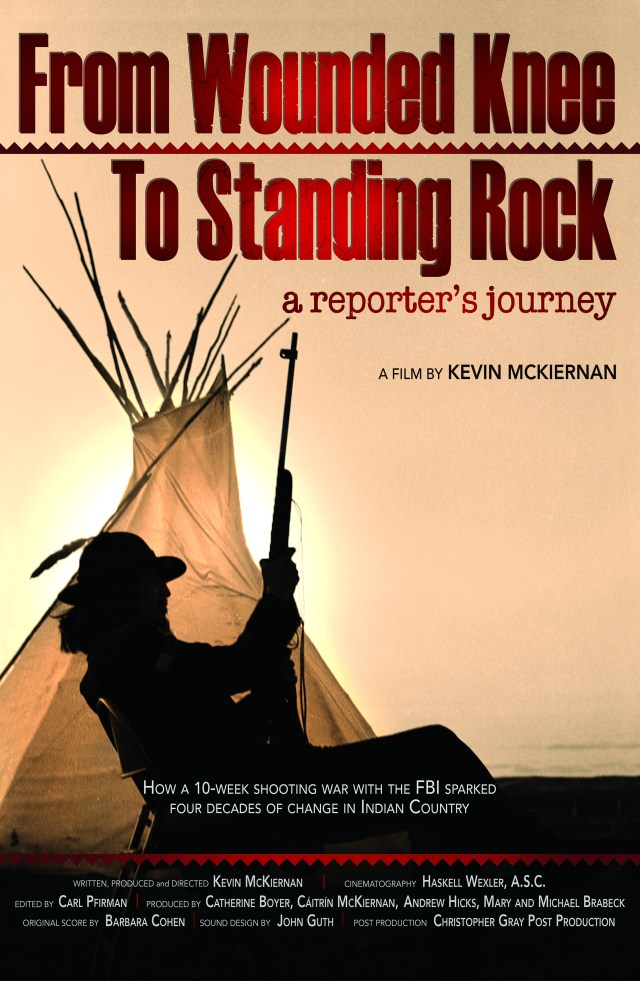
Movie review: “From Wounded Knee to Standing Rock: A reporter’s journey”

In 1973, Kevin McKiernan was a young white photographer from Minneapolis looking for a job. When AIM took over Wounded Knee, he headed to South Dakota and managed to get a press pass. When the US military excluded all media from the area, he gained the trust of the Oglala, snuck past the military, and spent weeks with the occupation. During lulls in the fighting, he filmed and photographed and interviewed the Lakota and others within Wounded Knee. He filmed Anna Mae Aquash’s wedding during the standoff. Later, in June 1975, he was at the Jumping Bull property in Oglala. He spent the night of June 25 there with Leonard Peltier. He only missed the shootout with the FBI because he left an hour earlier to go report on a court case.

Now, over 40 years later, McKiernan put this unique footage together in a documentary, From Wounded Knee to Standing Rock: A reporter’s journey. The promotional slogan is “How a 10-week shooting war with the FBI sparked four decades of change in Indian Country.”

McKiernan journeys back to Wounded Knee with occupation veteran Willard Carlson (Yurok) and includes modern interviews with Dennis Banks and others, as well as two former FBI operatives. It’s a compelling and gritty 90-minutes, hard but important to watch. Don’t expect much about Standing Rock. This documentary is about Wounded Knee, its aftermath, and the effect it had on the Native civil rights movement, on the Lakota, on AIM, and on subsequent Native legislation in the 1970s.

View the trailer.

McKiernan.jpg

Posted in my own thoughts | Tagged , , , , , , , , , , , , , | 2 Comments

Land acknowledgement: San Fernando Valley, California

I grew up and lived here for 18 years, near the southwest edge of the San Fernando Valley. My mom is still in my childhood house.

HH.jpeg

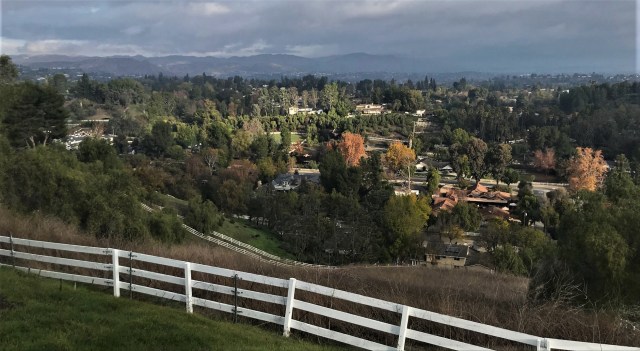
On a clear day, when there is no smog, you can climb what I call Saddle Creek Hill, the very last hill in the southwest corner of the valley, and look out across to the Santa Susanna and San Gabriel Mountains.

This is where Tongva and Chumash land meet.

In 1542 Juan Rodríguez Cabrillo claimed all this. In fact, he claimed the whole West Coast all the way up to 42 degrees north latitude—that’s the California/Oregon border today. But he hardly stepped ashore around here.

For over 200 years, California remained an island, protected from European exploitation by natural forces. There were a few visits, but for the most part the desert deterred the Spaniards from overland invasion. Prevailing northwest winds prevented them from sailing up from Mexico. When they did, fog obscured their view. When the eventually found San Francisco Bay, it was by land.

But the Spaniards finally arrived in force in 1769. Junipero Serra set up the missions. They were more analogous to ISIS-controlled Raqqa than anything worth honoring today, a theocratic totalitarian slave state imposed upon the Natives. With Nazi-esque efficiency, the valley’s Natives were taken to the San Gabriel Mission, built in 1771. The San Fernando Mission was built nearly twenty years later. Baptism meant conscription and servitude. Conditions were so egregious that European visitors were appalled. The Native death rate in the missions caused their population to plummet. For their part, the Tongva and Chumash led several uprisings, taking over mission complexes on several occasions. The missions only lasted 65 years before the Mexican and European Catholic authorities shut them down.

Nevertheless, the missions are remembered today with nostalgia, their architecture reflected in houses and buildings throughout the region. Serra was recently sainted. Only last year did the state of California reform the school curriculum to include a more balanced message.

CLICK TO ENLARGE

SF Valley timeline.jpgAs Alta California was falling from Mexican into American hands in the dying days of the Mexican-American War in 1846, the Mexican Governor Pío Pico turned most of the San Fernando Valley into the Rancho Ex-Mission San Fernando land grant. Sixteen years later, Pico, who was of Spanish, African, and Native descent, ended up owning the southern half of the property, the part where I grew up. From there, the land passed down to other ranchers and eventually, after the completion of the aqueduct in 1913, to real estate developers and, eventually, to my parents and thousands of others.

Today the Tongva and Chumash, like most California tribes, are a bit like a jigsaw puzzle dropped on the floor. First they were herded into the missions, merged with other tribes, and then released to become paupers in the new economy. Instead of being called Chumash or Tongva, they were called “mission Indians”, or Gabrieleño and Fernandeño, after the specific missions. That’s a bit like throwing Jews from Poland and gypsies from Czechoslovakia into Auschwitz and then calling all the survivors Auschwitzians.

There are more than a half dozen bands of the Chumash today and several of the Tongva. Yet, of all these groups, only a single Chumash band, the Santa Ynez, is federally recognized. Nevertheless, and remarkably, thousands of surviving Chumash and Tongva continue to keep their cultures alive today.


Posted in land acknowledgments | Tagged , , , , , , , , , , | Leave a comment

Land acknowledgement: Neah Bay, Washington

Makah2One doesn’t really need to do a land acknowledgement for Neah Bay because it is still in Makah hands. But I’ll do it anyway: This is Makah Nation land.

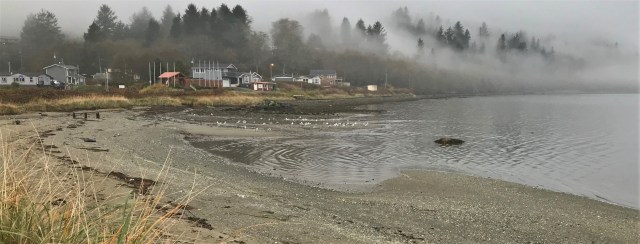
It’s my first time here, in the northwest corner of the Pacific Northwest, out on a point of land that divides the Pacific Ocean and the Straight of Juan de Fuca. In the Lower 48, you can’t get more northwest than here. Bathed in sea air, protected by clouds, bald eagles perch above the main street scanning the beach, loons and grebes dive in the harbor, and fishing is everything.

This is the home of the Thunderbird and the Whale, who fought so famously on January 26, 1700, causing a 9.0 earthquake and a tsunami that transformed the Pacific Northwest. Makah3The Makah logo, an eagle holding a whale, is everywhere; it appears on police vehicles, government buildings, boat houses, etc.

The Makah are one of the fortunate tribes to have their reservation on their ancestral land. And the four-hour drive from Seattle keeps this nation set apart, a world unto its own. I’m grateful they welcome visitors, who each must pay $10 for an annual visitor’s pass. No problem; I’m happy to do that. Many come to fish or to hike to the tip of Cape Flattery.

It is beautiful.

Makah1

Tsoo-Yess Beach on the Pacific side of the point.

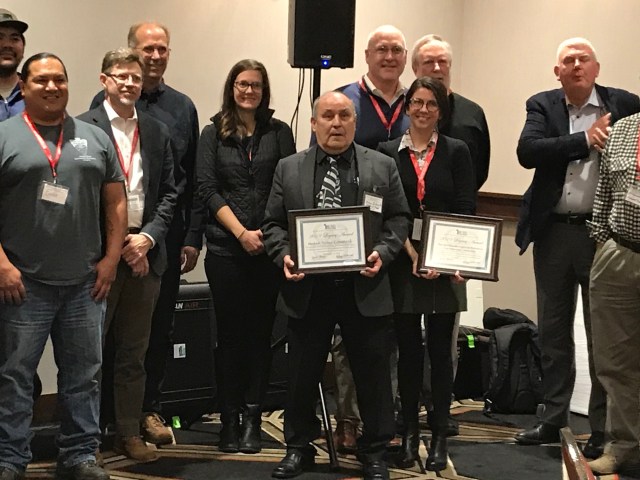
I got to see the Makah again, a few days later, at the Pacific States Oil Spill Task Force annual meeting in Bellingham, where they received a Legacy Award for their work in prevention and preparedness of oil spills (below). A large US Coast Guard rescue tug is stationed in Neah Bay.

Makah4

As I write this, other tribal officials are in Seattle for a hearing on their continued attempts to get a permit to resume whaling. More on that later. Here’s a past blogpost where I covered white liberals debating that issue on Facebook.


Posted in land acknowledgments | Tagged , , , , , , , | Leave a comment

Evo Morales and Bolivia: 500 years of indigenous struggle against international exploitation

The rise of Evo Morales to the presidency of Bolivia was a landmark moment in the struggle of indigenous people against colonial oppression. Bolivia has been ground zero in this struggle for centuries. Five hundred years ago, enslaved Aymara worked and died in the silver mines of Potosí, some while standing ankle deep in liquid mercury. The riches from those mines funded the European Renaissance. The mine’s symbol gave us the dollar sign we use today.

Since then, Bolivia’s riches in natural resources have led primarily to its exploitation. It fought wars and lost land to foreign interests over tin, oil, and potassium nitrate. Evo came to power in a conflict over natural gas. He’s been overthrown due to foreign interests in lithium. It is no wonder the Aymara say everything on the earth belongs to God, but everything under it belongs to the devil.

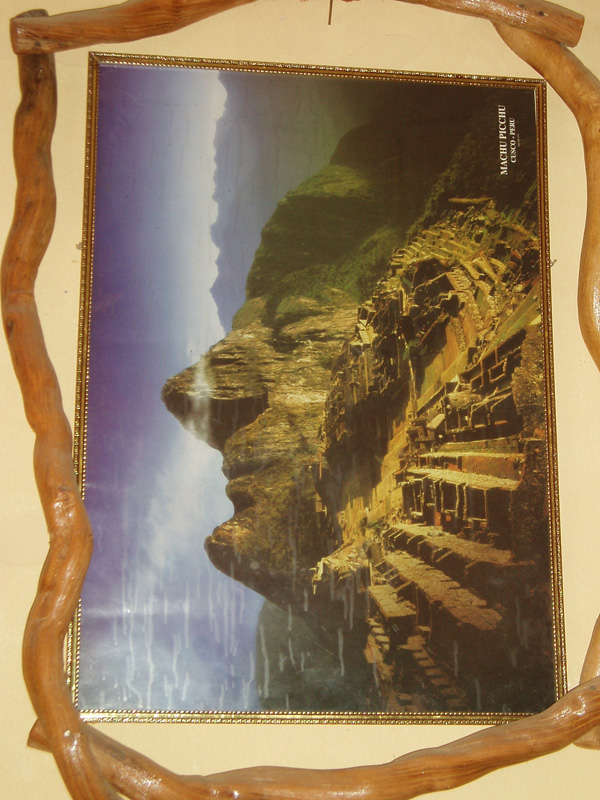
Evo’s rise was steeped in indigenous legend. When I was there in 2010, in restaurants I saw photos of Machu Picho turned on edge. The Sleeping Inca, they said, has woken up. They spoke of a prophecy of 500 years of oppression to be followed by 500 years of sovereignty. The first 500 years was now ending.
OLYMPUS DIGITAL CAMERA

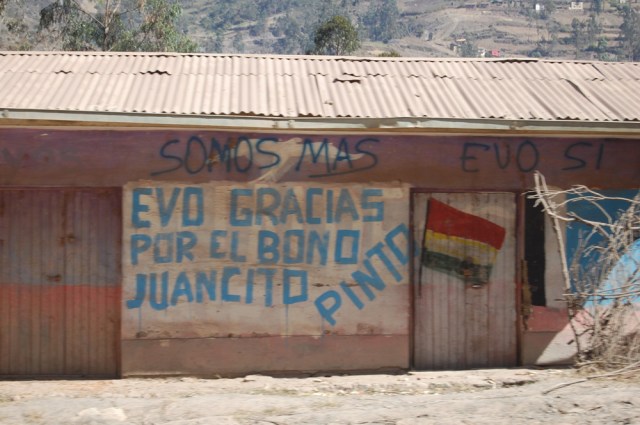
When I was on the Altiplano, “Evo” and “Este presidente as mi presidente” was spray-painted on walls and houses, even written on walls in children’s bedrooms. They could hardly believe a government that represented them.
evo4

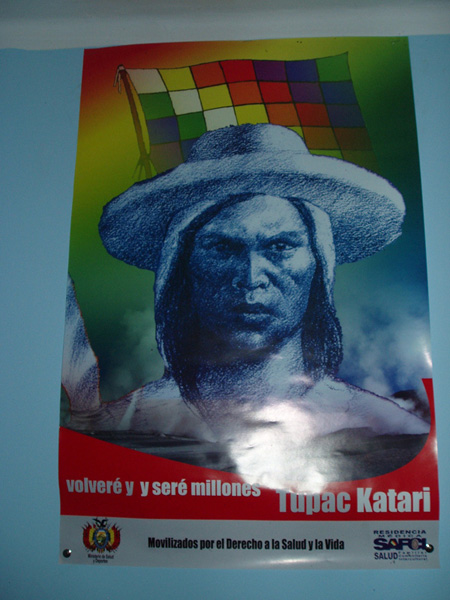
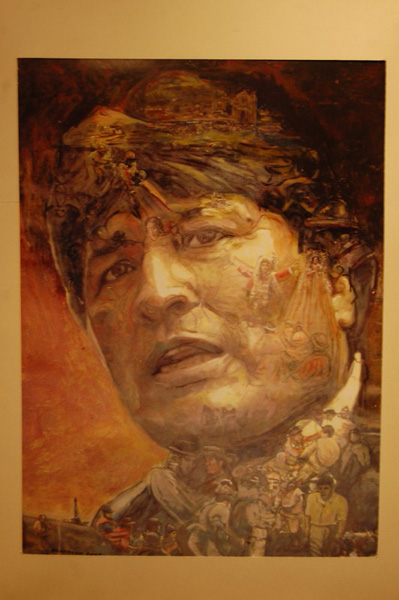
This poster of Tupac Katari, an indigenous leader who rose up against the Spaniards,  highlights his last words as he was drawn and quartered. “I will return, and it will be in the thousands.” The rise of Evo represented the return of Tupac and the rise of the Aymara. The wiphala, the indigenous flag, became a co-national flag under Morales.
OLYMPUS DIGITAL CAMERA

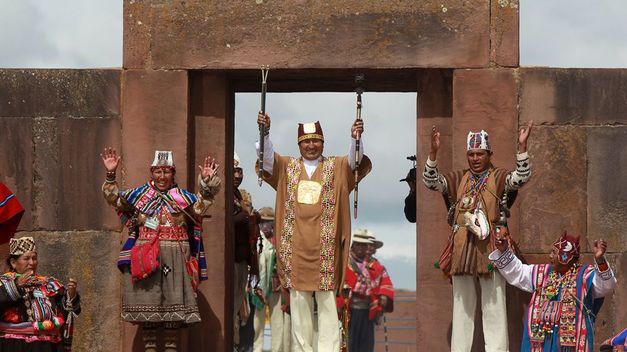
He was a lowly coca farmer, had never worn a tie in his life (and made a point never to do so), had been beaten up and left for dead by a US-financed anti-drug police unit, and was now president. As the first indigenous head of state in the Americas since the Spaniards, Evo held his inauguration ceremony at the historic pre-Incan site, Tiahuanaco, in traditional style.
evo6

Evo required all government employees to learn either Aymara or Quechua in addition to Spanish. He pushed indigenous languages in schools. Eduardo Galeano’s Open Veins of Latin America became required reading in high school.
evo1Bolivia is a country with two halves. Up on the Altiplano above 10,000 feet, there are the indigenous Aymara, living in poverty, growing potatoes when they aren’t working the mines. In the lowlands, there are the Spanish-speaking ranchers and businessmen, the conservative ruling class that have pretty much controlled the country for centuries. As recently as 1952, you could buy property on the Altiplano that came with Aymara slaves written into the title deed.

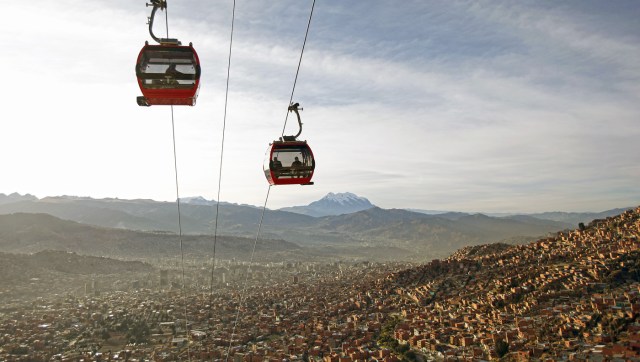
Evo challenged not only historic colonialism, but also modern neoliberal colonialism. Rather than allow the country to be pillaged of natural resources by multi-national corporations while its people suffered in poverty (e.g., exporting natural gas while the poor in El Alto lived at 13,400′ with no heat), he raised royalties and nationalized parts of the natural gas industry. He thus filled government coffers and started providing services: roads, electricity, and turf soccer fields for remote villages; three modern cable car telefericos for public transport between La Paz and El Alto; and improved access to education for the poor. Under Evo, Bolivia’s economy did well and poverty was dramatically reduced.
The Week That Was From Latin America Photo GalleryWhen Evo ran for the president the first time, he energized and mobilized a people not used to voting. He won a first term and a second term. Then he ran into term limits, but successfully modified the constitution to run for a third term. Then, this year, again facing term limits, he sued. The Supreme Court, largely his appointees, ruled that term limits “violated his civil rights”. He ran a fourth time.

So Evo probably overplayed his hand. He probably should have planned for a peaceful succession to an ally. This time, the right-wing forces arrayed against him were ready. They fomented an election controversy (which is well-explained at the Twitter link below).

Evo ended up fleeing to Mexico, his house ransacked, with a conservative anti-indigenous racist asserting the presidency. She called the Aymara “satanic” for their traditional ceremonies.

It’s a familiar playbook. A democratically-elected left-wing president in Latin America is removed in a coup and the US played a role.

This story is still unfolding.

As with the overthrow Zelaya in Honduras in 2014, which involved AT&T with support from Senator John McCain and Secretary of State Hillary Clinton (working against President Obama), the real story will come out slowly, shunted by the mainstream media to page B7 or simply left for left-wing journals to report.

But this story is not over. Search “Bolivia coup” on Twitter for a sampling. No one protests like miners. The indigenous people are still rising; their 500 years are just beginning.

evo7


Posted in my own thoughts, news | Tagged , , , , , , , , , | 2 Comments

Pioneer landmarks: Celebrating and denying ethnic cleansing

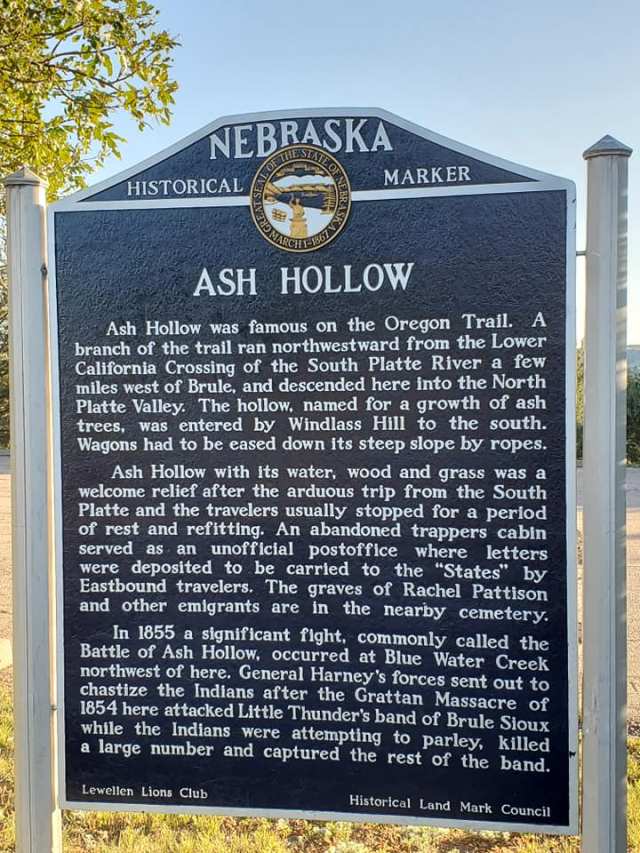
So my white friend is on a road trip and posting pics on Facebook. He likes history, so inevitably we start seeing those ubiquitous historical markers of pioneer struggles. Here’s just one example. Read it. It’s typical. The historical markers call it a “fight” and a “battle”, though in reality even the New York Times called it, at the time, “simply a massacre” of Native families by US soldiers. The marker admits they attacked “while the Indians were attempting to parley.” The marker itself is an echo of an attack without parley, for Nebraska didn’t even attempt to consult with the Lakota in developing the message. The National Park Service is better in this regard.

AshHollow1

Here’s the part the historical markers (and Wikipedia) leave out. After the “chastisement”, Brig Gen Harney and his men returned to Fort Laramie. They left 86 dead but brought the scalps and vaginas cut from the victims to display as trophies. They also brought 70 captives, all women and children. The most attractive women were given to the officers; the remainder were, in Harney’s words, “shared out among the soldiers.” Nine months later, the fort began to fill with what the soldiers called “half-breed” babies.  (Source: Drury, Claven. The Heart of Everything That Is, p.138-9)

AshHollow2Memorials to the westward march, to “Manifest Destiny”, to “opening the land” pepper the nation. There are countless schools and parks with the name “pioneer”, a euphemism for ethnic cleansing and genocide, a way to celebrate it and erase it at the same time.  And so countless towns, counties, rivers, states, forests, parks, schools and bridges honor Custer, Grant, Sheridan, Amherst, even Coronado, DeSoto, and of course Columbus. All ways to claim the land and claim the history and erase what really happened. These are in-your-face rebukes to Native children growing up in this land, ways to tell them they are second-class citizens.
The highest peak in the sacred Black Hills was named after Harney, until 2016 when it was appropriately officially renamed Black Elk Peak.


Posted in my own thoughts | Tagged , , , , , , , , , , , | Leave a comment

An ancient Karuk story about wildfire management in California

forestWith the rapid increase in deadly mega-fires in California, federal and state governments are turning to indigenous people for solutions. The US Forest Service is now working with the Karuk Tribe to implement prescribed burns to manage the land. Much has been written of their traditional land management practices regarding the use of fire. Redwood National Park has adopted prescribed burns, acknowledging they come “from time immemorial”.

This ancient Karuk story is adapted from Leaf Hillman’s account in a compilation of stories about traditional ecological knowledge (TEK) shared at the annual California Department of Water Resources Tribal Water Summit in 2018.

On the Pacific coast, where the redwood forests rise in waves, ridge upon ridge, from the crashing shoreline, “suddenly there appears a light on the mountain.” Hillman explains, “It’s a fire, actually. It’s not just a little fire; it is a lot of fire. For three days prior, six young men have been on top of the mountain, preparing for the fire. At the moment when darkness sets in, on the darkest night, the fire is pushed off the mountain and rolls down the hill. It sets the entire face of the mountain ablaze.”

In late summer the Karuk repeat this up and down the river.

“These fires burn from that time until the fall rains extinguish them. They burn and they crawl across huge areas of the landscape, creating necessary openings, killing the acorn weevils. At the same time, the inversion from the smoke from all these fires sets into the valleys along the river – cooling the Klamath River by two to three degrees, triggering the fall run of the salmon. “


Posted in news | Tagged , , , , , , , , , , , , , , , , , | Leave a comment

Slavery in the US before 1619; why are we ignoring it?

When English pirates arrived in Jamestown, Virginia in 1619 and sold 20-32 African slaves (which they had stolen from a Portuguese vessel off the coast of Spanish-controlled Veracruz, Mexico) to the settlers there, it was the first time that a British colony on what was to become US soil enslaved Africans.

I totally get that 1619 is a historical marker that is useful for focusing public attention on the legacy of slavery and the on-going history of discrimination against African Americans. (See this post for how reparations could work.) But there are several other options for historical markers in “US” history. I put “US” in quotes because it did not exist, of course, until over a century and a half later.

If our focus is slavery inflicted by Europeans within US lands, we could possibly go back to 1501, when European slavers off the coast of New England (or maybe Canada) kidnapped native Wampanoag. Or 1511 when Spanish slavers abducted some native Timucua or Ais in Florida, and again in 1513, as well as Calusa in 1513 and Matecumbe in the Florida Keys in 1516 and Tuscarora in South Carolina in 1521. You get the idea. In fact, the enslavement of Native Americans exceeded that of African Americans in US lands until some time in the 1700s. Florida was almost entirely depopulated by English slavers around 1700; the Seminoles of Florida are descended from Creek refugees and arrived from the north afterwards.

Focusing on the enslavement of Africans in the US, the first record is from 1526, 93 years before 1619. The Spanish colonists set up a fort called San Miguel de Guadalupe at Sapelo Sound, Georgia. It was Guale territory at the time. The outpost lasted four months before it was overthrown by their African slaves in concert with the Guale. We know little of what became of the liberated Africans, but it’s clear they did not depart with the fleeing Spanish survivors. We could use this year to mark the 493rd anniversary of African slaves in the US, and at the same time honor the first slave revolt, a successful one at that.

Two years later, in 1528, the Moor slave Estevanico was one of 600 men of the ill-fated Narvaez Expedition to land at Tampa Bay, Florida. Four years later, he was one of four survivors who trekked across the Gulf Coast to Texas and eventually Mexico. He later joined a precursor to Coronado’s attempted invasion of New Mexico, where he was either killed by the Pueblo or defected to them. He was undoubtedly the first African in the Southwest, not to mention the first Muslim in the US.

CLICK TO ENLARGE

slavery timeline

The enslavement of Africans to the US got off to a slow start compared to elsewhere in the Americans, where it started in 1492. By 1619, over half a million slaves had been shipped from Africa to the Caribbean and South America.

Looking at the timeline, the history of African slavery got off to a slow start: two short episodes involving a single settlement and a single individual. I can understand not counting them as the true beginning of the enslavement of Africans in the United States.

But in 1565, still a full 54 years before 1619, the Spaniards founded St. Augustine, Florida, the oldest currently-inhabited city in the United States founded by Europeans. As historic sites in St. Augustine attest, enslaved “African Americans helped establish American’s oldest city.” This fully functioning slave market continued thru the Civil War.

So that’s a strange thing to ignore. Why don’t we count 1565 as the start of the enslavement of Africans in the United States? I assume it’s because white America discounts the roles played by Spain and France in their history. Because they weren’t British or didn’t speak English, they are erased like Native Americans. The basic white narrative is this: the land was empty, the British/white Americans came, and then they brought slaves from Africa. The role of the slaves in building the colonies (or tearing them down in the case of San Miguel), and the role of Spain and France in the history of the US, are simply ignored. Florida belonged to Spain and not to England, so it doesn’t count. In a strange way, ignoring the slavery perpetuated by Spanish colonists dismisses non-English people as founders of the US; only the British count.

If we want to be Anglocentric, 1619 wasn’t even the first incident involving African slaves and the British in the United States. That happened in 1586, when Francis Drake dropped off a cargo of several hundred men on a sandbar near the fledgling colony of Roanoke. He had ransacked St. Augustine, absconded with the slaves, and was heading back to England. For reasons unclear, he dumped them as jetsam on a remote beach on the Outer Banks of North Carolina. Another English vessel arrived in the area four days later, but found no sign of the men. They had disappeared into the forest and probably sought refuge among the Powhatan.

In reality, both St. Augustine in 1565 and Jamestown in 1619 were tenuous footholds on Native land. In a 2017 article in Black Perspectives and Smithsonian Magazine, Michael Guasco argued that “the most poisonous consequence of raising the curtain with 1619 is that it casually normalizes white Christian Europeans as historical constants… [that the Europeans were] already home. But, of course, they were not. Europeans were the outsiders. Selective memory has conditioned us to employ terms like settlers and colonists when we would be better served by thinking of the English as invaders or occupiers. In 1619, Virginia was still Tsenacommacah, Europeans were the non-native species, and the English were the illegal aliens.” To illustrate the tenuous position of the English in Jamestown in 1619, three years later the Powhatan rose up and killed a quarter (347 of 1,240) of the British colonists in one morning.

All this is to say that British US history should not serve as the benchmark for all US history. Ignoring slavery in Spanish Florida, of course, erases the non-English roots of the US. As Guasco notes, “When we make the mistake of fixing this place in time as inherently or inevitably English, we prepare the ground for the assumption that the United States already existed in embryonic fashion. When we allow that idea to go unchallenged, we silently condone the notion that this place is, and always has been, white, Christian, and European.” And exclusively English.

Posted in my own thoughts, news | Tagged , , , , , , , , , , , , , , , , | Leave a comment

Land acknowledgement: Palm Springs, California

IMG_0814.jpg

Palm Springs is Cahuilla territory, specifically the Agua Caliente Band. This was apparent to everyone attending the Tribal Lands and Environment Forum, which is what I was doing there. The Agua Caliente Band were regularly acknowledged and thanked as the host tribe. And they welcomed us with song and dance.

IMG_0848.jpg

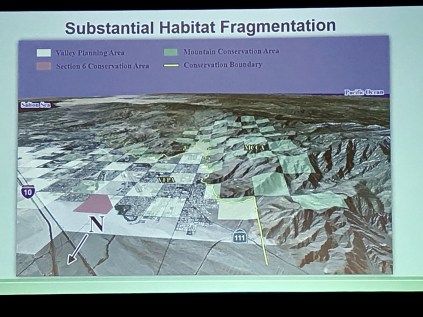
This is a screenshot of their Powerpoint presentation on bighorn sheep restoration, showing their reservation checkboard laid over the mountains and desert.

They have one of the few reservations in the state that was created in the 1800s. It’s big (over 50 square miles) and a bit unique— it’s a checkerboard created by a presidential executive order in concert with a gift of otherwise Cahuilla land to the Southern Pacific Railroad (the squares in the checkboard). It encompasses rugged mountains and canyons and flat desert floor, including a lot of prime real estate in Palm Springs. The history on that and how the tribe managed to keep it is a long and sordid story. Key to the tribe’s success and transition out of poverty was Chairwoman Vyola Olinger and four other women, who became the first all-women tribal council in the nation in 1954. Move over, Marilyn, there are some other powerful women in the history of Palm Springs (see page 60 of Me-Yah-Whae for their story).

IMG_0843.jpg

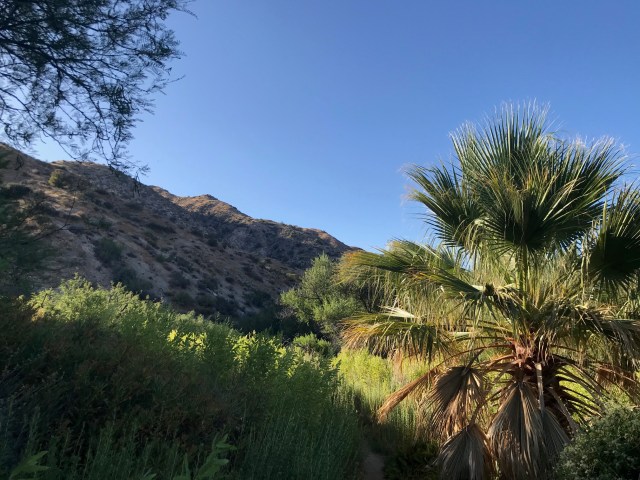
It hit 115 degrees when I was there. Historically, the Cahuilla would spend the summer in the cool shade of the palm oases in the canyons, descending to the hot springs on the valley floor in the cooler months.

At the conference, we learned about various initiatives of the Agua Caliente, such as their work with state and federal agencies to double the local population of desert bighorn sheep, and their multi-million dollar museum and cultural center under construction downtown around the hot springs that give both the tribe and the city their names.

IMG_0846.jpg

Over 500 people from tribes across the continent attended the conference, as well as officials from state and federal agencies.

Ta’Kaiya Blaney (Tla’Amin First Nation) filled the hall with her haunting voice during an evening of cultural presentations. Here’s a snippet.

At the end, the Agua Caliente bid us farewell and safe travels.

Posted in land acknowledgments | Tagged , , , , , , , , , , | 1 Comment