
I live in Port Townsend, Jefferson County, Washington. It was originally called qatáy by the S’Klallam, a place with a small lagoon and a series of freshwater ponds that allowed for kayak portages from Puget Sound to the Strait of Juan de Fuca, thus avoiding the wind and tidal currents at Point Wilson.
That’s already six colonial monikers and I’m only introducing where I live. Let’s review them.

Townsend, actually Townshend, was a friend of George Vancouver’s. Townshend led the British army against the French near Quebec, but that’s as close as he ever got to this area. The same can be said about Point Wilson, which is kam-kum to the S’Klallam and kam-kam-ho to the Chimacum. George Wilson was another Vancouver colleague who never came to the Pacific.
Washington is after George Washington, known to the Mohawk as “town destroyer”. Jefferson is after Thomas Jefferson, who considered Native Americans “savages… living under no law but that of nature.” He wrote repeatedly how to use indebtedness to divest us of our land. Puget Sound is another moniker bestowed by George Vancouver, after his lieutenant, Peter Puget. Juan de Fuca is the Spanish name for a 16th century Greek navigator, honoring his claim to have explored a hypothesized Pacific connection to the mythical Northwest Passage. The name was bestowed by fur trader Charles William Barkley.

As land acknowledgements have become somewhat routine, they have received a lot of attention and scrutiny. I get that they are “not enough” and may seem performative, done mindlessly without reflection, but I still appreciate them.
I appreciate them because we already have competing land acknowledgments all around us. The current “official” names reveal what our society acknowledges, honors, and celebrates, what virtues we signal.
By way of example, I’ll focus on a tiny speck of land—a two-mile radius from my home. Let’s call this a reverse land acknowledgment. Instead of walking the path of indigeneity, we’ll go the other way and head down the road of settler colonialism. This journey may be painful.
Back to Port Townsend. The town sits at the tip of the Quimper Peninsula. Manual Quimper was a Spanish “explorer”. His men raped a woman at Neah Bay. After a violent exchange with the Makah men, Quimper planted a crucifix on the beach and claimed it for god and king.
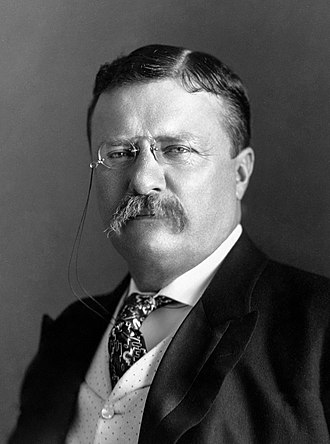
Walking up the road from my house, I gain views (on a clear day) of Mt Baker, Mt Rainier, and the Olympics. Native names varied with local dialects, but are generally modernized as Kulshan, Tahoma, and Sun-a-do respectively. Baker was another officer under George Vancouver. Rainier was another friend of Vancouver’s who never came to the Pacific. Like George Wilson, Peter Rainier fought for the British against the American Revolution, and thus was allied with many Native American tribes (though Native Americans fought and died on both sides of that war). The name Olympus, or Olympics, was bestowed by English trader John Meares, based on Juan de Fuca’s 16th century account, in which de Fuca named the range after the Greek mountain. de Fuca, remember, was Greek.
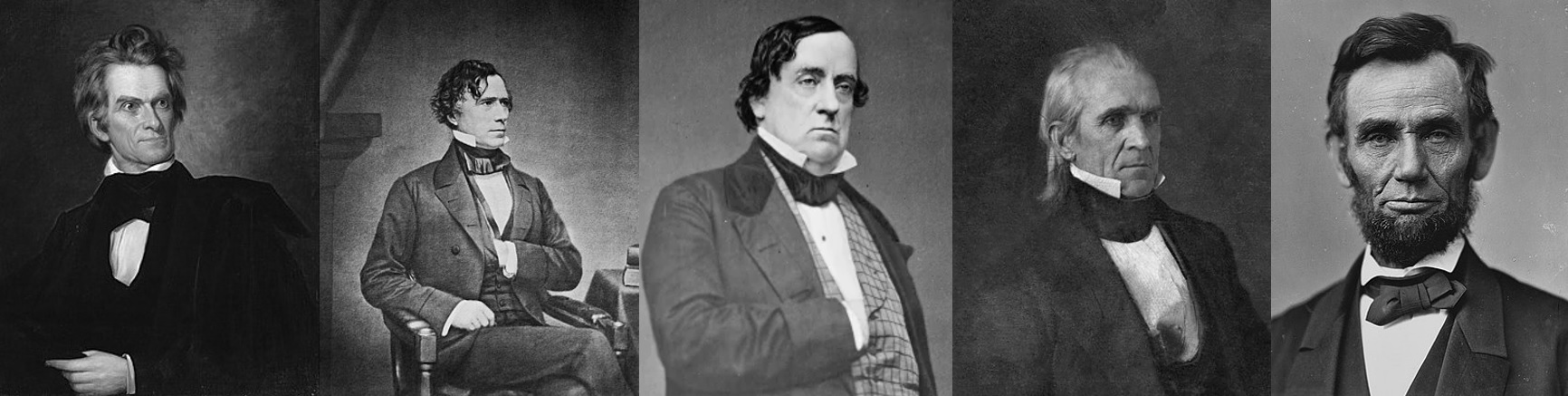
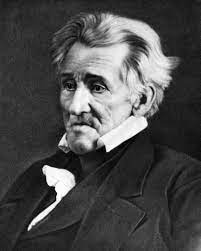
Nearby street names include Sheridan, Scott, Kearney, Cass, Calhoun, Franklin, Washington, Jefferson, Grant, Polk, Fillmore, Harrison, Pierce, Roosevelt, Taylor, Tyler, Quincy, Madison, Monroe, and Jackson. You get the idea. The list is actually longer. Just to drive home (no pun intended) this veritable celebration of ethnic cleansing (aka “Manifest Destiny”), these streets are connected by Discovery Road. And this is a very liberal, albeit white, town – only 13% for Trump – known as an “arts community”.

I won’t go into detail about each president. Suffice it to say that all of them played a part in the grand white American supremacist project of ethnic cleansing and genocide, of building a country originally intended for white people, using stolen land and slave labor. In 1830, Andrew Jackson, the President Trump of the 19th century, signed the Indian Removal Act, one of the most hotly debated pieces of legislation in the history of the US. He had campaigned on it. In 1850 President James Polk stood on the floor of the House of Representatives with a lock of Narcissa Whitman’s hair and promised to imprison all Indigenous peoples of Oregon and Washington in concentration camps. In 1875, President Grant launched an unprovoked war to seize the Black Hills, already ceded to the Sioux in the Treaty of 1868. Sheridan was the primary general who implemented this war. He used a “winter campaign”— deliberately targeting Native families in their winter camps, attacking them in sub-zero weather and burning their provisions. When Congress debated a bill to protect the declining buffalo, General Sheridan implored a joint session to embrace biological warfare: “For the sake of lasting peace, let them kill, skin and sell until the buffaloes are exterminated.” The local healthcare facility here includes the Sheridan Clinic. At least it’s not a veterinary clinic.
Kearny (spelled this way) was a key military leader in the Mexican-American War to fulfill Manifest Destiny; Kearney (spelled this way, like the street) was a key fort on the Oregon Trail. Calhoun was a fierce proponent of state’s rights and slavery. Cass was Jackson’s Secretary of War, which basically meant Secretary of Ethnic Cleansing. During a smallpox epidemic, Cass selected which tribes would be sent the vaccine and which tribes would not.
Whoever chose these names was certainly pro-slavery and pro-ethnic cleansing, even by historic US standards. These men were not simply representative of values at the time. These ideas were controversial among whites – and no doubt opposed by Blacks and Natives. Indian removal was hotly debated. A war was fought over slavery. Among Port Townsend street names, only Benjamin Franklin stands out as one who regularly respected Natives and Native ideas. He applied many principles of the Iroquois Confederacy, arguably the world’s oldest democracy, in the development of the US Constitution.
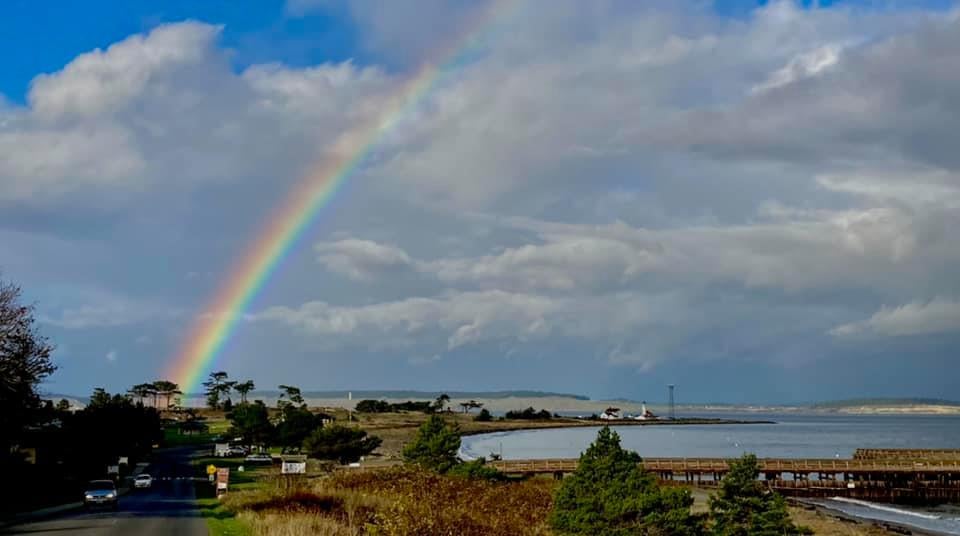
Favorite local beaches and promontories include Fort Warden, Point Hudson, Fort Flagler, and Cape George. I’m too tired to look all these up, but I’m guessing they were white European men from around the time of local ethnic cleansing.
The names don’t stop with place names. Even the birds – yes, even the birds – have names that honor European conquest. I’m a birder. In the first hundred yards from my house, I’ll likely hear Anna’s Hummingbird and possibly Townsend’s Warbler. The latter would probably be in the Douglas-firs. Anna was one of several women – or girls – honored by Audubon or his colleagues using their first names. Last names were reserved for men. Anna was honored for being “a beautiful young woman, not more than twenty, extremely graceful and polite.” A bit cringy. Townsend (not the same at George Townshend), in addition to his ornithology, collected Native skulls to support Samuel Morton’s Crania Americana. I could get into trees, squirrels, and crabs, but I’ll stop here.
The sheer number of honorific names is rather astounding. They dominate maps in both the urban and wilderness areas. It’s impossible to avoid them as you move about the town. This probably applies to nearly every town in the nation. And nearly all of these names honor European men (Anna being the only exception). It is virtue signaling of a kind, just usually not what I would consider virtuous.
If you look hard enough, there are some references to “other history”. Chetzemoka Park honors the chief who ultimately capitulated to white colonists, giving up the land to avoid a war he could not win. He did that from a hilltop just a few hundred yards from my house. Both his face and those of his two wives are honored in the portico of the federal building, built in 1893. His is the only local indigenous name you’ll likely learn around here.
Also nearby is Chinese Gardens, such a peaceful name for a painful place. It’s a shallow lake now. Chinese immigrants used to grow vegetables there, both for themselves and sale to local white residents. After the Chinese Exclusion Act of 1882, and subject to racist vandalism and assault, they began to leave the area.
In general, the Pacific Northwest is above average in using Native names. We have Seattle, Tacoma, Clallam, Issaquah, Puyallup, Tulalip, Nisqually, Skagit, Sequim, Snoqualmie, Samish, Suquamish, etc. I’d love to live on a street with an indigenous name, like qatáy Valley Rd. At least thank god my address isn’t an Indian killer street name.
So there it is – it’s actually possible to tell much of the most horrid parts of US history based on reminders within two miles of my house.
For a traditional Native land acknowledgement of Port Townsend (aka qatáy), see this post.




What’s the origin of the Umatilla street name?
I don’t know how the streets were named– or if there is any documentation of it. I suspect not, in most instances. All we likely have is the year the street was put in. Uptown was obviously first. Umatilla would have come decades later. I don’t know why that tribe is mentioned and none others.
Here is a similar piece, but in an academic forum and focused on 16 national parks.
Words are monuments: Patterns in US national park place names perpetuate settler colonial mythologies including white supremacy
https://besjournals.onlinelibrary.wiley.com/doi/full/10.1002/pan3.10302