
It’s dawned on me that the California’s missions were a lot worse that most people realize—objectively a cross between the ISIS theocratic state and Nazi concentration camps. Call it California’s Gulag Archipelago. European visitors at the time were horrified by what they saw. The Mexican government, as soon as it was independent from Spain, immediately disbanded the missions and sent the radical priests packing.
Today, we don’t even hold the missions to the moral standards of that time. We white-wash them, cover them with bougainvillea, glorify them, and have even developed an entire architectural style based on them: we have mission-style banks, restaurants, homes, and hotels.

Slave camps
For sixty-five years, from 1769 to 1834, the Natives of California lived Father Junípero Serra’s archipelago of twenty-one missions stretching along most of the coast and valleys. Each mission depended on Native labor and controlled vast lands, maintained thousands of head of livestock, and provided traders and nearby settlements with corn, wheat, beans, vegetables, butter, tallow, hides, leather, olive oil, and lots of wine. The Franciscan friars lived so well that they had servants to handle all the silver and gold they earned; they could not touch it due to their vows of poverty.

Serra and his missionaries were extremists. Many were into self-mortification, gauging their own flesh in spiritual penitence. Moreover, unlike Spanish missions elsewhere in the world, they restricted the converts from leaving the missions without permission and deliberately kept them illiterate.
The priests sought to maintain their labor force. Escapees were re-captured. Natives outside the mission were threatened or taken by force. To increase the birth rate within the missions, the priests resorted to punitive measures. They suspected that the high miscarriage rate among Native women was the result of deliberate abortions. Women suffering miscarriages were whipped, put in stocks, and publicly humiliated, forced to stand outside the church holding “a hideous painted wooded child in her arms.” At Mission Santa Cruz, Friar Roman Olbés ordered a Native couple to have sex in his office while he watched. When they refused, he settled for an inspection of their genitals. When it was her turn, the Indian woman fought back and a struggle ensued between her and the priest. He screamed for help and the woman was hauled away, given fifty lashes, and made to hold the wooden child outside the church. Her husband was shackled and forced to attend daily mass wearing bull horns lashed to his head.
Death rates

The purpose of Serra’s kingdom was to convert as many Indians as possible and send their souls to heaven. In this regard he was efficient; they were dying faster than they could reproduce. The Native “converts” lived in squalor, worked hard, ate little, attended mass daily, and were whipped frequently, sometimes during mass if they were not paying attention to the sermon, which was given in Latin. Diseases spread through their dark crowded dormitories more often than not. The priests seemed to care little. In 1775, Fray Pedro Font wrote that “they are so savage, wild, and dirty, disheveled, ugly, small, and timid, that only because they have the human form is it possible to believe that they belong to mankind.” During the mission period, 1769–1834, the Indian population at the missions, according to one estimate, declined from 72,000 to 18,000, with deaths exceeding births by 60 per cent.
The death rate within the missions equaled that of the worst slave plantations. In November of 1790, Father Fermín Lasuén, Serra’s successor, reported to Mexico City that, of the 13,308 Indians living in the missions, 4,780 had died so far that year—that is 36%— and there were still six more weeks to go. Thirty years later, high death rates remained a hot topic in communications between the missions and Mexico City. Father Mariano Payéras, another successor of Serra, blamed the Indians. He reported that they did not “value their health as they should but rather waste it and place it secondary to vile pleasures and whims.”
Their bones, however, do not lie. They are stunted and show signs of malnutrition, in contrast to Natives from outside the missions. The Natives did not lie either. On one occasion, twenty-three escaped the Mission Dolores and were re-captured. Six listed hunger and starvation as their reason for leaving, nine described the deaths of immediate family members, and, when a cause of death was given, it was starvation. Eight of the captives mentioned they were whipped or put in stocks for not working while they were sick. One man said that, after his wife was raped by a vaquero, he was whipped because he had not properly protected her.
Missionaries reaction
Many of the young missionaries, arriving from Spain with visions of helping the poor, quickly became disillusioned, because “the manner in which the Indians are treated is far more cruel” than they expected. Of the three young Franciscans met by the worldwide French expedition, one quit in his thirties, another was relieved after seven years due to “depression”, and the third lasted only a few years, becoming “incapacitated for work by reason of insanity.”
European reaction
In 1779 King Carlos III of Spain heard that the conditions were “worse than that of slaves”
and ordered all Natives freed after ten years of education. But the order was ignored and the Natives were kept illiterate; most could not even speak Spanish. Seven years later, a visiting French expedition noted that “corporal punishment is inflicted on the Indians of both sexes who neglect the exercises of piety, and many sins, which in Europe are left to Divine justice, are here punished by irons and the stocks.”
Visiting Russians and Americans had similar reactions. When a new priest was sent to fill a vacancy at the Mission San Miguel and was shocked that “the manner in which the Indians are treated is far more cruel” than he expected, he was quickly removed from his post, branded unstable, and returned to Spain.
Native reaction
In addition to constant runaways, there were notable uprisings. In 1775 the Kumeyaay rose up and sacked Mission San Diego. Priests constructing the mission as San Juan Capistrano heard about it, abandoned their construction site, and buried the giant mission bells to hide them. An attempt to build missions up the Colorado River was quashed by Quechan (Yuma). The Great Chumash Revolt of 1824 at Missions Santa Inés and Santa Barbara led to the establishment of a secret survivor’s colony at Walker Pass in the southern Sierra.
White-washing history today
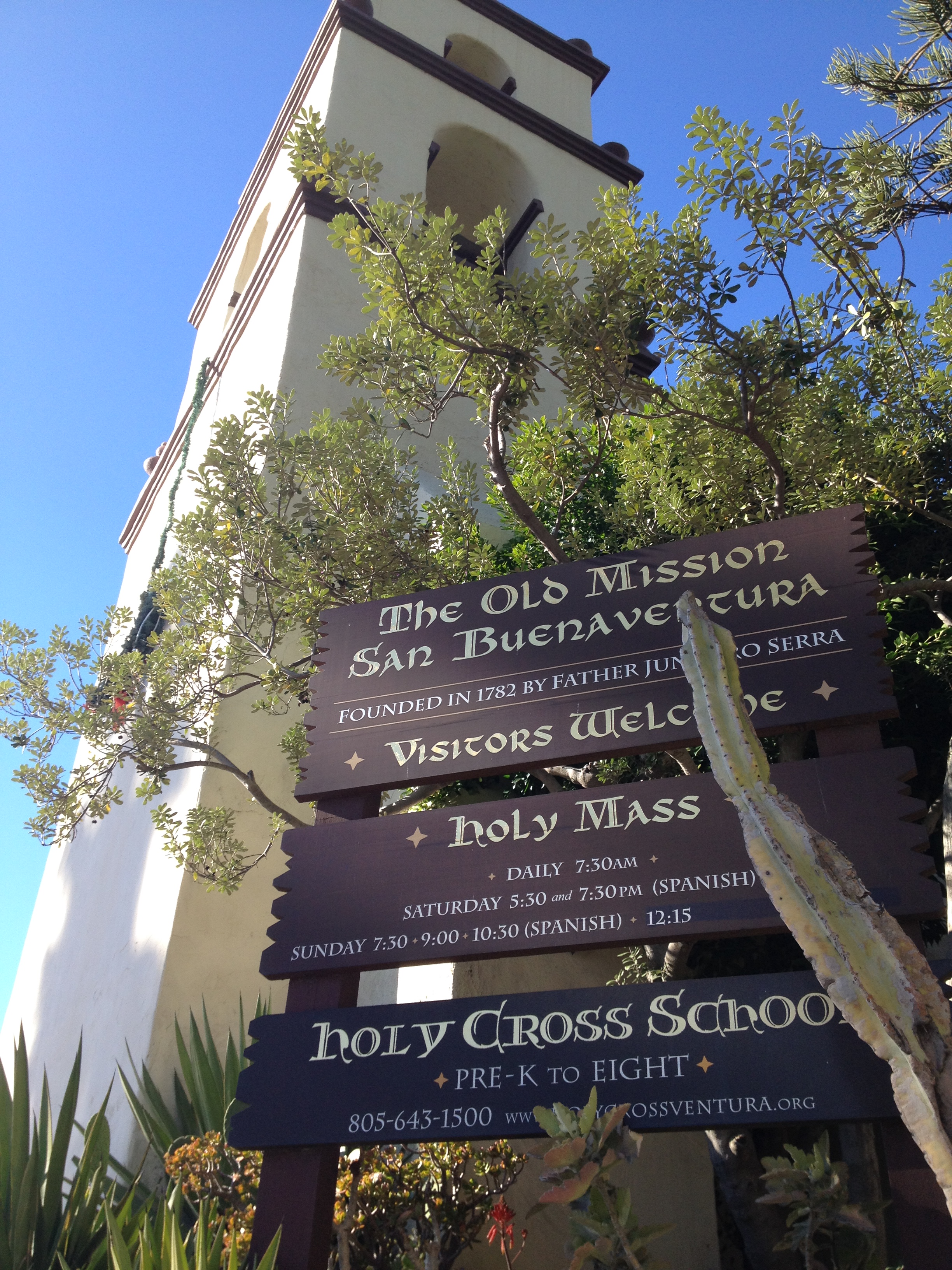
For decades California’s 4th graders studied a sanitized and white-washed version of the missions, complete with the infamous assignment to build a model of a mission out of sugar cubes, complete with a bell tower to summon the faithful to mass. This would be akin to German children building little models of Auschwitz. The mere fact that California history (the mission period was followed by a state-sponsored genocide in the 1850s) is relegated to 4th grade, is itself questionable. The topics are inherently difficult and violent, more suitable to older children. This would be akin to Rwanda only teaching its history in 4th grade. It’s a deliberate decision to avoid topics.
California recently revised teaching standards, but the mission models may live on thru various school districts and teachers.
Today most of the missions are preserved by the Catholic Church. None of them offer an experience such as at Whitney Plantation in Louisiana, curated to put visitors in the position of the slaves and walk them through the daily life of a captive. None of that. Instead, you can pray in the chapel or visit the giftshop, replete with little statues of Mary.
I’ll end with her words from what is known as the Song of Mary or the Magnificat, one of the more radical pieces of literature ever written at the time, a prayer for the poor and against the powerful:
He has brought down rulers from their thrones
but has lifted up the humble.
He has filled the hungry with good things
but has sent the rich away empty.
It’s time to teach the true history of the missions and remember those who suffered.

Some useful sources:
Castillo, E. 2017. A Cross of Thorns: The Enslavement of California’s Indians by the Spanish Missions.
Costo, R. and J.H. Costo. eds. 1987. The Missions of California: A Legacy of Genocide.
Life in a California Mission: The Journal of Jean-François de Galaup de la Pérouse.
And useful information for teachers seeking alternatives to the missions project: https://chssp.ucdavis.edu/blog/mission

 Memories of the People
I live in a town with one of these missions. I’ve always avoided the place-whenever I see it, I feel sad knowing so many were tortured and killed there.
Though what happened at the missions is horrible and many lives were lost, most of the events you list of torture and death didn’t kick off till after Serra had died. Serra had only founded the first 8 missions, ending with the mission Buenaventura. Though he had advocated for corporal punishment, there is a letter written by him to the governor in 1780 realizing the error and admitting that other friars had taken things to far. I reiterate by saying that what happened at the missions is horrible, disgusting, and is a dark part of history for both Catholics and Native peoples of California. Along with this, I don’t believe all the blame can be placed on Serra as he genuinely wanted a willful conversion from native peoples. A side note, I cannot comment on the wealth of the missions after Serra’s death, but as early as 1774 the missions were doing horrible as we see in his letters to the governor, and at each mission there only seemed to be 40 heads of cattle and little too no agriculture being produced and the fact that Serra was constantly asking for supplies.
None of the blame can be placed on Saint Junipero Serra.
If you look back at the Sierra Gordas Missions he was given charge of before Alta California, he quickly came in, baptized those who wanted to become Christian, then taught them essential skills for a more stable society such as agricultural practices, masonry, animal husbandry, etc. But he also taught them music and art. The ones who were called became priests and deacons and when he left, all of the lands that had been developed, except for the church grounds itself, were given back over to the native people and manned, managed and run by them. Their baptism made them Christian subjects and therefore they couldn’t be enslaved. This was the objective for Alta California. His superiors at the College of San Fernando were pleased with not only what he accomplished in the Sierra Gordas but the quickness with which it was done.
They then sent him to what is today Baja California, to the missions recently vacated by the Jesuits. In short order he gave the Baja California missions to the Dominicans and set off for Alta California.
From the begining he would have preferred not to have had the military accompaniment, but the crown insisted. Saint Serra fully expected to be martyred by the native people he encountered, those he termed the “Gentilidad” , but he loved them so much without ever knowing them, just the thought of them not knowing Jesus Christ was sufficient to fuel the zeal of his endeavors, to be willing to leave his high place of honor as Scotus at the university back home and travel to unknown lands, suffer debilitating injuries and illnesses and face the certain fait of martyrdom. But contrary to what’s been inferred the native people’s of the missions loved him like a father. They were family.
I don’t know what happened subsequent to his time but the reason you don’t find presidios at the same locations as California missions, even in San Diego, was because he refused to have military housed with the neophyte housing. It caused greater casualties and loss of life because it lengthened response times to attacks. The people who chose to become Christians and live in community with the pacifist Franciscans were free to leave, but should they choose to do so, they were not welcome to return to the missions. When one joins religious orders today, it is much the same. You don’t go back and forth. But in these circumstances they learned through precedence that it was better for all parties to go their separate ways if the neophyte was attached.to their former life.
The attacks were in order to take what the Franciscans had by force rather than to trade. Some attacks were for the purpose of kidnapping neophytes in order to force them back into the tribal system they had escaped. The loss of so many members was affecting the cheifs bottom line. The tribal system was not some egalitarian Pocahontas fantasy reality, it was a hard and brutal and violent caste system.
The starvation was not just suffered by the Indians, but the plight of the Franciscan friars as well. There were floods and thefts and vandalsim and fires and earthquakes. Anyone who has lived in California for.more than a handful of decades is familiar with the cyclical nature of draught and deluge, earthquakes and fires and rioting, vandalism and looting 🤣
I wish these fake historians would look at original source materis and quit besmirching the Saint who founded California.
I don’t know about the author, but my Indian and European ancestors were happily married and in love. They were good people who treated all with hospitality and graciousness…and it’s well documented.
All of this is well documented in original source materials.
the referenced materials I will look them up. But I suspect it will be the same old story. They only go back to the 1970s when the theory first materialized out of someone’s psychotropically enhanced imaginings.
¡Siempre Adelante!
“.. I wish these fake historians would look at original source materis and quit besmirching the Saint who founded California. ..”
Post your own ‘original sources’.
(And ‘saints’ are a catholic supremacy institution)
‘Founded’ ? >> Helped occupy.
It would be more then welcome, to see an extensive (linked) list of historic sources to this topic. Literature/source lists are essential to every non fiction article. Best greetings.
Thanks for your suggestion. I always have sources for my posts! I’ve added some sources in the post and will include them here as well: Some useful sources:
Castillo, E. 2017. A Cross of Thorns: The Enslavement of California’s Indians by the Spanish Missions.
Costo, R. and J.H. Costo. eds. 1987. The Missions of California: A Legacy of Genocide.
Life in a California Mission: The Journal of Jean-François de Galaup de la Pérouse.
Thank you ! Are these studies also accessible through internet? (any kind of distributor, like the inter-universitary academia.net is one ?)
The comment from ‘House’ also is interesting, and I would like to see a similar reference base, there. We got the old (1951 novel, 1955 film) fiction production, based on the history (‘The Nine Days of Father Sierra’ > ‘Seven cities of gold’), which is portaying mr. Serra as a “semi holy” individual indeed. What is correct, what is fiction? The 1950-ies filmproductions, generally speaking, whitewashed everything of the past.
Greetings
recently moved to california and reading up on its history. Don’t end the natives slavery story with the missions. Mexico may have sent the Franciscan Friars packing, but Mexico ceded the land to Rancheros who heavily depended on native people slave labor as well. So it seems the cycle continued even under the benevolent Mexicans.
Yes, you are exactly right. It continued into the California era as well, taking a modified form with each new era.
Beginning with Calif statehood in 1850, one of the first laws stated that “any Indian able to work and to support himself who shall be found loitering or strolling about, or frequenting public places where liquors are sold, begging, or leading an immoral life, shall be arrested on the complaint of any citizen.”
They were typically arrested on Sunday and fined on Monday. Unable to pay off their wages, they were “auctioned off to the highest bidder for private service,” usually for a week. And then they were paid in liquor to repeat the cycle.
Horace Bell, a resident, described: “Los Angeles had its slave mart as well as New Orleans and Constantinople—only the slave at Los Angeles was sold fifty-two times a year as long as he lived, which did not generally exceed one, two, or three years.”
One could talk about the present, where 45% of Calif farm labor is undocumented, a don’t-ask-don’t-tell system that suits the farmers well. They don’t want a solution to this.